Staff audits keeps clinics ticking
Promoting good health for children

Shelves in the human resources office of Chikwawa District Health Office in southern Malawi are curving under the weight of bulky files.
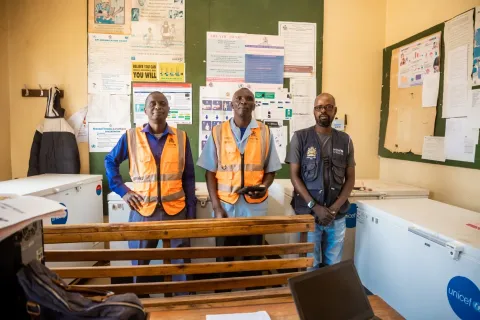
In June 2022, Stanfold Jere and his team examined each staff record and conducted a headcount of both healthcare workers and support staff in all 32 facilities in the district.
"We had a rude awakening," says the human resource management officer. "We discovered a 54% vacancy rate, but several workers who had died, retired, resigned or got transferred were still on our books as if they were still working in our district."
The review produced a detailed account of personnel.
At a click of a computer key, health authorities can tell where the unmet need for staff lies, making the emerging evidence a trusted tool for tackling staff shortages in health facilities.
"Since we know where the vacancies are, it is easy to lobby for the government's approval to fill them," he says.
UNICEF provided resources for the exercise to update the district’s staff profile and personal files.
The staff review is part of the United Nations Joint Programme for Health Systems Strengthening, alternatively known as Umoyo Wathu. UNICEF is jointly implementing the six-year project with UNFPA and the World Health Organization with funding from the UK’s Foreign Commonwealth and Development Office.
Jere says the figures at his fingertips provide the basis for proposing the recruitment of staff and revising staff roles.
He explains: "Chikwawa DHO had 900 employees in 2022, the government allowed us to employ 40 in 2023, some 48 in 2023 and 112 this year. We expect 80 more to replace those who have retired.
"The quality of services in our health facilities is improving with more hands at work."
The case in point is Chapananga Health Centre, 50 km west of Chikwawa town. Health workers once shunned the rural locality in preference for urban sites.
Within two years, it has received two clinicians, two nurses, two grounds persons, eight health surveillance assistants, two security guards and a hospital attendant.
"Based on the gaps highlighted by the functional review, the facility is better-staffed and surrounding communities are getting adequate treatment and hygiene, which boost infection prevention," says clinician-in-charge Lusant Binto, the clinician in charge.
In 2018, he was alone in the clinical section at the health centre that serves a population of 20, 000. Other staff included three nurses, two guards and a groundsperson.
"We used to work day and night and the facility wasn't clean," Binto recalls.
Not any longer.
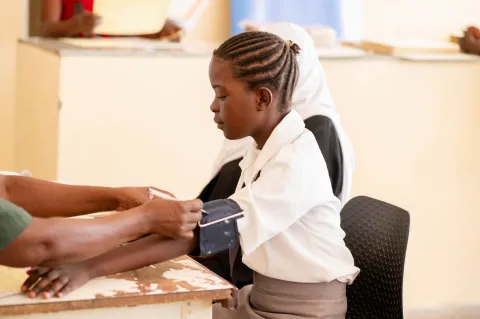
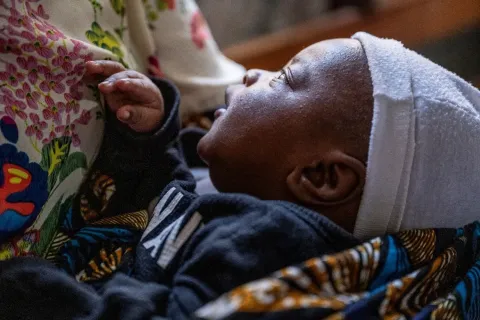
"Since there are many, we work in shifts and take time to adequately assess and assist patients, monitor children's growth, administer vaccines and treat them," Binto says.
Clinician Carolyne Munthali arrived at Chapananga Health Centre in November 2022, barely six months after the staff review.
She briefly worked as an intern at Mzimba District Hospital in 2021, a year after obtaining a diploma from the Malawi College of Health Sciences.
The 26-year-old was unemployed when she took her first permanent job following the staff audit.
"The in-charge and I were seeing 150 to 200 outpatients every day until our colleague Sufo Chiwaya arrived this year. The workload tells me I'm in a place where my skill is needed and appreciated," says the 26-year-old.
She urges policymakers in the country's health system to consistently track staffing levels and expand the exercise to all districts.
"Patients could be getting a raw deal due to high vacancy rates while skilled young men and women leaving colleges remain unemployed."