Mothers defy Cyclone to sustain HIV treatment
Mothers to Mothers group boosts access to HIV treatment

In March this year, Cyclone Freddy dumped heavy torrents on Southern Malawi, triggering landslides and flooding that disrupted the livelihoods of more than 2.2 million people in 14 districts.
Huge rocks rolling downhill ripped homes and crop fields in Nanchidwa village at the foot of Mount Mulanje.
Four months on, the village in the devastated valley is draped with boulders from the country's largest mountain sitting where homes and shops once stood.
Here, Dorothy Kandiero, a mother of seven, fled her falling house and spent a night in a tree in a narrow escape to an overcrowded camp at Nanchidwa primary school, where she took shelter for three months.
The torrents and rockslides also damaged her crops and tearoom, worsening hunger and poverty in her family.
Today a massive rock stands on the rubble of the business that earned K15 000 to K20000 a day.
However, the woman living with HIV mourns the loss of her medication and medical records that increased the risk of developing drug resistance and Aids.
She recalls: "On March 13, my family lost everything in the house, crop fields, and tea shop.
"Life was tough with the antiretroviral drugs gone. I spent four days without taking the daily pill. I couldn't replenish the drugs because the roads to the nearest clinic were impassable, and my cards went with flash floods."
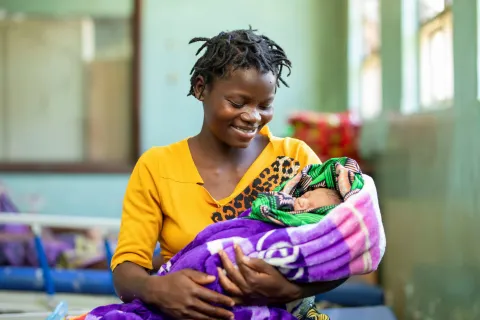
The loss included nevirapine doses for her 11-month-old breastfeeding baby not to contract the virus.

"I felt helpless. My children and I became sickly. We developed rashes. I couldn't make a K1 500 trip to Namasalima clinic at Limbuli to get more ARVs as my savings and source of income were gone. I couldn't afford new health passports and a hospital trip," she narrates.
Kandiero reverted to HIV treatment after discrete approaches by three women determined to ensure persons living with HIV do not default on treatment. She commends the trio of mentor mothers trained by Mothers2Mothers with funding from UNICEF for the follow-up visit that helped her get enough pills and the child's in the aftermath of Cyclone Freddy. They linked her to Muloza health centre along the border between Malawi and Mozambique, where she was assisted without demanding the book.
"My life depends on the drugs I take daily at 6 am. The women's intervention saved me. When I take treatment without fail, my life is OK. When I don't, opportunistic illnesses kick in," she explains.
Taking HIV treatment consistently reduces one's viral load to a level where the virus can neither be detected nor transmitted, studies show. Kandiero feels excellent to be back on treatment.
This boosts global efforts to get to zero Aids-related deaths by ensuring that at least 95 percent of HIV-positive persons take the treatment flawlessly and 95 percent achieve undetectable viral load.
Chrissy Chilumba, one of the three mentor mothers who visited Kandiero, says putting HIV treatment at the centre of emergency response proved vital in the Prevention of Mother to Child Transmission (PMTCT).
"When mothers take the drugs consistently, children are born HIV-free and cannot catch the virus during breastfeeding. Cyclone Freddy put this success story under threat," she states.
The tragedy claimed 129 lives in the district's worst-hit area, with 69 declared missing. For weeks, the area was haunted by smells and sights of rotten bodies that the locals could only burn to reduce air pollution and disease outbreaks..
"Life was hard. Some persons on HIV treatment went three weeks without taking a pill. Their health was deteriorating when the government airlifted drugs and health workers to cut-off camps," Chilumba explains.
However, persons with HIV couldn't keep or take the drugs safely in crowded camps without security and confidentiality."
During the visit to the camps, Chilumba and her colleagues—Edna Namandwa and Aida Chibalo—encouraged their clients not to quit or relent.
The mentor mother, who works in a rural community with more than 4 000 persons living with HIV, traced 447 defaulters in five camps.
"We took them aside, assured them that the disaster wasn't the end of life and it would be meaningless to survive the devastating disaster only to die from a treatable condition. We also lobbied health workers to launch mobile clinics in camps and affected communities," she says.
Mothers2Mothers trained the volunteers to help HIV-positive persons open up to the benefits of treatment.
"This work gives me joy because HIV is not the end of life. Those who take ARVs consistently enjoy healthy lives and bear HIV-free children. They spend more time doing profitable work, not bedridden," she says.
The mentors also assist children and adolescents who were highly affected by AIDS because they didn't know their status and lacked friendly services, including condoms and information.
A quarter of the mentor mothers’ clients are adolescents aged 18 and below.

Mothers2Mothers project coordinator Elliot Bonongwe said the emergency PMTCT support helped roll back a surge in default rates following the disaster that struck months after the phaseout of his organization’s work in Mulanje district.
He states: "Following the cyclone, many people weren't going to health facilities to replenish their drugs. The default rates reached 30 percent in some health facilities. The Government of Switzerland and UNICEF's support tremendously transformed access to HIV treatment during the disaster as we brought the defaulters back to care and counselled them not to lose hope."
Over 99 percent of HIV-positive pregnant women in communities surrounding Muloza health centre now give birth to HIV-free babies.
"When a child is born without HIV, we are happy because we want every child to have a healthy start and live long to achieve their full potential," says Esther Khumbanyiwa, a nurse who heads the facility's maternity wing.
She reckons the volunteers are best placed to trace defaulters because they live in the communities where the mothers and children on ART live.
"Thanks to the mentor mothers' tireless follow-ups, defaulters are few, and we no longer find ARVs dumped in crop fields.
"As a result, only two babies were born HIV-positive since the cyclone struck. One was born to a defaulting mother from a neighboring Mozambique who presented with a high viral load, and another to a Malawian woman identified too late to protect the child," Khumbanyiwa recounts.
Khumbanyiwa wishes the post-disaster support for the community-led initiative outlived the September 2023 funding deadline as disasters become more frequent and devastating due to climate change.