‘With community involvement, everyone wins’
Prioritising the health of newborns

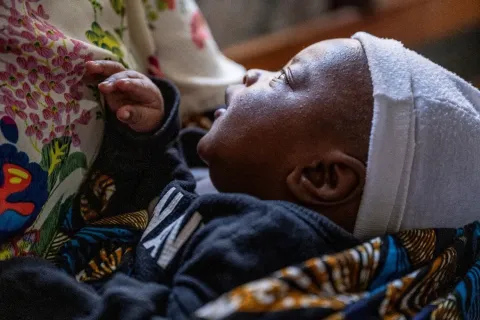
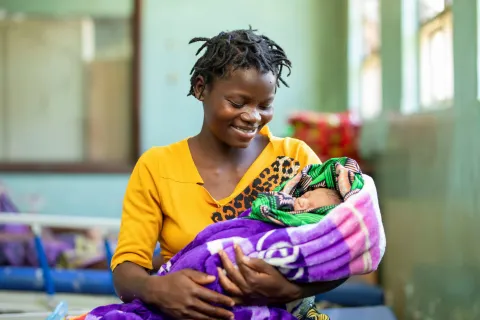
On a sunny Tuesday morning in June, Mercy Khonje safely gave birth to baby Prince at Mzokoto health centre in Rumphi District, northern Malawi.
She was happy to deliver her second child in a sanitary setting near her home.
“When I left home three days ago, I feared for my life and my unborn baby because my first child was born at a time when the health centre had a single latrine for both women and men. It is pleasing that now there are two more, which are clean—one for men and another for women,” she said.
Mercy expects the new toilets to protect patients, pregnant women and children from sanitation-related disease infections at the health facility.
“Now we need clean bathrooms,” she says. “We come here to receive life-saving services, not to catch preventable diseases. I’m optimistic that with improved sanitation, more women will come to give birth here instead of dying in the homes of the banned traditional birth attendants.”
Mercy Khonje
The new sanitation facilities illustrate the importance of community involvement in improving healthcare services.

Under the Umoyo Wathu Project funded by the UK Foreign, Commonwealth and Development Office, UNICEF supported the Ministry of Health to revamp and train all health centre management committees (HCMCs) in Rumphi to speedy tackle pressing needs in their facilities.
The United Nations Joint Programme assists the ministry to achieve its quality improvement targets, including decentralising financial resources to community structures.
“The training equipped the community-led committees with the necessary skills to identify and promptly tackle pressing needs at their facilities,” says Rumphi district hospital administrator McDonald Nkhonjera. “Previously, the HCMCs didn’t know their roles and many volunteers ended up backsliding because they didn’t understand the importance of their voluntary work.”
After the training, all the 19 committees in Rumphi drew budgets and received grants worth K1 million to K2 million to swiftly meet basic needs that would take longer if referred to the DHO, district council or Ministry of Health.
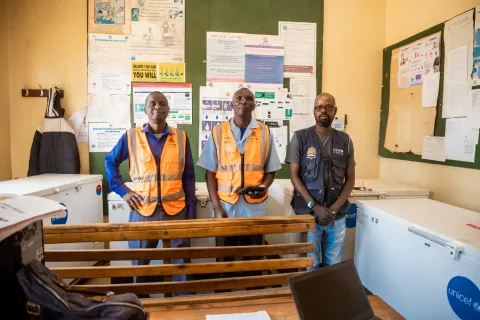
Mzokoto HCMC's spending is displayed on a public noticeboard in the outpatient section, making it accessible to all.
“The writing on the wall demonstrates our commitment to transparency and accountability,” says HCMC procurement subcommittee member Chakufwa Chihana. “This is public spending, so it’s no secret for both residents and visitors who come here.”
Apart from publicly displaying the K1 million budget and spending, the HCMC members also talk about it during public gatherings such as village and area development committees' meetings.
“We want everyone to know how much we received and how we utilised it in their name,” says HCMC chairperson Arrow Nyirenda. “The grant helped us solve the sanitation problems everyone was worried about, especially women who spend days waiting to give birth here.”
According to the wall chart, the committee paid K800 000 for construction materials, transport and labour for the two latrines. They also spent K100 000 on slashers, mops, torches, light bulbs, gumboots and batteries for machines that detect patients' blood pressure. The remainder settled administrative expenses, including buying paper, pens, staples, files, punching machines, calculators and receipt books.
Each HCMC comprises 14 community representatives, four health workers and a member of the area development committee.
When the procurement committee obtains three quotations for budgeted materials, all 19 members meet to discuss the price, discarding suppliers of overpriced and substandard goods in favour of quality affordable supplies.
When the subcommittee procures the approved material, the shop owners sign the receipts and delivery notes.
“At the receiving end, the HCMC physically checks the items to ensure the money was spent on approved goods,” Nyirenda explains. “The process is quick and transparent while following every step because our people deserve quality services.”
The concerted spending of the public grant personifies the vibrancy of the newly revamped HCMCs.
Community health nurse Hlupekire Mzumara was part of the team that presided over the training and elections of the renewed HCMCs.
She says the orientation helped the committees understand their roles and how to utilise the grants for the benefit of their communities, including women and children.
Hlupekire states: “Umoyo Wathu has empowered the committees that bridge the gap between community members and health workers to take the lead in making and implementing decisions at the facility level.
“Health workers do not operate in a vacuum but are surrounded by communities that require quality services. If they work together, both sides win because the health workers are motivated and their clients get quality services.”
Hlupekire is happy that the grants helped swiftly fix breakdowns in infection prevention, maintenance of vital facilities and service delivery.
“With the skills and capacity to manage public finances, they carry out timely maintenance and procure basics without waiting for the district council’s intervention, which often takes time. “The buckets, mops, soaps, boots, gloves, stationery, doorknobs, window panes and bulbs are now available,” she explains.

To Westein Nyirenda, Director of Health and Social Service in Rumphi, the refreshed HCMCs personify how the health systems strengthening project is boosting ties between health workers and community members for the benefit of their target population.
"The UN Joint Programme came at a time Rumphi lacked partners’ support for quality improvement initiatives," says the medical doctor. “Our work with UNICEF and other partners in the Umoyo Wathu project is just a starting point; it can only get bigger with community participation and leadership."
And he counted the gains.
“From the new toilets at Mzokoto health centre to the renovation of three staff houses at Ng'onga and construction of a concrete slab where a tent for emergencies is erected at Chitimba, we feel this is the way to go. Communities need to be empowered to own the health facilities and be part of the solution to improve the services they sometimes complain about, including maternal and neonatal health.”
Maggie Kafunda, a nurse at Mzokoto health centre, sits in the HCMC procurement subcommittee.
"This is essential for infection prevention as our clients come here in search of treatment and care, not preventable disease.
"It's a huge relief that women no longer share a toilet with men. The new ones are always clean and less overwhelmed, which attracts. Many women come here to deliver with the help of skilled caregivers since they are assured of proper sanitation, privacy and a disease-free clinical setting."