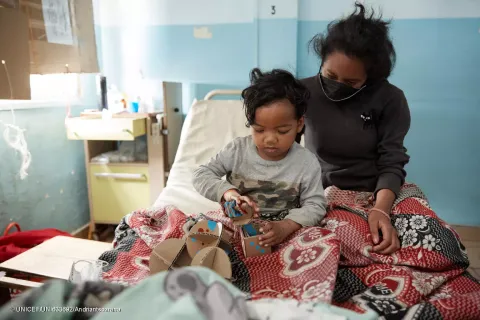
The benefits of daycare play areas for the development of the child
Perceived as an innovation among communities, daycare play areas allow children to develop in a safer and healthier place


In the village of Tanambao, in the south-west of Madagascar, Vaoline enjoys the benefits of a daycare play area that guarantees her children a better development. The development of her son and daughter of only 7 months was not always so palpable. The daycare play area offered them a playful and safe environment for their physical, intellectual and social development. “I am grateful every day for the deployment of this space, especially when I see my children thrive there. The place is truly safe and enjoyable and greatly improves our lifestyle,” says Vaoline. The same is true for Vaha Berthine, 45 years old and mother of two children. In his solidarity village of Andrebasy, this time in southern Madagascar, the daily activities of households, especially women, consist mainly of cultivation and manual works.
Indeed, within communities, there are generally no specific structures to allow children under 3 to explore the world around them. Children crawl on the floor and experience the world inappropriately, in precarious and unhealthy places. In particular, Vaoline recalls the times when she was busy with household chores and her children were exposed to certain dangers, such as falling into pits or eating animal excrement. These situations promote diseases, especially diarrhoea because of lack of hygiene. With difficult living conditions, medical expenses represent a significant burden for households.
Awareness sessions by the NGO SAHI – UNICEF implementing partner in the implementation of its wellness spaces – were necessary for convincing Vaoline and Vaha Berthine of this behaviour change. Vaha Berthine, along with other mothers in her village and the encouragement of the village chief, have joined together to build and set up a daycare play area with the raw materials available locally.
“The daycare play area is safe and healthy. It offers my treasures the opportunity to grow freely while stimulating their physical and mental development. Concerns about medical expenses disappeared because we were often victims of diarrhoeal diseases,” says Vaoline. On the side of Vaha Berthine, the daycare play area was equipped with hand washing device with ash to strengthen hygiene for the benefit of the children.
Today, Vaoline promotes the use of a daycare play area among mothers in her neighbourhood. As for Vaha Berthine, she is now more relieved and reassured. Sometimes, she takes the opportunity to play with the children and make them discover simple games.
UNICEF and its partners have established nearly 457 daycare play areas in five regions to date.