Lebanon’s children and youth raise their voices
Learn what happened when 170 children and young people, from all over Lebanon, came together at a series of UNICEF - organised consultations and discussed the challenges they face and proposed solutions.

- English
- العربية
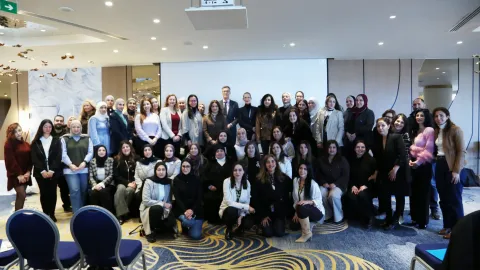
2019 marks 30 years of the Convention on the Rights of the Child (CRC). Across Lebanon, UNICEF organised activities to raise awareness on child rights including consultations with children and young people. 170 children between the ages of 10 and 18 attended these consultations to raise their concerns and the challenges they face in their daily lives and agreed on joint recommendations aimed at providing solutions.
Throughout each day of meetings, workshops and round-table discussions, and with World Children’s Day on 20 November foremost in their minds, the children were given a forum both to learn more about their rights as a child, and to express their thoughts with regard to their implementation.
The local consultations delivered a tangible snapshot of what life is like as a child in Lebanon in 2019.

We are here today to prepare ourselves through activities to identify our problems and share them with the government, so they can bring us a better future
“We are here today to prepare ourselves through activities to identify our problems and share them with the government, so they can bring us a better future,” said Vera, a 15 year’s old. Hussein, a 12 years old added, “It is important for us, as children, to talk about our problems, and I am here today to demand my rights”.
The children and young people spoke with a maturity that often belied their ages. Empowered by the freedom to learn from UNICEF moderators, and invited to speak freely about real-life issues, the individual statements addressed the collective emotions, with one announcing: “This is the first time we as children coordinate, design and organize such activities”.
Far from purely representing their own thoughts, delegates attended in representation of their peers – similarly-minded children at school, within their families, and friends. While protecting the privacy of the delegates, issues were divided across two categories – the first dealing with personal concerns relating to the individual’s life experiences, and the second looked at wider issues of the society.


Having worked together to identify their priorities, problems and the obstacles they face, they also identified solutions and recommendations that could help them reach their goals and identified the responsible stakeholders whom they expect to fulfil and defend their rights.
Many issues were pointed, from pollution issues, education curriculums, violence in schools and at home, bullying, discrimination, malnutrition, mental health, no access to services and poverty. But also, a lot of solutions were proposed: creation of safe spaces, child labor and child marriage banning, ensure food safety, provide free treatment, medicine and rehabilitation services for drug addicts, update the schools curriculums with integrated technologies, encourage self-confidence in schools away from physical or psychological punishment and provide clean water at home, …
Today, it is children who see these new challenges and opportunities most clearly. Young people are voicing their right to an education, demanding an end to discrimination, claiming for no violence in schools and calling on leaders to protect their future.
The children and young people know that it will fall upon today’s generation to demand governments for the fulfilment of their commitments and act for child rights now, once and for all. They know what’s needed and will pursue a commitment towards making sure every child, has every right.