

Social Policy
UNICEF’s Social Policy Section generates evidence of child deprivation and equity, promotes child-sensitive social protection and provides technical support to implement policies and public finance for inclusive development
- English
- العربية
Challenge
Lebanon is grappling with one of the most severe crises in its history, a combination of prolonged economic collapse, political instability, institutional fragility and conflict.
Families are struggling to survive, forced to adapt by reducing spending on food, healthcare, and education, and, in many cases, their children are compelled to work to contribute to the household income.
Much of the progress Lebanon had made in advancing children’s rights, such as in health, education, protection and play, was reversed. Deprivations are especially severe for children with disabilities, who face greater barriers to accessing essential services.
With no clear resolution to the crisis in sight, the situation for children continues to deteriorate:
- Malnutrition is on the rise.
- School dropout rates are increasing.
- Families are delaying or forgoing medical care.
- Children are bearing adult responsibilities, often becoming primary earners.
- Mental health needs among children are escalating.
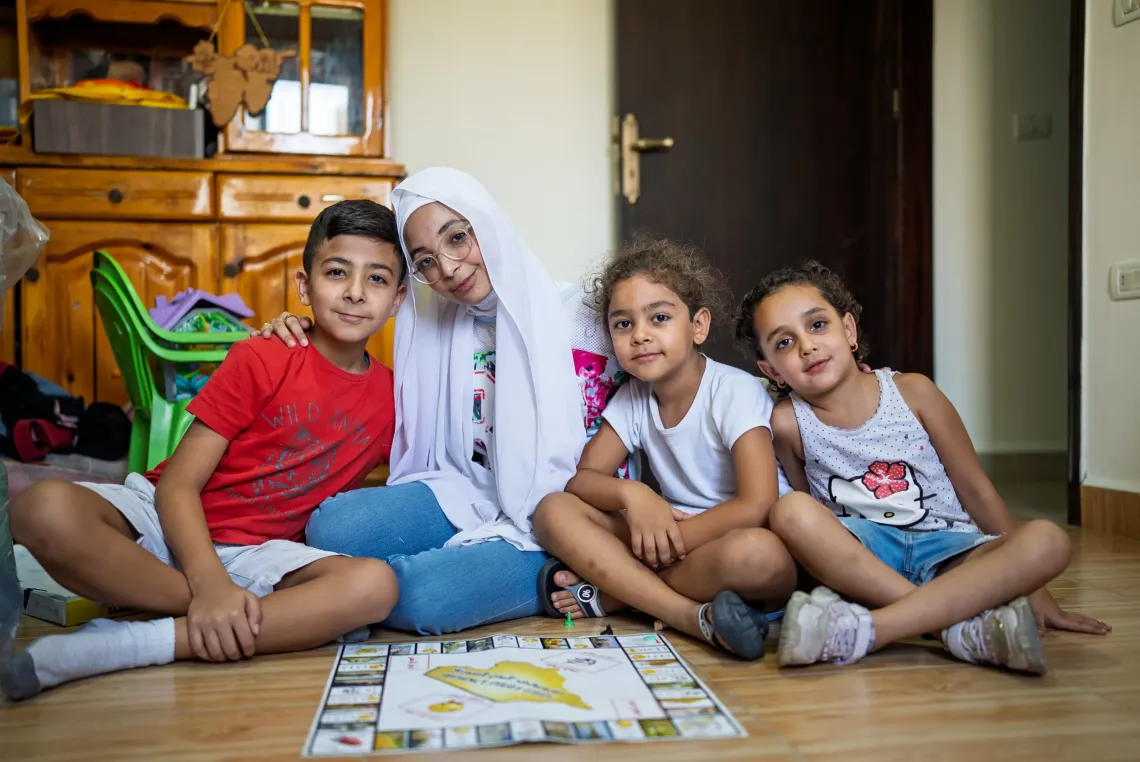
Exacerbating this already dire situation is the lack of a comprehensive, inclusive social protection system. Even before the crisis began in 2019, Lebanon’s social protection system was fragmented and underfunded, leaving the most vulnerable, especially children, without a minimum level of protection.
In addition, access to essential services remains severely disrupted in conflict-affected areas, leaving communities dependent on overstretched humanitarian assistance. The escalating conflict – which started in October 2023 and continued well into 2025, displaced tens of thousands of people, with many families forced to flee repeatedly amid shelling and insecurity.
The conflict, layered on top of the economic and governance crises, has severely strained the fragile public institutions, limiting their capacity to deliver basic services and respond to growing needs.
Lebanon’s children bear the heaviest burden of this compound crisis. Without urgent, sustained investment and action, the future of an entire generation will be in jeopardy.
Solutions
Addressing the devastating impact of the crisis on children and families requires urgent and large-scale economic, fiscal and social reforms. Lebanon needs:
- A credible national budget, with increased allocations for essential social services.
- A shift towards a progressive and equitable tax system that eases the burden on the most vulnerable and enables sustainable investment in children and the services they rely on.
- An immediate and significant scale-up of shock-responsive social assistance to help vulnerable households cope with the compounded effects of displacement, inflation, and service collapse, while laying the groundwork for longer-term economic and social recovery.
- Child benefits, including universal or near-universal child grants, are among the most effective tools for improving child well-being and reducing inequality. These cash transfers should be linked to broader support systems, including healthcare, education and employment services.
- Regular reporting on the drivers, dimensions and trends of child poverty is also necessary to inform policy and raise public awareness.
Our Key Achievements
- UNICEF is working with the Government and the International Labour Organization (ILO) to build inclusive, rights-based social protection systems to progressively realize the right to social protection for all. Main activities include: Development and implementation of the National Social Protection Strategy, which
outlines Lebanon’s long-term vision for social protection. - Design and Implementation of the National Disability Allowance (NDA). Launched in April 2023, the NDA had provided a monthly transfer of US$ 40 to about 34,000 persons with disabilities by mid-2025.
- Joint advocacy with the ILO, which culminated in the Government’s allocation of 450 billion Lebanese pounds (approximately US$ 5 million) in the 2024 budget for key social grant programmes for the first time, and double that amount in 2025.
The support included:
- Delivering emergency social assistance to about 100,000 people during the conflict.
- Integrating cash support into other child protection and disability services.
- Reaching over 130,000 children through the Haddi Child Grant between mid-2021 and February 2023.
- Supporting the Ministry of Social Affairs (MoSA) in designing a National Child Grant as part of Lebanon’s broader social protection strategy.
This includes:
- Collaborating with the Institute of Finance to enhance budget transparency and help promote evidence-based fiscal policy and reform. This partnership led to the development of the Citizen Budget Dashboard and the regular publication of Lebanon’s Citizen Budget.
- Promoting evidence-based policy analysis and advocacy to advance inclusive development and inform Lebanon’s public policy agenda, particularly around social protection, child poverty, inequality and public finance.