

Central Administration of Statistics and UNICEF Launch the 2023 Lebanon Multiple Indicator Cluster Survey (MICS6) Sub - National Results
- English
- العربية
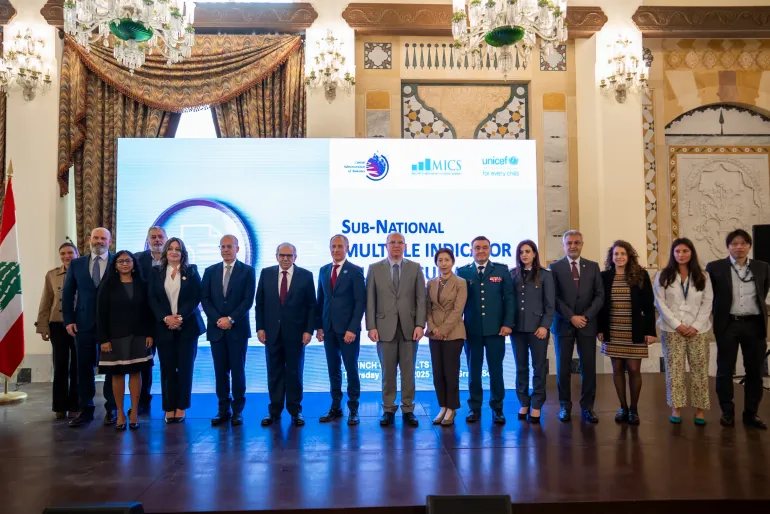
Beirut, 27 November 2025 – The Central Administration of Statistics (CAS), in partnership with UNICEF, launched the subnational results of the 2023 Lebanon Multiple Indicator Cluster Survey (MICS6) during an official ceremony at the Grand Serail, under the patronage of His Excellency the Prime Minister, Mr. Nawaf Salam. This launch crowns an extensive fieldwork operation conducted across five Lebanese governorates: Beirut, Mount Lebanon, North, Akkar, and Bekaa in addition to Palestinian refugee camps and Syrian displacement settlements. Data collection could not be conducted in the governorates of Nabatieh, South, and Baalbek-Hermel due to security reasons. The survey aims to provide reliable data to support evidence-based national policymaking.
Prime Minister Dr. Nawaf Salam said: “It is an honour to join you today for the launch of the results of the Multiple Indicator Cluster Survey (MICS6), which is not merely a report or a set of figures, but a fundamental step towards building a state whose policies are based on evidence and accurate knowledge. The survey highlights both achievements and gaps in the situation of children and women in Lebanon.”
Salam affirmed that responsibility is shared between the state and society saying: “The State must protect, and society must engage in self-reflection, particularly regarding its inherited norms. Despite the challenges, the Central Administration of Statistics has demonstrated its ability to produce reliable and independent data, with appreciated support from UNICEF. Our duty today is to translate the survey’s findings into tangible policies by strengthening child protection across all Lebanese territory; developing health and education services; combating child marriage and child labour; adopting policies that ensure justice for women and guarantee their participation in public decision-making; and firmly confronting all forms of violence and discrimination”. He added.: “This survey is not the end of a journey, but the beginning of a renewed commitment. I say it clearly: Lebanon’s future will not change unless we change the present of its children and empowering women. Today, I pledge that our government will translate the results of this survey into policies that protect children, uphold women’s rights, and rebuild trust between citizens and their state”
In her remarks, Ms. Maria Nalbandian, Acting Director General of CAS, emphasized that the success of this survey would not have been possible without the support of the Presidency of the Council of Ministers and the cooperation of the relevant ministries, in addition to the technical and logistical partnership provided by UNICEF, and the essential role of local authorities and security forces in facilitating fieldwork. She also praised the role of the participating households and the data collection teams for their professionalism in the face of challenges, along with the commitment and hard work of CAS staff.
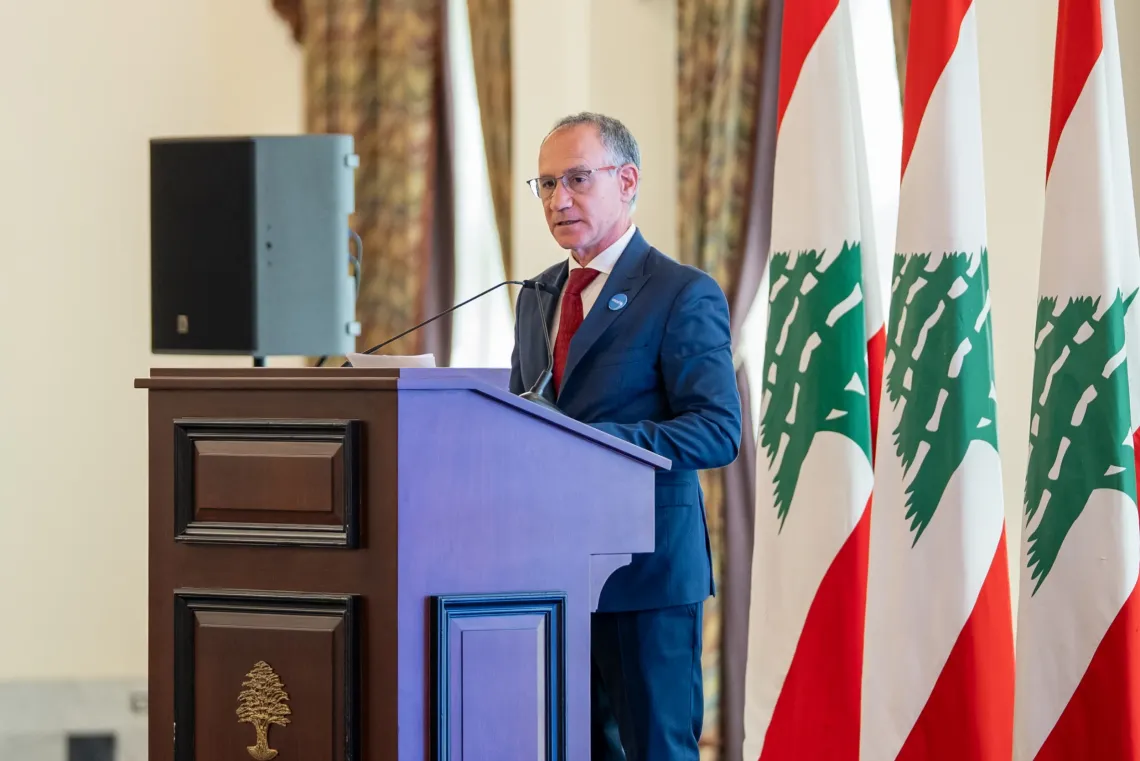
“This MICS has been years in the making. Since its initiation in 2019, Lebanon has endured cascading crises. Yet CAS, with UNICEF’s support, persisted. Questionnaires were redesigned, field plans adapted, enumerators trained, and families across the country opened their doors even when trust was low and daily life difficult” said Marcoluigi Corsi, UNICEF Representative in Lebanon “MICS allows Lebanon to say with confidence: Here is what we know about our children. Here is where progress is happening. And here is where urgent action is needed” he added.
Developed by UNICEF, MICS is a globally recognized household survey programme conducted in more than 120 countries since 1990, it measures the situation of children and women through more than 160 key indicators across critical sectors, including health, education, nutrition, immunization, energy, breastfeeding, child protection, water and sanitation, and social protection.
Key Findings:
- Children and Nutrition: Stunting reached its highest level in Syrian displacement camps (31%) and its lowest in Beirut and the North (9%).
- Health: Skilled health personnel attended more than 95% of births in all regions. Immunization data revealed gaps both across governorates and between governorates and UNRWA services.
- Education: Completion rates declined in Akkar, the North, and Bekaa. Early childhood development indicators recorded their highest levels among Lebanese children in Mount Lebanon (85%).
- Water and Energy: Access to improved drinking water exceeded 90% in most regions, with a decline noted in Akkar (87%). Despite limited hours of electricity supplied through the public grid, overall access to electricity surpassed 98%, prompting widespread reliance on alternative sources.
- Child Labour: The highest child labour was recorded among non-Lebanese children, particularly in Mount Lebanon (36%) and in Syrian displacement camps (23%).
CAS underscores that these results constitute a key tool for informing social and sectoral policies. The full set of tables will be published on its website: www.cas.gov.lb
About UNICEF
UNICEF works in some of the world’s toughest places, to reach the world’s most disadvantaged children. Across 190 countries and territories, we work for every child, everywhere, to build a better world for everyone. For more information about UNICEF and its work for children visit www.unicef.org/lebanon/.
Follow UNICEF Lebanon on Facebook, Twitter, Instagram, LinkedIn, YouTube and TikTok.