

Nutrition and Child Development
UNICEF’s Nutrition and Child Development Programme aims to improve access to healthy diets, nutrition and child development services so that children, adolescents and women can grow and develop to their full potential
- English
- العربية
Challenge
Lebanon’s overlapping crises have severely affected children’s access to nutritious diets, essential services and supportive environments.
Years of unrelenting economic crisis, compounded by a deadly escalation of conflict in 2024, have left many families struggling to give their children the food and nurturing care they need to survive and thrive.
With limited access to the most nourishing foods, and poor dietary and feeding practices, Lebanon faces a triple burden of malnutrition: undernutrition, micronutrient deficiencies and, particularly among adolescents, overnutrition.
Malnutrition can have lifelong consequences for children, impairing their brain development and leaving them vulnerable to diseases.
Solution
Lebanon needs to urgently tackle the complex nutritional challenges that put children and future generations at risk. Significantly reducing malnutrition in all its forms – undernutrition, micronutrient deficiencies, and overweight/obesity – must be a priority. This entails:
- Ensuring that all children and adolescents have healthy, safe, affordable and sustainable diets that support their growth, development and long-term well-being.
- Ensuring that all children have access to high-quality, integrated nutrition and early childhood development (ECD) services.
- Promoting environments that support positive nutrition practices, including infant and young child feeding, responsive caregiving and early stimulation.
This vision is grounded in the Convention on the Rights of the Child and guided by UNICEF’s global strategies and the Lebanon Country Programme Document (2023–2025).
How We Work
UNICEF Lebanon is working to give every child a strong start in life. We support children and families at every stage - during emergencies and in everyday life - by helping them access better food, services, and improving their practices.
UNICEF works to make children’s food healthier and more nutritious. We:
- Support the development of public policies and standards to improve food quality and fortification
- Provide food supplements and therapeutic food for malnourished children
- Create healthier food environments in schools, homes, and communities through evidence generation, advocacy and technical support for the development of policies related to food marketing, labelling, and availability (see more here on the reasons why).
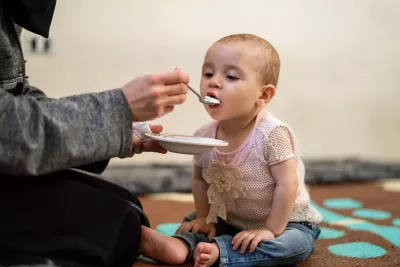
- Promote good feeding practices through education and caregiver support
UNICEF ensures that high-quality nutrition and Early Childhood Development (ECD) services reach all children, especially the most vulnerable. We:
- Coordinate partners to deliver integrated nutrition and ECD services.
- Provide technical assistance to partners, ensuring alignment with global standards.
- Support the government in developing strategies, tools, and action plans.
- Provide essential supplies and train frontline workers across the country.
UNICEF helps caregivers and communities give children the care they need to grow, learn, and thrive. This includes:
- Promoting breastfeeding, healthy feeding, play, and early stimulation
- Supporting the government to develop national training and tools, like the Infant and Young Child Feeding package and the package on ECD and nurturing care.
- Training community actors and frontline workers to promote responsive care
- Working across health, WASH, education, protection, and social services to make sure nurturing care is part of every child’s environment
- Using social and behavior change strategies to help communities adopt positive caregiving and nutrition habits
UNICEF brings everyone together to put children first. We:
- Advocate for more investment in nutrition and child development
- Generate and share evidence to shape better policies and programs
- Lead coordination at national and local levels
- Design innovative solutions
Flagship “RISING”:
Launched in 2023 and adopted as a national programme by the Government of Lebanon in 2024, “Rising” is UNICEF Lebanon’s flagship initiative to combat malnutrition and developmental deprivations in the first years of life .
“RISING” focuses on improving services and practices that support early childhood development. It works through a multi-system approach, engaging the Ministry of Public Health (MoPH), Ministry of Education and Higher Education (MEHE), and other partners to deliver integrated interventions to impact the diets, services and behaviours in the first few years of life to support optimal growth and development of children.
This national programme is delivered through multiple platforms, including primary healthcare centres, multi-service centres (e.g. MAKANI centres), nurseries, as well as home visits, and digital platforms.
Our Key Achievements
UNICEF Lebanon’s Nutrition and Child Development Programme has made significant strides in improving the lives of children, adolescents and women. Through integrated efforts across capacity building, service delivery and systems strengthening.
- Developed 19 digital training modules on ECD, nurturing care and responsive feeding.
- Trained 818 community health workers, daycare workers and ECD frontline staff, providing essential knowledge and skills in nutrition, responsive care and ECD.
- Trained over 1,019 frontline workers on nutrition and ECD in emergencies.
- Supported the development of the national standard operating procedures (SOPs) for quality assurance and control (QA/QC) of salt iodization and trained the relevant staff including Government inspectors and private sector staff to enhance national coverage and quality of iodized salt production.
- Reached 231,725 children and caregivers with integrated ECD counselling and SBC interventions.
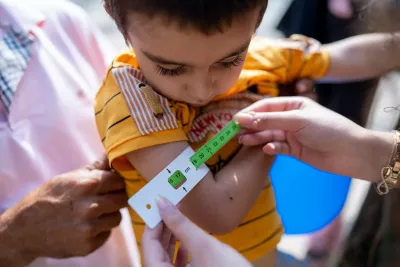
- Screened 425,302 children under five for growth and acute malnutrition.
- Provided 78,976 children under five with essential nutritional supplements to prevent malnutrition.
- Administered Vitamin A supplementation to 129,175 children under five, supporting immune health and development.
- Screened 86,470 pregnant and lactating women (PLW) for malnutrition, and provided 17,737 PLW with micronutrient supplements, supporting fetal and newborn growth and development.
- Enrolled 3,933 children and PLW in treatment for acute malnutrition, including supplementary cash support to facilitate access to services.
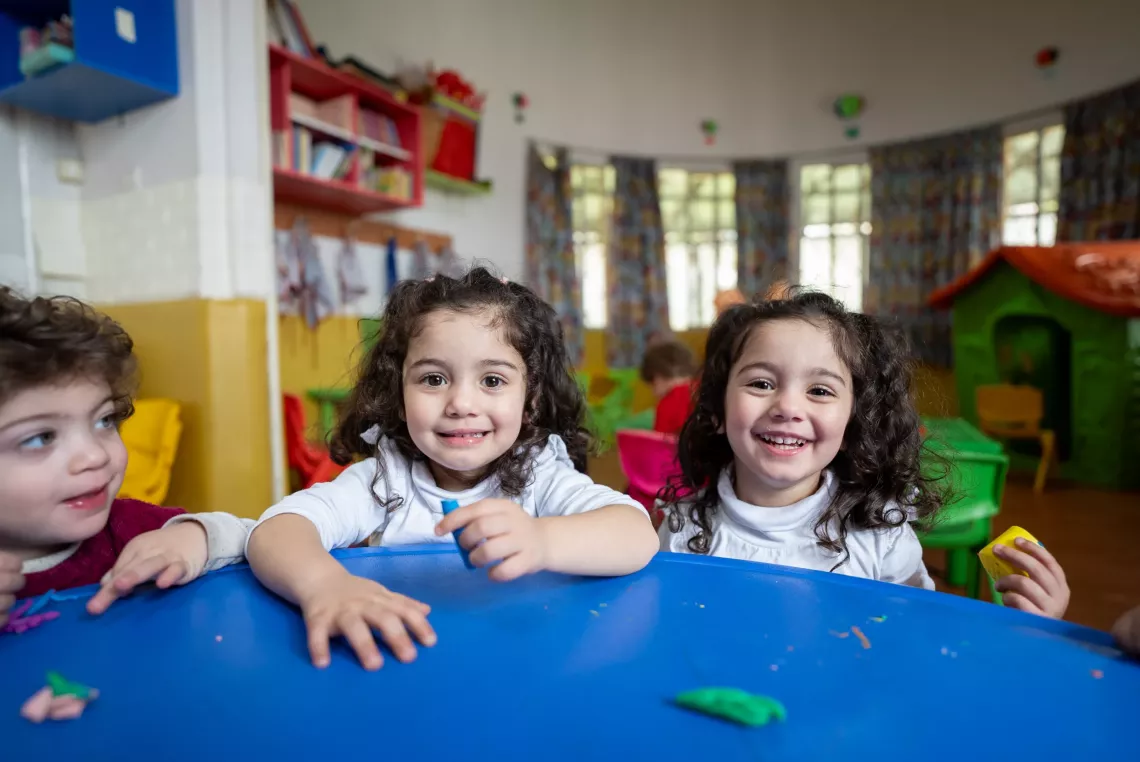
- Supported 149 daycares through the RISING Initiative, equipping them with skills, supplies and integrated packages of nutrition and ECD services.
- Institutionalized home visitation practices by community health workers, centered on nurturing care and ECD.
- Developed a digitalized child development monitoring system.
- Worked on a national assessment to evaluate the availability, pricing, placement and promotion of foods marketed to children.
- Performed a landscape analysis for the Universal Salt Iodization programme in Lebanon, followed by revitalizing the programme in 2024 in collaboration with MoPH, MoET, USAID and the Iodine Global Network.
- Worked on Lebanon’s first-ever Integrated Micronutrient and Child Development Survey, in partnership with MoPH, Harvard University, Groundwork, and other nutrition partners.
- Supported the launch of Lebanon's first Child Safeguarding Policy for Private Daycares, in collaboration with MoPH and American University of Beirut.
- Updated national guidelines for the prevention and management of wasting, enhancing emergency preparedness and service quality.
- Integrated essential nutrition and ECD interventions into mobile health teams and partner platforms during the escalation of hostilities in 2024.
- Reached 36,402 children and women with acute malnutrition screening and nutrition supplements, including ready-to-use complementary food jars for infants.
- Provided counselling to 68,599 caregivers on breastfeeding, infant and young child feeding, ECD and responsive care.
- Established 85 static and mobile ECD corners within community centers and platforms, expanding access to developmental support.