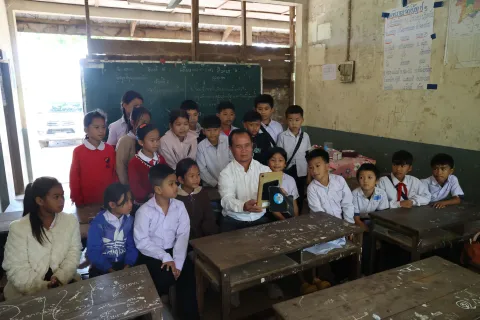
Pave the Way for a Digital Future in Lao PDR's Education Sector.
UNICEF and Lao Government Pave the Way for a Digital Future in Lao PDR's Education Sector.

The Lao PDR education sector is on the cusp of a transformative shift as the Ministry of Education and Sports (MoES), in partnership with UNICEF and the European Union, advances its ambitious 10-year ICT in Education Strategy. With the recent approval from the Minister of Education, this strategy sets a visionary path to integrate technology across teaching and learning environments nationwide.
The initiative aims to empower students and educators with digital tools and skills, ultimately enhancing learning outcomes and skills development crucial for both work and life. The strategy also emphasizes strengthening education data management systems to support data-driven, evidence-based policymaking and practices.
This strategic alignment with the National Digital Economy Strategy (2021-2030) and the National Digital Economy Development Plan (2021-2025) underscores Lao PDR’s commitment to building an inclusive digital society. Furthermore, this strategy will inform the upcoming 10th Education and Sports Sector Development Plan (ESSDP) for 2026-2030.

UNICEF has played a pivotal role, not only in crafting this forward-looking strategy but also in ensuring it remains adaptable to the unique needs of Lao PDR’s education system. Key pillars supporting this digital transformation include digital access, digital skills, digital learning, digital information, and online safety.
Together, these pillars form a comprehensive framework to address current gaps while preparing young learners for the demands of the digital age. With a strong focus on inclusivity and equity, the strategy is designed to reach the most marginalized and underserved populations, including remote and rural communities where educational resources have historically been limited.
Building a Path to Digital Inclusion
The 10-year ICT in Education Strategy acknowledges that true digital transformation in education requires more than just technology; it involves building a foundation of digital skills that enable students and educators to thrive in a rapidly evolving global landscape. To this end, the strategy includes initiatives to strengthen digital skills and capacity-building for students, teachers, and education officials, ensuring all participants are equipped to navigate and leverage digital tools effectively. Engaging and empowering parents is also critical in supporting these efforts.

Digital learning initiatives within the strategy focus on providing high-quality, accessible educational content in both digital and offline formats. This approach is particularly significant in remote areas where internet connectivity remains a challenge. By promoting hybrid learning models, the strategy seeks to bridge the gap between urban and rural learners, enabling all children and adolescents to benefit from enhanced learning resources, regardless of their location. This commitment to equitable access reflects the shared dedication of MoES, UNICEF, and the European Union to ensure that no one is left behind.
Ensuring Safe Online Environments

A core component of the strategy is its focus on digital information and online safety. In a world where children increasingly engage with online content, safeguarding their safety and privacy is paramount. UNICEF has been instrumental in advocating for children’s rights in digital spaces, and the ICT in Education Strategy aligns with UNICEF’s global standards on child protection and online safety. The strategy addresses the need for secure digital platforms and establishes guidelines to protect young users from potential risks, including cyberbullying and data breaches. By fostering a safe and supportive digital environment, MoES aims to empower students to explore online resources with confidence, knowing their well-being is protected.
Operationalizing the Vision
While the 10-year strategy outlines a broad vision, the next step is to translate this into actionable goals through a detailed, costed 5-year action plan. UNICEF, working closely with MoES, is leading the development of this plan to ensure each component of the strategy has a clear pathway to implementation. This action plan will include funding mechanisms, resource allocation, and measurable targets, providing a structured approach to realizing the strategy’s objectives.

The costed action plan will focus on critical areas, such as procuring digital devices, training teachers, and creating culturally relevant digital content. UNICEF’s extensive experience in education and digital transformation across countries uniquely positions it to support MoES through this phase, offering technical expertise and strategic insights. This systematic approach ensures that resources are used effectively and sets benchmarks for evaluating progress, which is essential for lasting impact.
A Legacy of Digital Transformation in Lao PDR
The launch of the ICT in Education Strategy marks a pivotal moment for education in Lao PDR. Through its dedicated support, UNICEF is working alongside MoES to lay the foundation for a digital education system that will serve future generations. The strategy not only aligns with national development goals but also supports Lao PDR’s aspirations within the broader digital economy framework. By empowering students with digital skills, enhancing learning environments for teachers, and prioritizing online safety, this collaboration is paving the way for a digitally inclusive future.

In the years ahead, the continued partnership between UNICEF and MoES will be essential to fully realize this vision. Together, they are building a brighter future where every child in Lao PDR has the opportunity to learn, grow, and succeed in a connected world.