‘‘We’re safe, but scared.”
Guatemalan youth use U-Report to stay safe and share their stories.

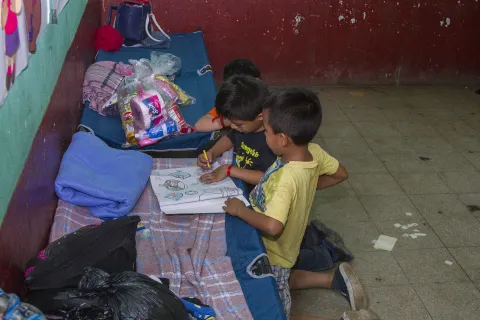
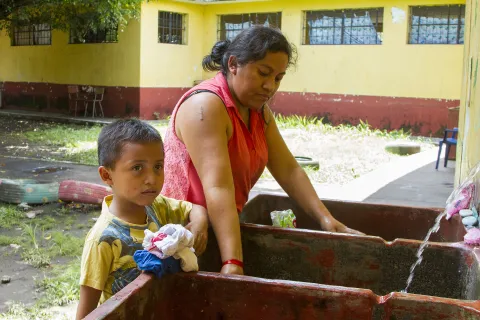
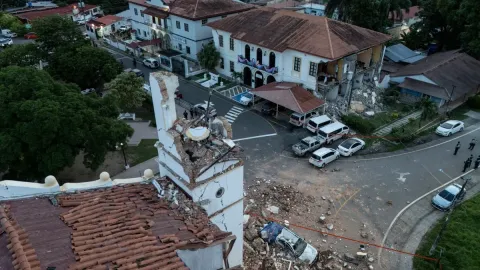
On 3 June 2018, the Fuego volcano erupted leaving a devastating scenario in three departments of Guatemala: Escuintla, Sacatepéquez and Chimaltenango. Over 1.7 million people living in the affected area – including more than 663,000 children, have been affected. Thousands have been evacuated, leaving behind their houses and belongings.
U-Reporters in Guatemala have been sharing their first-hand experience of volcano Fuego’s eruption on 3 June, 2018. U-Reporters across the three affected districts of Escuintla, Sacatepéquez and Chimaltenango sent messages and pictures of what was happening around them to UNICEF, via their mobile phones. UNICEF has been sharing life-saving information with U-Reporters across the whole country, as well as promoting its advice to hundreds more via Facebook.
“I live in the northern department of Escuintla which is just 10 kilometers from the lahars. My town is full of shelters and everything has come to a standstill. There’s a constant sound of ambulances arriving with rescued people,” writes one U-Reporter, aged 20, 5th June. Another U-Reporter told us, “the houses are all covered in sand, everyone is scared, it shook so much.”
U-Report is a platform that UNICEF and partners use to bring about social change and give a voice to young people. We use it to ask youth and adolescents their opinions which we share with partners, and to provide information and support to young people all over the world. And, when something like a volcano erupts, we can use it to send potentially life-saving information, and hear first-hand from U-Reporters what is happening on the ground.
“We’re all scared… that what could come next is worse,” says an 18-year old U-Reporter from Sacatepéquez. Another said “I’m scared I might die.”
Over 20% of U-Reporters reported ash and sand in their communities, and over 56% told us that they don’t have access to masks to protect themselves from the ash. Many told us that they were safe, but wanted information on how to help others in their country. UNICEF, in partnership with CONRED (the National Coordination for Disaster Reduction of Guatemala), therefore developed a U-Report Bot (an interactive chat app on Facebook Messenger) to provide helpful advice for all U-Reporters including stay safe messages, such as how to deal with ash(. They also sent U-Reporters who wanted it information on how to volunteer and where and how to donate useful items.
‘I moved district earlier this year, so the eruption hasn’t affected me directly, but we’re trying to collect belongings to send to those who need them,’ writes a U-Reporter outside of the affected area.
Learning from experience during hurricane season 2017, UNICEF and partners CONRED wanted to make sure that people who aren’t currently U-Reporters could also access the advice. UNICEF therefore launched a series of adverts on Facebook where with just one click, individuals are able to access U-Report and the advice. 1000 additional people have accessed this information to date via the newly-created U-Report Bot.
‘Thank you so much for such useful information’ replies a 20-year old U-Reporter from Quetzaltenango. ‘I was interested because I want to share what you’ve sent to me with other people, thank you,’ says another.
UNICEF will continue to use U-Report via Facebook and WhatsApp as a tool to communicate with, and provide support to, those affected by the volcanic eruption as well as getting feedback from affected communities on their needs. U-Report will also be used to support volunteers, providing them with information and advice.
* Mariana Desiree Cordon Castaneda, Social Community Manager, UNICEF Guatemala and Vicky Maskell, Innovation in Public Health Emergencies, UNICEF Latin America and Caribbean.
For more information:
U-Report Guatemala
Situation Report