How Omaira is knitting for peace
#WomenHumanitarians

- Español
- English
Cúcuta, Colombia - When she was a little girl, a teacher once told her that one day she would become a great leader. She didn’t want to pay attention to the comment, but Omaira Bastos has, indeed, become already a reference for the integration of Venezuelan migrant children and of those settling in Cúcuta, the major Colombian city bordering Venezuela.
Omaira knows better than anyone the troubles of migration. Born Colombian, she crossed the border with her family when she was little. In Venezuela, she lived without any type of documents practically all her adolescence and youth. She and her family, especially her father, were recognized as victims of the internal Colombian conflict and they decided to return in 2014 to their country to rebuild their lives. The family settled in a small community on the outskirts of Cúcuta. Slowly, the village started growing in population, first with the Colombians returnees, and afterwards, with the Venezuelan migrants.
“When I arrived in the community there was already the need to create an association of victims of the conflict. We wanted to help and, above all, to guide them to access their rights”, recalls Omaira. “The people began to call me then ‘Lawyer of the poor’,” she adds.
Omaira was trained on human rights and gender approach by the United Nations and the Ombudsman of the Government of Colombia. “With this training, my leadership was born,” reminds this young woman, who was not able to sit idly just looking at the situation when the deportees started to arrive. She, then, became a UN volunteer: “It is touching to see that type of things. It affects you deeply. You always think it could have been you.”
The complex context in which Omaira was working, in a vulnerable community, with almost no services and increasing population, became more complicated through the years. The Venezuelan exodus began. “The migrants arrived here. They needed us ... and here we are”, explains Omaira, who says she feels “happy to do what I like and help those who need it”.

Omaira got more involved with the community. “These people have been hardly affected, but I know how to help them. I realize that people's rights are constantly being violated. If they do it with people who know their rights, what will they do with those who do not know them?” she reflects.
UNICEF Colombia identified Omaira and did not hesitate to support her and her work. Now, the Fund supports her in the promotion of the rights of children and adolescents. This is how the ‘Knitters of Peace’ project began, a workshop where children learn to knit but where, essentially, they can sit quietly, in the safety of a friendly space, open up and talk about their experiences and problems. Omaira, along with staff of the United Nations Children's Fund, provides free of charge materials and psychosocial support to children while doing embroidery, and promotes values of peace and friendship. They also receive snacks.
“Children are a base that can be molded, they can learn whatever they want, they have no limits or barriers and, if we help them, they achieve everything they want,” she says.
But not everything is simple. UNICEF also supports Omaira psychosocially, so she can continue to develop her work. “Sometimes I feel very affected by the stories of the people who arrive. It's terrible,” she explains. “Knowing that a 14-year-old girl gets pregnant because she did not have the means to protect herself or because someone took advantage of her vulnerability, touches you.”
Despite everything, Omaira does not lose her smile and all the children of the community love her and respect her, as they do with their own mothers. By the way, many of them also attend the knitting courses and have found an income as they sell their handcrafted products, created together with this 37-year-old UNICEF volunteer.
Omaira is an example of resilience, leadership and generosity, as well as a pride for UNICEF. A person who, “without wanting to,” does not hesitate to “be there for the children”.
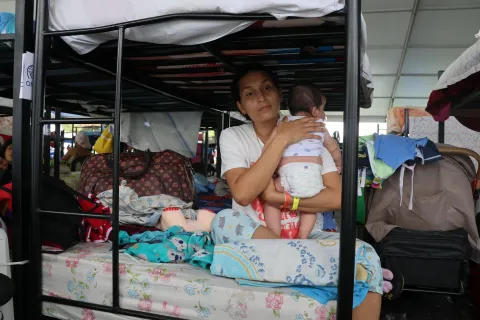
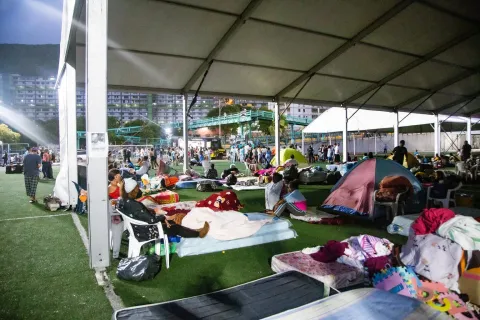
Currently, in Colombia, it is estimated that more than 300,000 Venezuelan migrant children and from the host communities need humanitarian support.