Climate, poverty and children: Latin America on alert
The impact of climate change on child and youth poverty in Latin America

- Español
- English
Children, adolescents and youth in Latin America are facing a crisis that is not only changing their lives now, but also threatens their opportunities in the future.
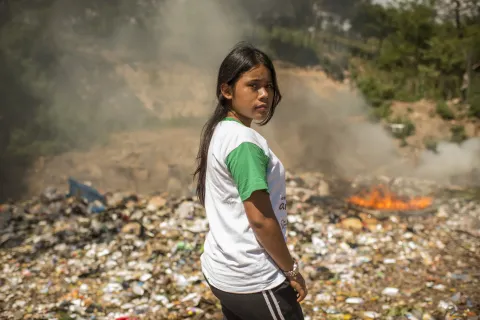
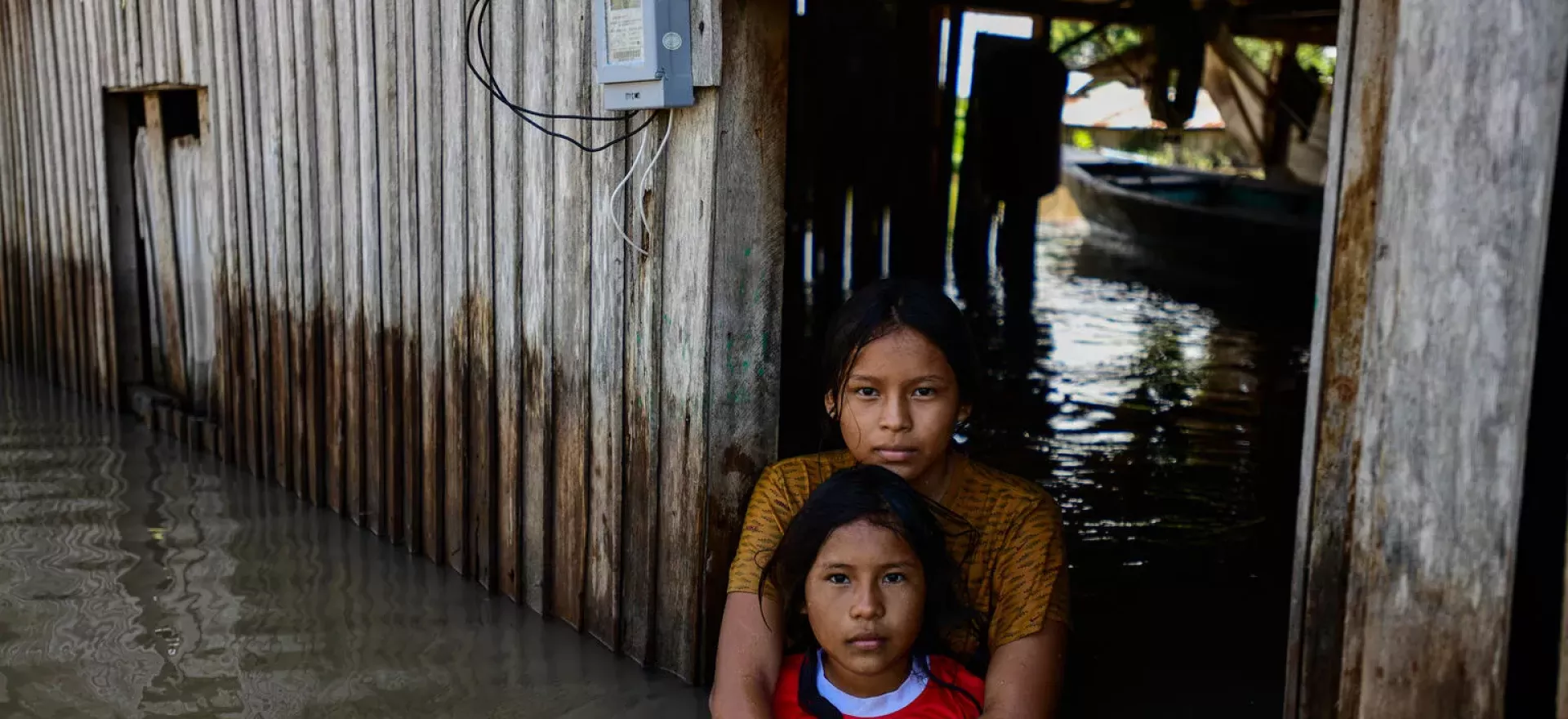
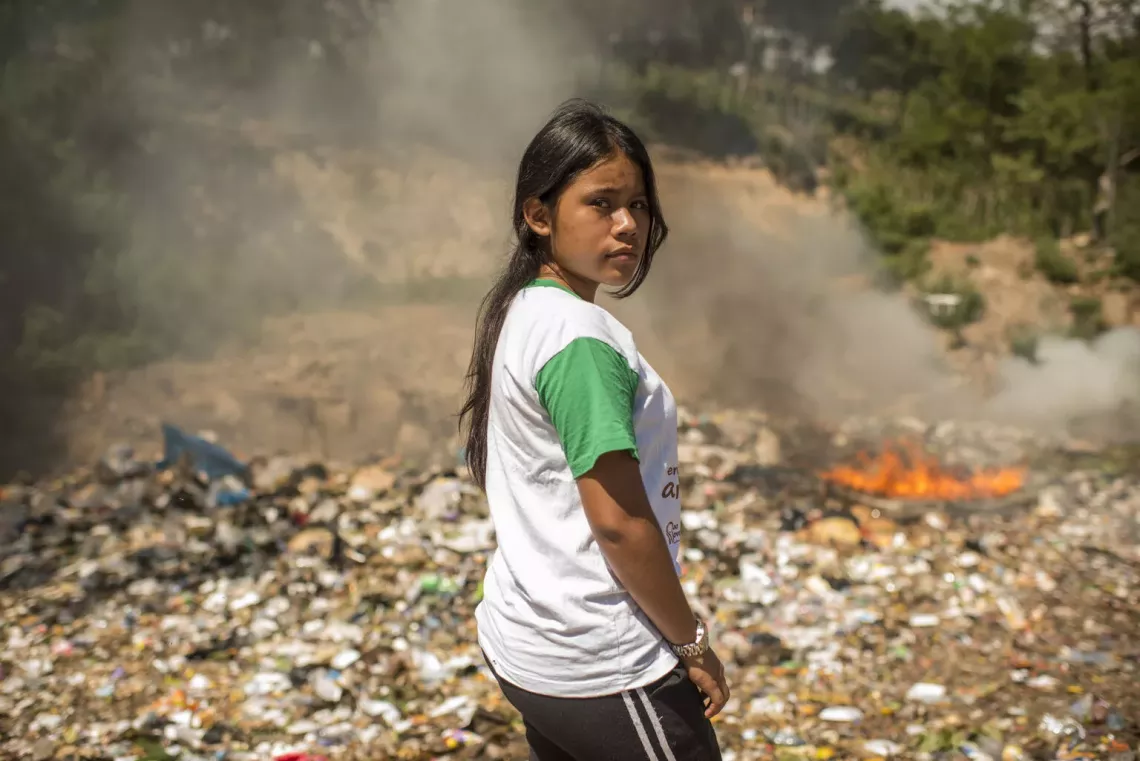
Climate change affects children, adolescents and youth disproportionately, both physically and mentally. It also reduces access to the services they need to survive and develop fully.
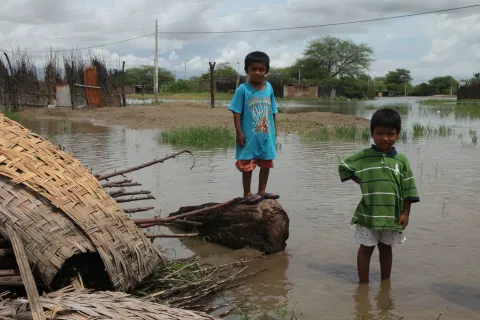
Extreme weather conditions, such as floods, droughts, storms and heatwaves, are exacerbating gaps in health, education, nutrition and social protection.
Based on poverty data from 18 countries in the region, the Economic Commission for Latin America and the Caribbean (ECLAC) and UNICEF estimated the impact of climate change on increases in child and youth poverty in Latin America by 2030.
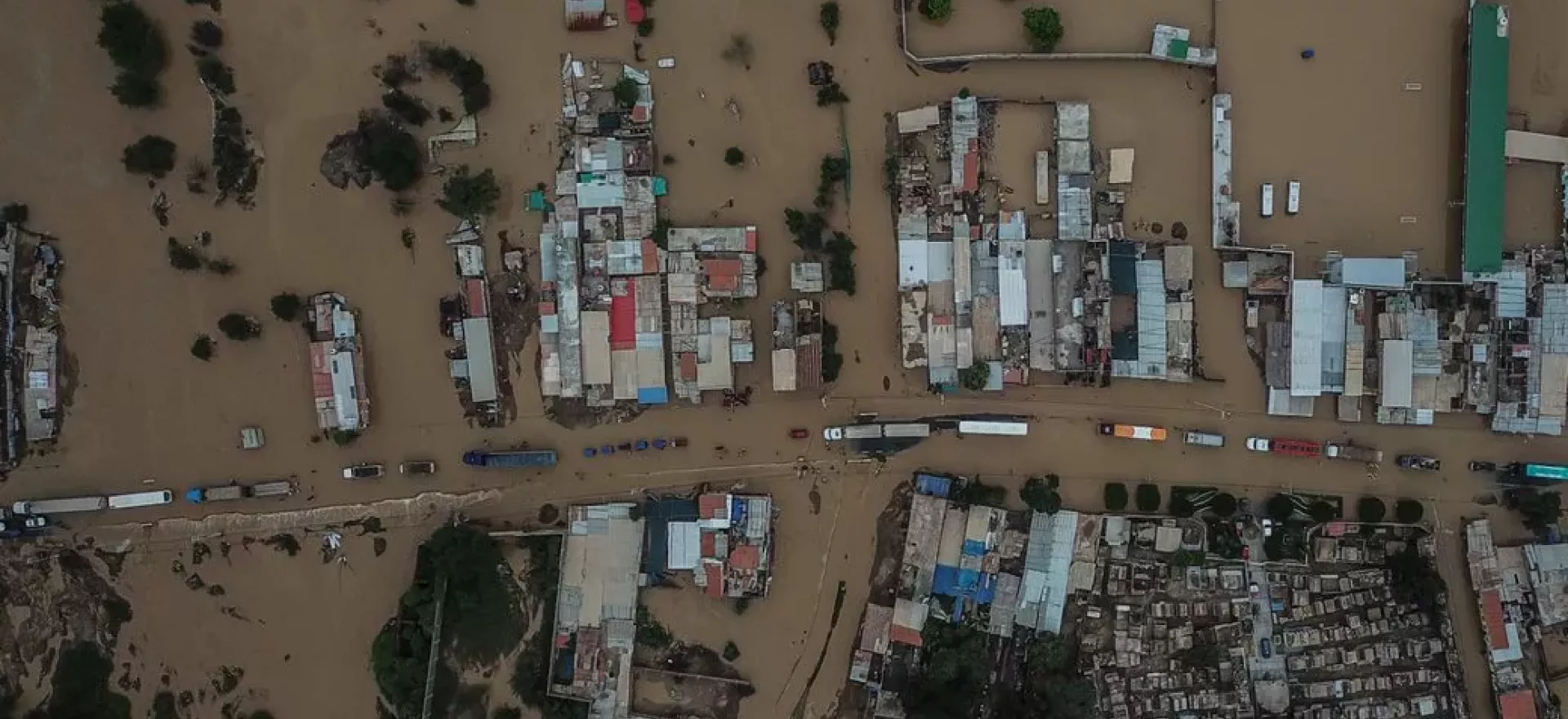
UNICEF Perú/2023/Mejía
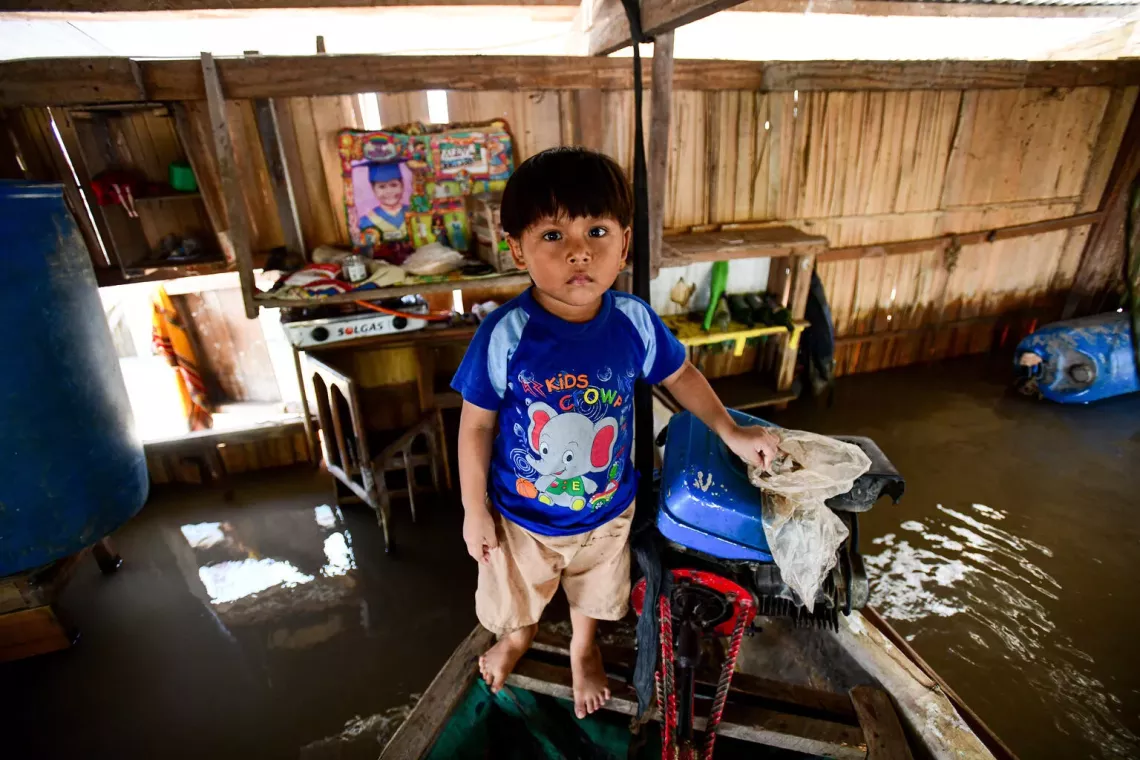
UNICEF/UNI770689/Romani
Children are especially vulnerable to the climate crisis, and their future is at risk. This is not fair. They are not responsible for the crisis, but they are paying the highest price for it.
Three scenarios for children
The report by ECLAC and UNICEF explores three scenarios.
The total extent of any increase in poverty caused by climate change depends on the climate scenario towards which the planet is heading, as well as on the public policies implemented by the region's countries.
It is more urgent than ever to make decisions and implement them.
Scenario 1 | Scenario 2 | Scenario 3 |
Countries implement greenhouse gas (GHG) emission reduction policies and actions that are more ambitious and stringent than those to which they have currently committed.
| This scenario maps out a global emissions pathway aligned with the policies implemented by countries as part of their nationally determined contributions (NDCs), which are the commitments each country has made to reduce GHG emissions.
| Countries do not meet their commitments to reduce greenhouse gas emissions (as outlined in their NDCs) and climate finance does not prioritize social and climate resilience services for children.
|
Child and youth poverty could increase in5.9 million. | Child and youth poverty could increase in9.9 million. | Child and youth poverty could increase in17.9 million. |
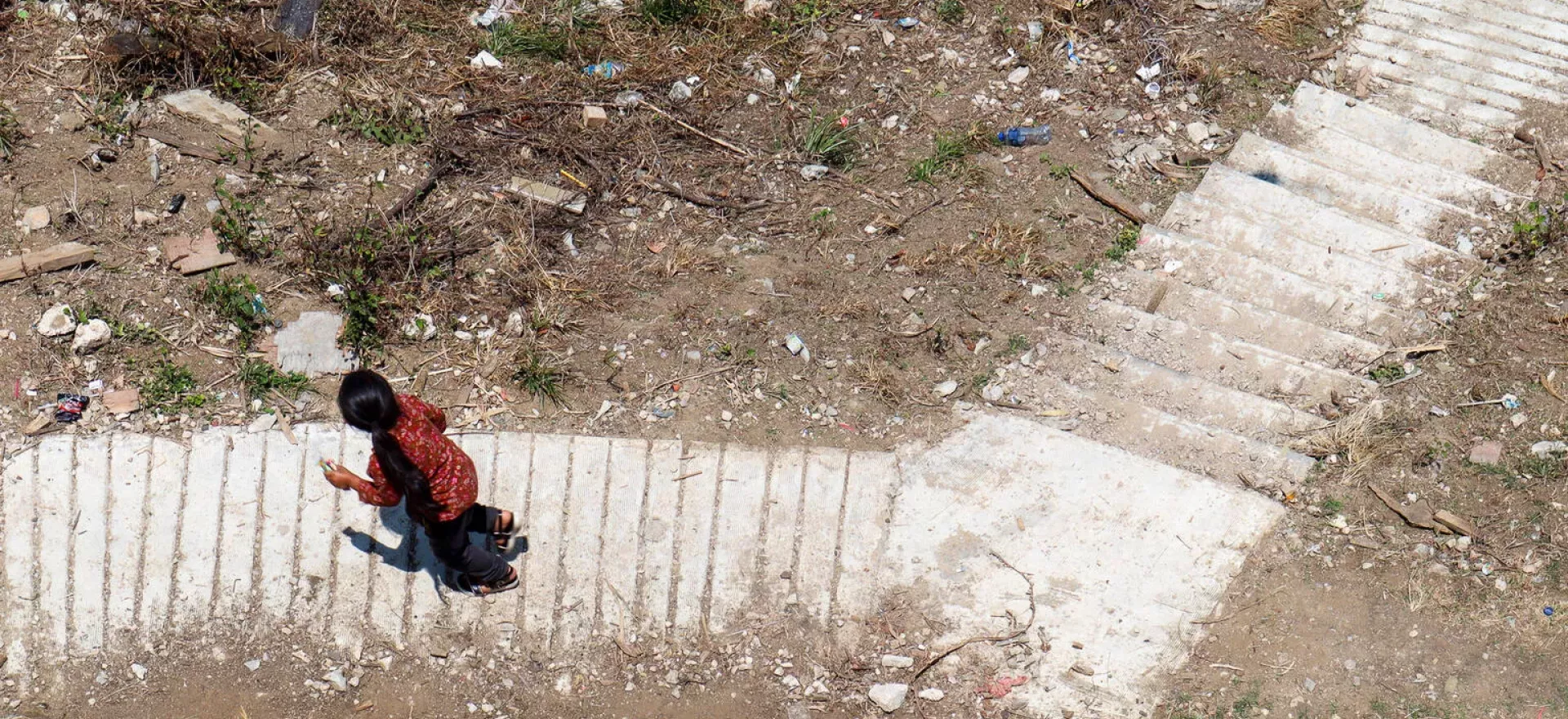
UNICEF/UNI778712/Retamoza
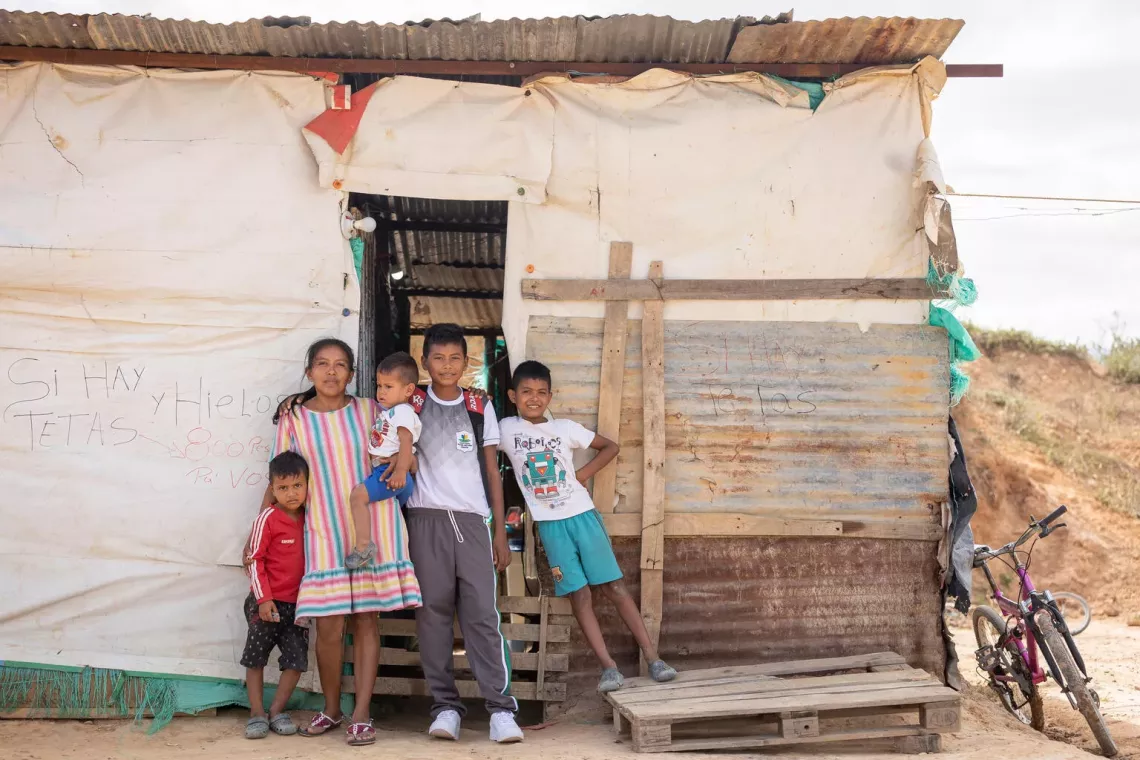
UNICEF/UNI463295/Estrada
Even in the most optimistic scenario, climate change will push an additional 5.9 million children, adolescents and youth into poverty.
Climate finance for children
One out of every two people living in poverty in Latin America is a child, adolescent or youth. This equals
94 million children, adolescents and youth
But this number could grow much larger due to climate change and lack of action to address its effects.
Now more than ever, we must invest in responses that account for the specific needs of children and adolescents.
Climate finance that directly benefits children in Latin America is woefully inadequate: only 3.4% of total multilateral climate finance is dedicated to children and adolescents.
Announcements of cuts in international aid have come at a time of unprecedented need. Millions of children and adolescents need support to mitigate the impact of climate events on their lives and rights.
UNICEF/UNI770750/Romani
UNICEF/UN0364264/Volpe
'Too little, too late' is the least favourable scenario in terms of increases in child poverty due to climate change. Decision-making, policies and funding can help the region prevent major consequences for children, adolescents and youth.
Policy recommendations
Faced with these challenges, ECLAC and UNICEF recommend that Latin American governments take action to promote climate policies and those that protect children and young people, including:
- strengthening the climate resilience of social services and critical infrastructure to better protect children, adolescents and youth, with a particular focus on the first 1,000 days of life
- increasing child-sensitive climate finance, with actions that specifically target the needs of children at different ages
- promoting greater climate awareness, education and empowerment of children, adolescents and youth and their meaningful participation, as well as the inclusion of environmental and climate education in school curricula and educational programmes and
- promoting adaptive social protection and emergency response policies that account for the specific needs of children and adolescents.
Find out more about the analysis, projections and recommendations in the report.
Highlights
This study presents data from 18 Latin American countries, based on which ECLAC estimates poverty figures at the regional level. The population of these countries represents approximately 95 per cent of the total population of ECLAC's 33 Member States.
The study quantified the impacts of extreme climate events (droughts, floods, tropical cyclones and heatwaves) in three climate scenarios, taking into account future global greenhouse gas (GHG) emissions trajectories. These scenarios consider three levels of effort by countries to reduce GHGs, as well as mitigation, adaptation and loss and damage reduction commitments.