

Breastfeeding in the workplace
Progress and challenges in Latin America and the Caribbean
- Español
- English
Breastfeeding is key to ensuring the health and development of children and has lifelong benefits. Moreover, every dollar invested in promoting and supporting breastfeeding generates an estimated $35 in long-term economic returns.
However, in Latin America and the Caribbean, mothers still don’t get the support they need in the workplace to breastfeed.
It’s one of the reasons why only 43 per cent of babies under six months of age in the region are exclusively breastfed, below the global average of 48 per cent. And just 48 per cent of children between 12 and 23 months in the region receive continued breastfeeding, falling well short of the global average of 65 per cent.
What does the data say?
A survey of 305 companies in Latin America and the Caribbean, conducted by UNICEF and Deloitte in 2022, found that:
Among large companies (a third of the companies surveyed):
- 70% focus on promoting breastfeeding through flexible breaks and reduced working hours for mothers.
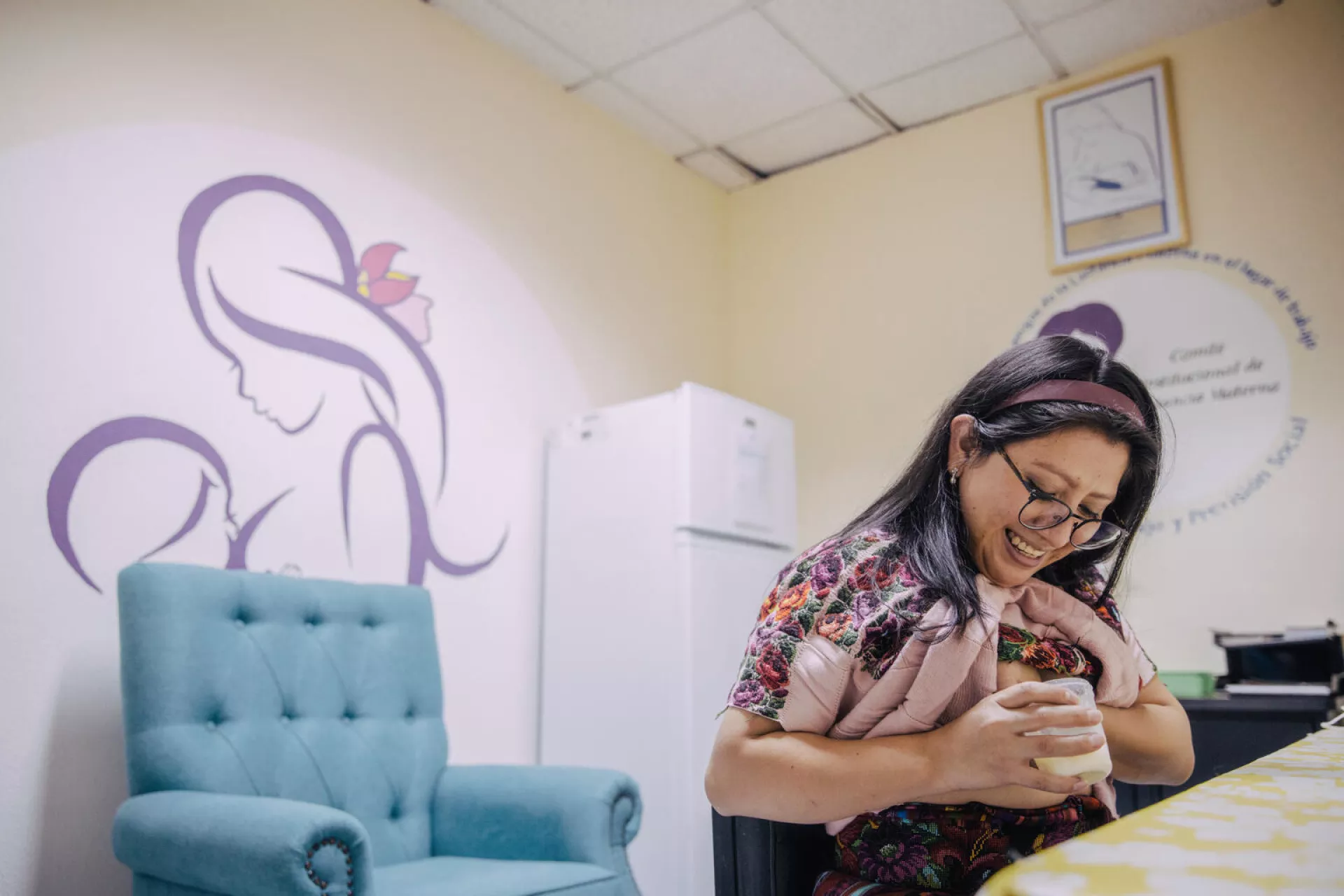
- 68% have breastfeeding rooms.
- 39% have non-discrimination policies for working mothers who are breastfeeding.
- 29% offer awareness-raising sessions on the importance of breastfeeding.
- On average, they offer 13.6 weeks of paid maternity leave and 11 days of paternity leave to full-time workers.
Among small and medium-sized companies (two thirds of the companies surveyed):
- 29% have breastfeeding rooms.
- 52% offer reduced working hours with the same salary so that mothers and fathers can take care of their children.
- On average, they offer 13 weeks of paid maternity leave and 9 days of paternity leave to full-time workers.
The average amounts of paid maternity leave recorded in the UNICEF and Deloitte survey show a reality still far from the international recommendations of up to 6 months leave after childbirth.
What we do in the region
UNICEF advocates with governments, companies and unions in Latin America and the Caribbean to promote breastfeeding in the workplace.
UNICEF organizes events, webinars and training aimed at raising awareness and educating on the importance of breastfeeding and the support needed for mothers, fathers and caregivers. UNICEF has also provided technical support to facilitate the installation of breastfeeding rooms in workplaces.
Explore what countries in the region have done:
Paises
With the "Companies that Protect" initiative in Bolivia, UNICEF scaled up the care agenda, including breastfeeding, by collaborating with 38 companies. Through the initiative's digital platform, companies can access tools, guides and resources on breastfeeding, parenting and mental health.
In Colombia, UNICEF partnered with Banco de Bogotá on the "First Steps" programme to promote breastfeeding and healthy family environments. This initiative became a good business practice and a reference for other companies. A guideline on breastfeeding in workplaces was also developed.
In El Salvador, UNICEF supported the national government in developing regulations on breastfeeding rooms in the workplace and guided the business sector on the requirements for their implementation.
In Guatemala, UNICEF promotes the Strategy for Midwives to Promote Breastfeeding with the Ministry of Health, which has graduated more than 3,200 midwives as breastfeeding promoters. As part of the Breastfeeding-Friendly Health Services Initiative, a course for health personnel was launched, also 16 hospitals and 22 health services have been certified by the Ministry of Health. With the Ministry of Labor, the Breastfeeding-Friendly Spaces Initiative was relaunched, which includes a course on breastfeeding in the workplace, to provide accompaniment and technical assistance, and after which more than 20 spaces from various organizations have been recognized.
In Mexico, UNICEF worked with the Ministry of Labour and the private sector to produce a national guide and online courses on breastfeeding in the workplace. UNICEF also supported the development of a new regulation that promotes teleworking for pregnant and breastfeeding women, as well as a certificate for breastfeeding-friendly companies. These initiatives included business forums to raise awareness of the importance of breastfeeding in the workplace.
In Paraguay, UNICEF has trained 81 companies in the management and installation of breastfeeding rooms, as part of an ongoing awareness-raising and advocacy effort to improve family-friendly practices.
In the Dominican Republic, the "Dad all the time" campaign, developed by UNICEF in collaboration with the corporate sector, helped to improve breastfeeding and positive parenting rates in the country.
In Uruguay, UNICEF has developed a series of research studies on family-friendly policies and the implementation of breastfeeding rooms in the workplace, as well as a guideline, to contribute to advocacy on these issues within the business sector.
Renewing Commitments
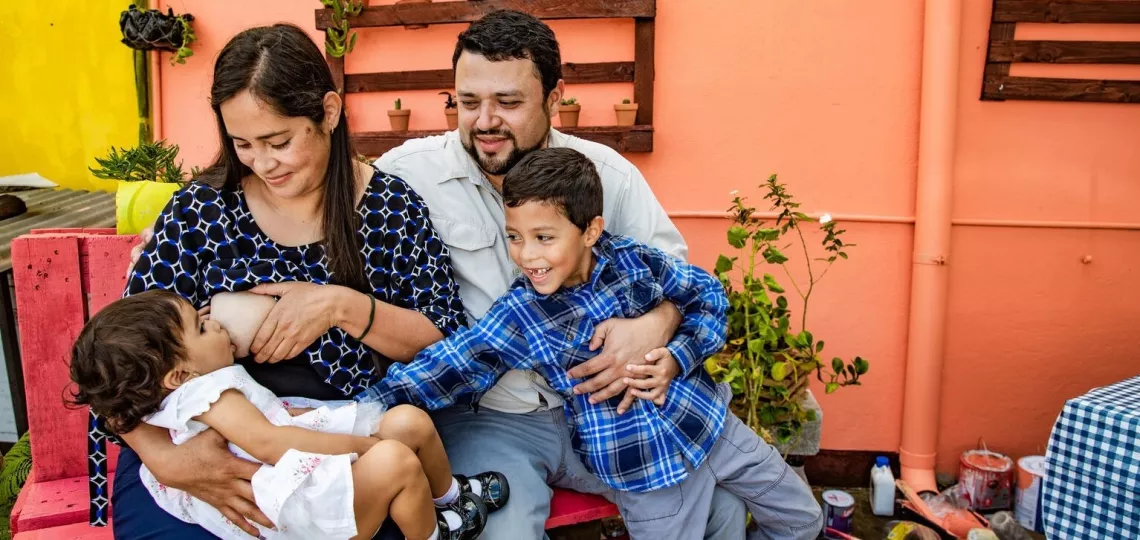
Despite all these efforts made, the region is lagging behind on exclusive and continued breastfeeding. We must renew our joint commitments to ensure that mothers have the support they need in the workplace to breastfeed.
To achieve this, it’s essential to continue to expand the implementation of family-friendly policies and concrete actions that make breastfeeding compatible with work.
UNICEF's call to action
UNICEF calls on governments, public institutions and the private sector to:
Provide parents sufficient paid parental leave to take care of their children.
This includes:
- Ensuring paid maternity leave to provide adequate protection for breastfeeding for a minimum of 18 weeks, and preferably six months after childbirth.
- Extending paid paternity leave to promote protective breastfeeding environments.
Ensure a supportive breastfeeding environment for all mothers in paid work, including those in the informal sector or on temporary contracts.
This includes:
- Providing regular breastfeeding breaks during working hours.
- Having adequate facilities to enable mothers to continue breastfeeding.
- Flexible return-to-work options.
Increase investment in policies and programmes to support breastfeeding in all settings, including the health sector, and especially in contexts of crisis and food insecurity.