

Gender equality
Improving lives for children means creating equal opportunities for boys, girls and women
The challenge
Gender disparities often start subtly in early childhood, with boys and girls having equal access to crucial services like immunization and preschool education. During this stage, girls are generally as developmentally on track as boys, sometimes even slightly more so. However, as children transition into adolescence, gender norms and expectations begin to diverge significantly, restricting their life and educational choices, and exposing girls to harmful practices that can have lasting consequences on their physical and mental health.
Adolescent girls face a variety of challenges more severely than their male peers. They are often burdened with more domestic responsibilities, face higher risks of child and forced marriage, and are more vulnerable to gender-based violence.
Twelve per cent of women in Kyrgyzstan aged 20-49 years have married before the age of 18, and this proportion is significantly higher in some marginalized communities (MICS 2023).
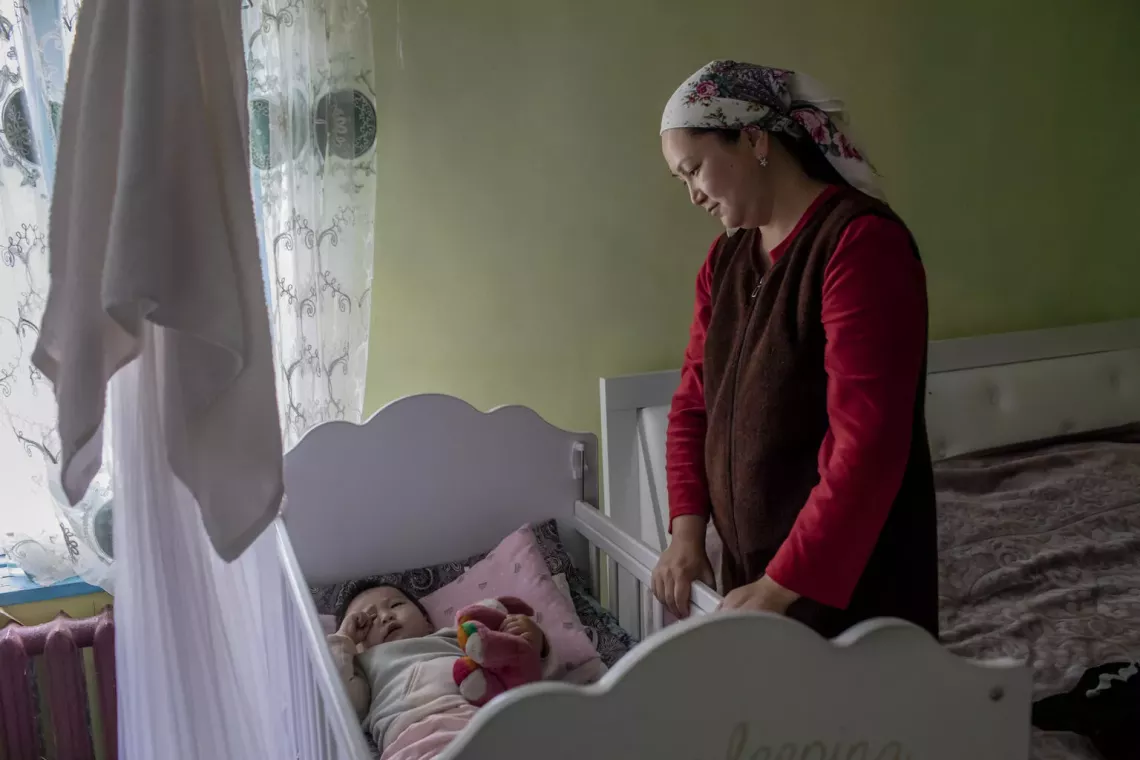
Anaemia also places young women at increased risk of maternal mortality and places their children at excess risk of mortality. Rates of anaemia among older adolescent girls (15-19 years) are high, at 31 per cent (NIMAS). These issues are compounded for girls who experience early marriage or pregnancies, which contribute to high rates of maternal mortality and disability. Girls are also disproportionately affected by sexual violence.
Educational inequalities widen as girls grow older, with fewer opportunities and support to pursue studies in subjects like science and mathematics.
The choice of subjects is also heavily affected by normative gender perceptions, with many female students opting for non-STEM (science, technology, engineering and mathematics) subjects, including education, health and services. As a result, twice as many girls as boys are out of education, training or work by late adolescence.
The denial of basic rights and opportunities to girls has long-term consequences, perpetuating poverty and limiting prospects for future generations. Furthermore, gender norms harm boys as well, leading to issues like child labour and recruitment into violent groups, showing that gender inequality negatively affects all members of society.
The solution
Reducing gender inequality is key to strengthening economies and building resilient societies where everyone has the opportunity to succeed. UNICEF Kyrgyzstan works with the government, civil society, academia and other partners to accelerate gender equality through all its initiatives.
This includes working with the national health system to improve maternal care, equipping primary health-care professionals with knowledge and tools to identify gender-based violence and refer the survivors for services, identifying and addressing gender-related barriers to immunization services.
UNICEF also collaborates with the education sector to ensure that both girls and boys excel in school and find pathways to meaningful employment. We support the integration of gender equality principles in the state education standards, in-service teacher training, and textbooks for pre-school and school education. STEM4Girls is an example of gender-transformative approach to empowering adolescent girls with 21st century skills and creating a supportive environment for them to apply their skills, pursue education and the professions of their choice. UNICEF engages with parents, teachers, school administration and education policy makers.
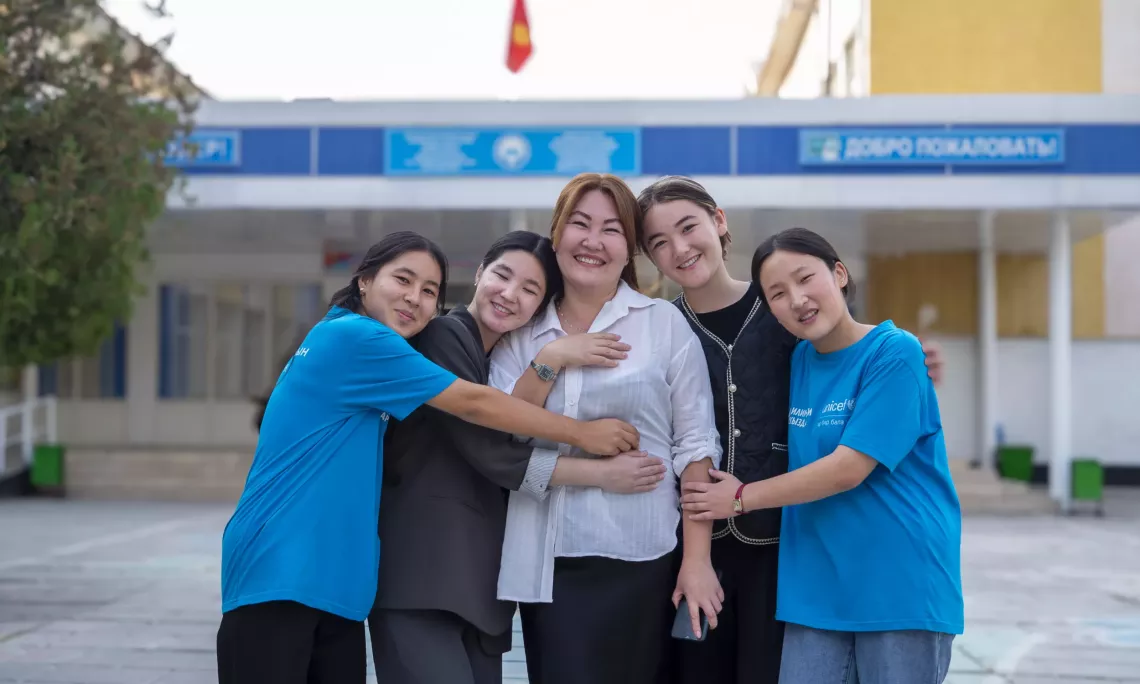
UNICEF focuses on empowering adolescent girls economically through skills-building programmes that nurture their potential as entrepreneurs, innovators, and leaders. Equipping girls with green skills and expanding employment pathways in green labour market, and amplifying girls’ voices in climate change platforms has been a focus of UNICEF work on climate agenda.
To protect girls from harm, UNICEF prioritizes preventing gender-based violence, ending child marriage, and supporting gender-positive socialization. Edutainment tools, such as “Spring in Bishkek” and “Secrets of Sary Kol” are innovative mobile app games designed to engage youth and influence their attitudes to the practices of forced and child marriage.