How bullying affects our lives
UNICEF staff share their personal stories at school

- русский
- English
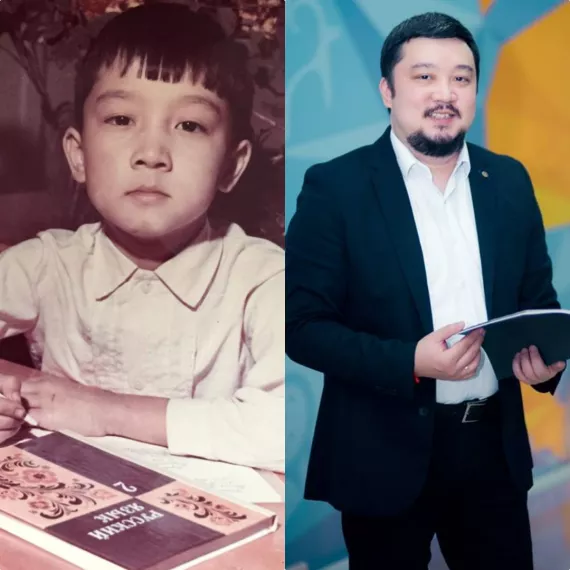
Story of Marat
I studied in four schools. Like most schoolchildren, I occasionally had conflicts with classmates and children from other classes. I don’t remember being subjected to systematic bullying and feeling like a hunted outcast, but I sometimes had to receive hate and threats from others.
In one of the schools, up to a certain grade, we were divided into “hooligans” and “nerds”, I belonged to the latter. I was a bookworm who loved the dusty silence of library halls, daydreaming about space flights and adventures in the spirit of Mayne Reed and Jules Verne, for whom courtyard showdowns and boyish movements were farther than the Andromeda nebula. There were disagreements and brawls between the “hooligans” and the “nerds”, but by the seventh grade we had matured, relations had levelled off, and yesterday's “enemies” had become friends. But I was on the "dark" side.
I remember for a while both “hooligans” and “nerds” bullied a girl in my school. The "nerds", apparently, did it in order not to be bullied by themselves. They came up with an insulting nickname for this girl, spread unpleasant rumours about her, sometimes threw her briefcase in a basket or stuffed it with garbage. A scene pops up in memory as she entered the class in the morning and was greeted with insulting remarks. I am still ashamed that I supported this bullying in silence, and sometimes even with vigorous actions. Perhaps if I told my parents about this bullying, they would have taken measures - warned her parents, talked to the teachers, school principal. However, everyone was ignoring this case, bullying continued for long after.
Now I have two daughters, the eldest goes to the first grade this year. I teach her how to defend herself, protect others if she feels that they are bullied. Most importantly, I try to build trust between us. Every day I ask her about her day, school, and sometimes we just lay and chat about everything in the world. Most often, children who have been subjected to bullying do not talk to their parents and teachers about their problems, they try to confront the aggressors on their own, get traumatised and then it becomes too late. Adults are able to stop bullying and protect their children, but if only they know what is going on. Your children will speak to you about bullying if they know they can trust you.

Story of Balnura
In the 90s, my parents moved from another city in Kazakhstan to Almaty, where I went to kindergarten and school. It was the happiest time of my life :)
In the 5th grade, I moved to a new school, and, unfortunately, some guys in the school and neighbourhood regularly bullied me, often saying offensive things about my hometown and its people. Sometimes, they did not stop there and even offend my parents.
It was always painful to hear all these things. It took a lot of time to learn how to ignore them. Also, it took me a lot of time to love myself, my roots and not respond to bulliers with aggression.
Now I understand that I never deserve bullying, because no one deserves it. Bullying is, first of all, about people who commit it, and not about those who are exposed to it. Bullying leaves a deep mark and leads to all sorts of negative consequences, so we all must take measures to prevent bullying in our society.
There is an opinion that bullying ‘makes us stronger’. I strongly disagree with this, because I believe that bullying often makes us vulnerable and therefore, we become closed or aggressive. I am glad that my friends and my parents helped me a lot with advice and always support me. Thanks to their unconditional support, I become stronger.
Now at UNICEF, I am working on a project to protect children in migration processes. Unfortunately, children away from their homes often become victims of bullying and discrimination, simply because they are not born and raised at that particular place or area. This situation makes me very sad, and therefore I am glad to share my story and have this opportunity to tell the children in Kazakhstan that regardless of your background, social status, abilities or personal qualities, we all deserve our stories and differences to be respected and accepted in society.

Story of Zarina
When I experienced bullying in the 6th grade, we did not have the word for it. Perhaps, this explains why it was hard for my parents and for the parents of the bullies to resolve the situation. Instead, both sets of parents agreed that ‘boys will be boys’ and that ‘this is how boys expressed interest’.
What adults did not understand was how much anxiety going to school could cause an 11-year-old. Nor did they realize the many ways in which the signs of trauma would manifest themselves, long after the nine months of teasing and name-calling. Nobody made any connection between my experience of being bullied and what followed: a straight “A” student skipping classes, hanging out with the ‘bad crowd’ and getting into physical fights.
For better or worse, adults in my life did not turn a completely blind eye to the problem. My father taught me how to fight back. My late grandfather whom I lovingly called “papa granny” gave me as a present his punching bag. These well-intentioned efforts were such a far cry from today’s guidance to parents how to help children deal with bullying. Needless to say, the bullying continued but at least I felt supported and loved by the people who mattered to me. I understand my parents did not know any better. They gave me all the love and support they could and that is what carried me through that terrible year.
With the information we have on bullying today, it is unacceptable to let any child experience any form of violence at school. We must teach our children kindness and we need to do a lot of learning ourselves. We need to make an effort to be kinder, even if at the end of a long stressful day at work.
Once, during an innocuous chat with my son he revealed that he and his friend were teasing a girl in his kindergarten. My husband and I did not for one moment consider it adorable or write off as a typical boy behaviour. We sat him down and had as long of a conversation as a four-year-old can take about feelings, respect and compassion. He stopped teasing the girl but we haven’t stopped listening to him and encouraging him to be kind.