More Than 100,000 Children in Kazakhstan and Uzbekistan Gain Water Conservation Knowledge and Skills
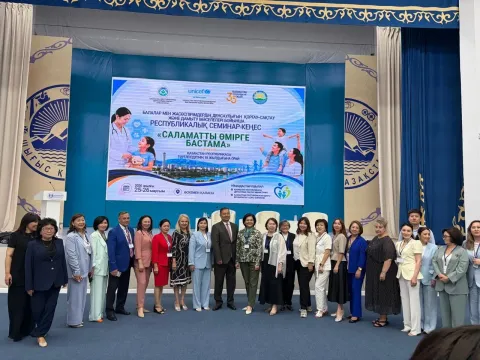
Astana, Kazakhstan, 29 June 2026 – UNICEF and its partners are expanding an initiative to promote water conservation among children and young people in Kazakhstan and Uzbekistan. The project steering committee for the Water and Education project held its second meeting in Astana to review the initiative’s progress and agree on the next phase of implementation.
With support from the French Development Agency (AFD), UNICEF is implementing the project in partnership with the governments of Kazakhstan and Uzbekistan. Partners include the Ministry of Water Resources and Irrigation, Ministry of Education, and the Information and Analytical Centre of the Ministry of Water Resources and Irrigation of Kazakhstan, the Ministry of Preschool and School Education and Ministry of Water Resources of Uzbekistan, the International Innovation Centre for the Aral Sea Region, regional authorities, educational institutions, and the International Fund for Saving the Aral Sea.
Climate change is intensifying water scarcity across the Aral Sea region, one of the world's most vulnerable areas. Today, more than 55 per cent of children in Kazakhstan and 89 per cent of children in Uzbekistan experience water shortages, while 84 per cent of children in Kazakhstan and 91 per cent of children in Uzbekistan face exposure to extreme heat. These challenges directly affect children's health, learning, and development – limiting their opportunities for a healthy and prosperous future.
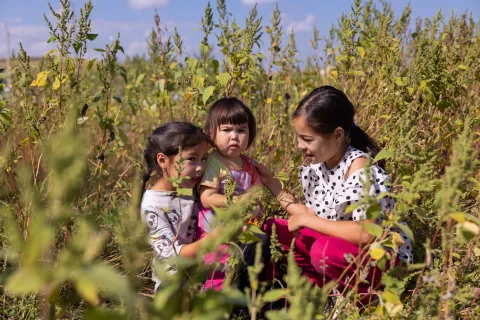
The project helps children and adolescents understand the value of water while equipping them with practical skills to use it responsibly at school, at home, and in their communities.
"This project is an important example of effective regional cooperation in addressing one of the region’s most pressing challenges – water scarcity," said Raushan Ibrasheva, Acting Deputy Representative of UNICEF in Kazakhstan. "Our goal is not only to provide knowledge but also to encourage lasting behavioural changes so that every child can become an agent of change and contribute to water conservation in their daily lives."
The project has already delivered significant results. In Kazakhstan, more than 67,000 children and 1,700 teachers have participated in project activities. Ten resource schools and 45 partner schools have introduced water conservation practices and established water clubs that engage more than 27,000 children. Schools have organized more than 2,800 learning sessions and nearly 5,000 events. Partners have also developed more than 570 educational resources, including the innovative Su Sandygy learning toolkit. Awareness campaigns have reached hundreds of thousands of children through in-person activities and more than 1.6 million children and young people online.
In Uzbekistan, more than 50,000 students from 1,000 schools have taken part in water conservation education programmes. Information campaigns have reached more than 80,000 people, while 141 students in pilot schools have developed practical water-saving skills. The project has also established a network of 113 youth climate leaders, who have engaged around 500 additional young people. The programme combines classroom learning with hands-on activities, including water filtration, hydroponics, environmental journalism and community action.
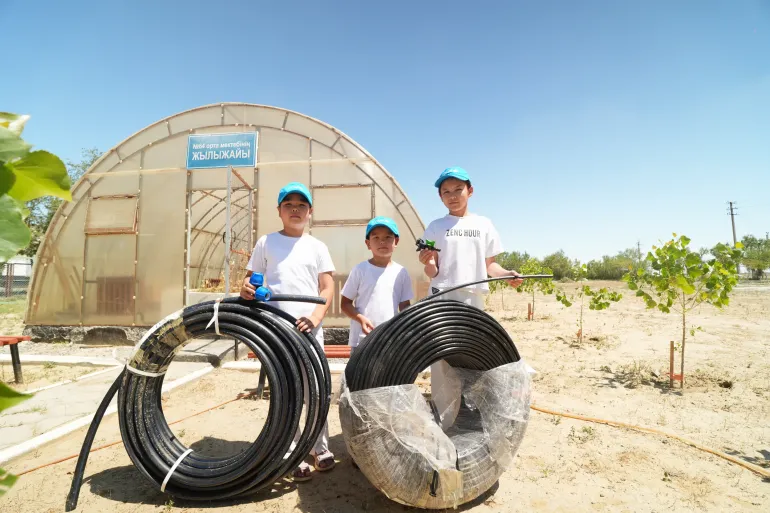
Schools participating in the project are introducing water-saving technologies, including drip irrigation, water filtration systems, and efficient water management solutions. These practical demonstrations allow children to see sustainable solutions in action and apply them in their daily lives. Schools are becoming centres for developing lasting habits that children carry into their families and communities, extending the project's long-term impact.
During the next phase, partners will establish water-saving infrastructure in schools, integrate water conservation and climate topics into national curricula, strengthen youth engagement and volunteer initiatives, and deepen regional cooperation on water resource management. The Water and Education project demonstrates that investing in children's knowledge and practical skills today is helping build a generation capable of managing water resources responsibly and adapting to the challenges of climate change.
Media contacts
About UNICEF
UNICEF, the United Nations agency for children, works to protect the rights of every child, everywhere, especially the most disadvantaged children and in the toughest places to reach. Across more than 190 countries and territories,
we do whatever it takes to help children survive, thrive, and fulfil their potential.
For more information, visit www.unicef.org.