From the Aral Sea to ‘green jobs’: youth from Central Asia present their solutions for sustainable development
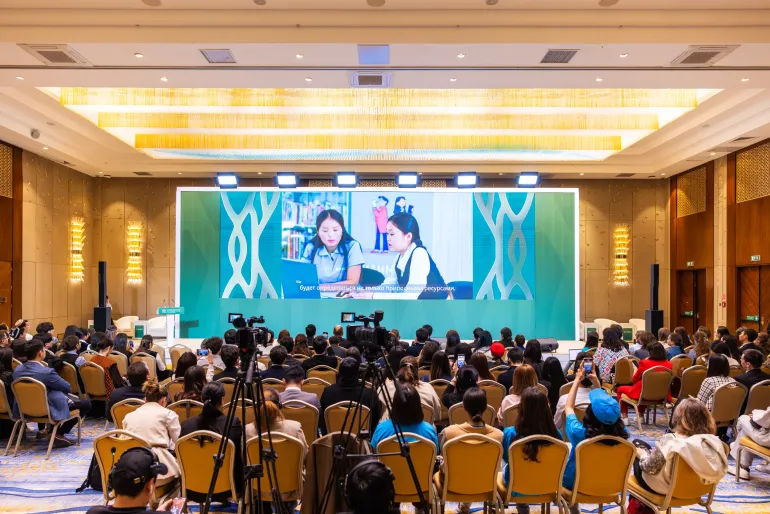
ASTANA, 24 April 2026 — Young leaders from all five Central Asian countries shared their vision for a sustainable future at the Regional Ecological Summit (RES 2026) in Astana today. They set out proposals on the professions, skills and the education transformations that are needed in the context of climate change.
Their presentations took place during the UNICEF youth session ‘Future Ecosystem: Children and Youth as Architects of Sustainable Development’ at RES 2026, which brought together 65 young people from Kazakhstan, Kyrgyzstan, Tajikistan, Turkmenistan and Uzbekistan. The session was an opportunity for constructive dialogue between youth, experts and government representatives.
In the weeks leading up to RES 2026, participants worked with technical experts to analyse key Ecological challenges facing the region — from water resource management and air quality issues in the Aral Sea region to urban resilience, waste management and the development of sustainable transport.
They were asked to identify which professionals will be in demand in the coming decades to address these challenges — and how education systems can prepare the next generation for these shifts. Their work progressed from problem analysis to the development of solid recommendations on skills, professions and educational approaches.
Each team then presented its proposals to representatives of government institutions, international organizations and the private sector.
“This experience has shown that the future of sustainable development begins with education. It is important for us to already understand today which skills and knowledge will help young people be prepared for new Ecological and economic realities,” noted one youth session participant.
The proposals included the development of green professions — including specialists in sustainable urban development, water resource management and Ecological monitoring — as well as the integration of climate literacy, digital skills and responsible consumption practices into school curricula.

The session will generate a set of recommendations from Central Asian youth on Ecological challenges, future professions, required skills and educational innovations. Their presentations will form the basis for a joint document of key proposals that will be promoted through their own platforms, partner channels and at government level across Central Asia, contributing to the region’s agenda on climate, education and employment.
This approach aligns with the Regional Green School Platform (RGSP), implemented under the leadership of governments in the region with UNICEF support. The RGSP aims to advance climate-resilient education systems, modernize school infrastructure and engage children and young people in shaping the Ecological agenda.
“Children and young people are not only participants — they are architects of sustainable development. Across Central Asia, they are already shaping solutions to climate challenges, from water and air quality to urban resilience. By equipping them with the right skills, knowledge and opportunities to act, we can ensure they lead the transition towards more sustainable and resilient societies,” said Octavian Bivol, UNICEF Regional Director OIC for Europe and Central Asia.
RES 2026 is taking place in Astana from 22 to 24 April, bringing together around 1,500 delegates from across the world to discuss sustainable development and climate adaptation.
Media contacts
About UNICEF
UNICEF promotes the rights and wellbeing of every child in everything we do. Together with our partners, we work in 190 countries and territories to translate that commitment into practical action, focusing special effort on reaching the most vulnerable and excluded children, to the benefit of all children, everywhere.
For more information about UNICEF and its work for children, visit https://www.unicef.org/eca/.