Teachers at the Forefront of Digital Transformation
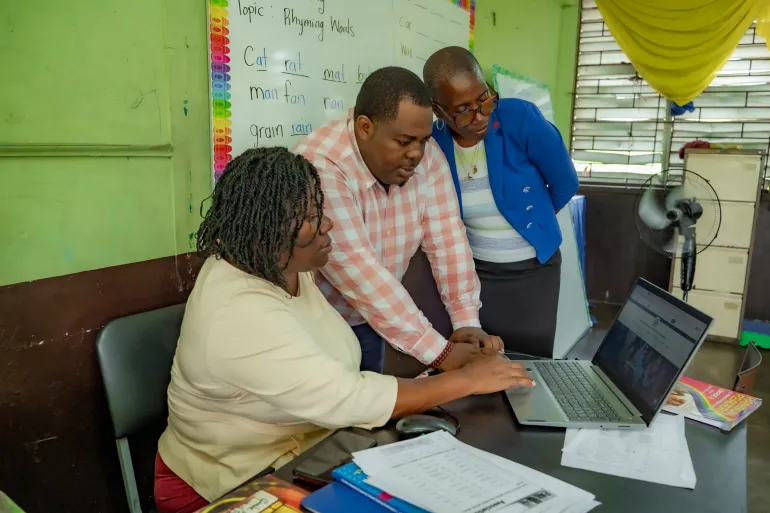
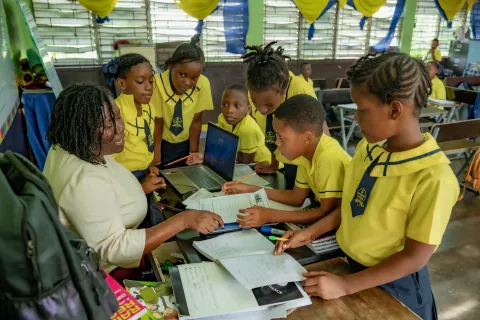
After months of preparation, Jamaica's digital education transformation is taking shape in classrooms with support from the SDG Joint Programme on Digital Transformation for Education. The Programme has entered its pilot phase, bringing new tools, systems and opportunities directly to fifty-four (54) schools selected by the Ministry of Education, Skills, Youth and Information (MoESYI). At the heart of this transformation are teachers, who are helping to shape how digital solutions are introduced and used in schools.
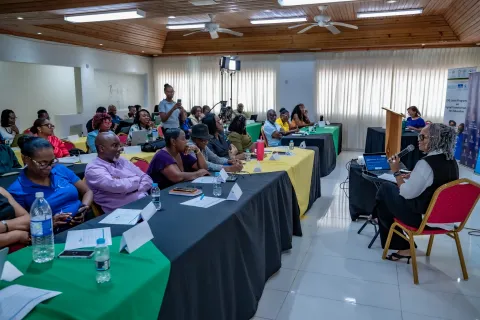
According to Nichole Thompson, National Project Officer for Digital Transformation at the UNESCO Office for the Caribbean, the transition marks the testing of digital solutions designed under the SDG Joint Programme to strengthen teaching, learning and decision-making. She was speaking at the first sensitization session held recently in Mandeville, attended by school leaders from Elletson Primary and Infant, Mile Gully High, Cross Keys High and Hazard Primary.
This is an important milestone in the wider effort to create a more connected education system: one where information flows more easily, school leaders can make better-informed decisions and teachers and administrators spend less time navigating fragmented systems.
“Digital transformation is about creating systems that help educators access the information they need, when they need it, so they can provide stronger support for students. Ultimately, the goal is to ensure that data works for our children, to improve outcomes for every learner,” says Mrs. Marcia Phillips, Acting Senior Director, Project Management and Development Branch in the Ministry.
The SDG Joint Programme on Digital Transformation for Education supports the Government of Jamaica's efforts to strengthen digital innovation. With initiatives focused on digital learning, teacher management, deployment and wellbeing, data governance, nutrition and school feeding systems, the Programme aims to improve educational outcomes for children and adolescents.
One of the flagship initiatives is the expansion of the Education Management Information System (EMIS), which is expected to create a more integrated digital education ecosystem. Bringing together information that is currently spread across multiple platforms, the improved EMIS is designed to help education stakeholders access better data in a timely manner strengthen planning and decision-making, and improve the delivery of services to students, teachers and schools.
One of UNESCO's priorities during this next phase is strengthening how teacher data is collected and reported. “We’re strengthening the teacher module in the school census instrument,” Mrs Thompson says. Currently, information is spread across multiple systems, making it difficult to access and use seamlessly. Rather than creating new systems, the goal is to strengthen existing platforms utilized by the government of Jamaica such as MyHR+ and the Jamaica Teaching Council’s registration system by improving interoperability and digitising key employment workflows for teaching and non-teaching staff.
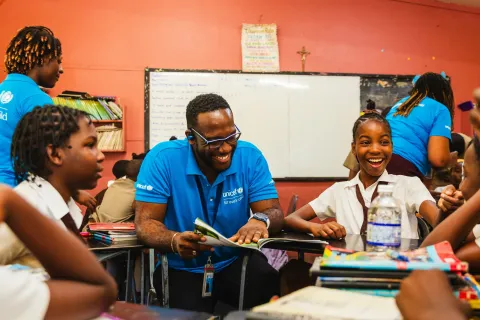
While stronger data systems are an important part of the MoESYI’s Digital Transformation, UNESCO believes the success of any digital initiative depends on the people who use it. That is why teacher capacity-building is a central focus, helping educators build the skills and confidence needed to integrate technology into their daily work.
School leaders will be part of that journey. An upcoming workshop planned for early 2027 will focus on Digital Transformation and the use of Artificial Intelligence, giving principals and school administrators an opportunity to better understand emerging technologies and explore how they can be used responsibly to support leadership.
The decision to engage school leaders more directly was informed by feedback UNESCO received from teachers during an earlier workshop, which highlighted the importance of leadership involvement in the digital transformation process. "We want school leaders to understand the opportunities technology presents and be equipped to lead that change within their schools," says Dr Nicole Bella, Head of Education Programme, UNESCO Office for the Caribbean.
Digital transformation cannot happen through software alone. It depends on teachers, administrators and school leaders having the skills, confidence and support to use the technology effectively. As the project implementation progresses, the experiences will help shape how digital solutions are refined and scaled across Jamaica's education system.
##
About the SDG Joint Programme on Digital Transformation for Education
The SDG Joint Programme on Digital Transformation for Education supports the Ministry of Education, Skills, Youth and Information in strengthening education outcomes through a more connected and inclusive system. Implemented in partnership with UNESCO, UNICEF, the Food and Agriculture Organization (FAO) and the World Food Programme (WFP), the Programme works to improve education planning and management, strengthen school feeding and nutrition systems, enhance data-driven decision-making, and equip educators and institutions to better support children.
Media contacts
About UNICEF
UNICEF promotes the rights and wellbeing of every child, in everything we do. Together with our partners, we work in 190 countries and territories to translate that commitment into practical action, focusing special effort on reaching the most vulnerable and excluded children, to the benefit of all children, everywhere.
For more information about UNICEF and its work for children in Jamaica, visit www.unicef.org/jamaica.