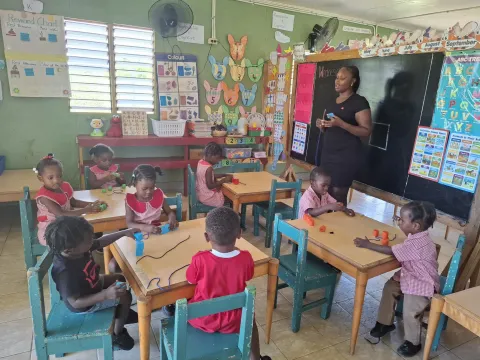
KINGSTON, May 19, 2026 – Six months after Hurricane Melissa tore through Jamaica, recovery continues not only through rebuilding efforts, but in the emotional healing of children and teachers learning to move forward.
Across the island, many are still grappling with the shock, disruption, and loss left behind. For educators on the frontlines, supporting students now goes far beyond academics; it means helping them feel safe, understood, and ready to learn again.
One programme helping to make this possible is Return to Happiness (RTH).
Supporting Mental Health Through Schools
Return to Happiness is a psychosocial support programme designed to help children and adolescents cope with stress, trauma, and loss following crises. Delivered through trained teachers and school staff, it uses age-appropriate activities—such as storytelling, guided play, and emotional check-ins—to help students express their feelings, rebuild confidence, and develop healthy coping skills.
By placing teachers at the centre of this approach, RTH ensures that children receive consistent care in a familiar environment: the classroom.
One such teacher is Mrs Ilene Cohall Bailey, Master Teacher and Head of Home Economics at Manning’s School in Savanna-la-Mar, Westmoreland, where she teaches Grades 10–13. She recently participated in RTH training hosted by the Jamaica Teaching Council (JTC) in collaboration with UNICEF Jamaica.
Initially hesitant, Mrs Cohall Bailey found comfort in the shared experience of the sessions.
“Through the laughter and the sharing, I realized I was not alone,” she said, reflecting on the safe space created for teachers to process their own emotions while learning how to support their students.
Added Pressures in an Already Difficult Year
April to June are typically stressful months for high school students preparing for exams. This year, however, those pressures have been intensified by the lingering effects of Hurricane Melissa.
“There is so much going on for the students,” Mrs Cohall Bailey explained. “Many fear they will not do well academically after all these years in school.”
In recent years, Jamaican children have faced multiple disruptions, from the COVID-19 pandemic to Hurricane Beryl in 2024, and then Hurricane Melissa in October 2025. These repeated shocks have not only interrupted learning but have also taken a significant toll on mental health and well-being.
In response, UNICEF Jamaica has supported the rollout of Return to Happiness training in the aftermath of these crises. To date, nearly 3,000 teachers across the country have been trained in the methodology, strengthening schools’ ability to respond to students’ psychosocial needs.
Healing Amid Losses
At Manning’s School, the impact of the hurricane was severe. Classroom roofs were destroyed, and the school’s historic main building—a centrepiece of its heritage—was flattened.
Like many educators, Mrs Cohall Bailey was coping with her own emotions of anger, loss, and uncertainty, even as she supported her students through theirs.
Today, she sees RTH as an essential tool for recovery.
“Children need every support possible after any crisis,” she said. “They rely on adults to help them recover mentally, physically, and otherwise. This program helps reduce anxiety and prepares us to cope better next time.”
Through simple but intentional practices, teachers are helping students process their experiences, rebuild trust, and feel safe again in spaces that once felt uncertain.
Building Resilience for the Future
As Jamaica continues its recovery, programmes like Return to Happiness are doing more than addressing immediate needs, they are laying the foundation for long-term resilience.
By equipping teachers with practical skills to identify and respond to distress, RTH is restoring stability in classrooms and enabling children to re-engage in their learning with renewed confidence.
For Mrs Cohall Bailey, “returning to happiness” is not about forgetting what happened, but about finding a way forward.
“Take it one day at a time,” she advises. “Celebrate small achievements, seek trusted help, and make use of programmes like Return to Happiness.”
As students and teachers continue their journey of healing, one step at a time, they are not only rebuilding what was lost, they are restoring hope, strengthening resilience, and shaping a future where every child feels safe to learn and thrive.
##
Return to Happiness training is offered regularly by the Jamaica Teaching Council in partnership with UNICEF Jamaica. Research consistently shows that children who experience trauma may struggle with concentration, memory, attendance and academic performance, underscoring the importance of mental health support in schools.
For updates on upcoming sessions, follow @UNICEFJamaica and @jamaica.teaching.council on Instagram.