Zaynab’s Story of Mental Wellness
Finding Strength and Hope

- English
- العربية
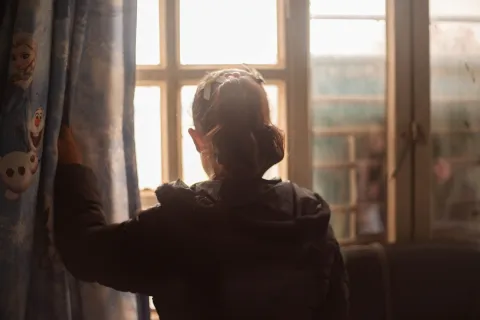
In Ashti camp for internally displaced persons in Sulaymaniyah, 36-year-old Zaynab Kareem, hailing from Salahaddin Governorate, exemplifies resilience. Married at 15, Zaynab became a mother for the first time at 16 and has now eight children, her youngest being just nine months old.
Zaynab’s life was filled with hardships, compounded by an unresponsive husband. Married as a child, she was thrust into the role of a young mother while still a child herself. "My mental health was in a terrible state," she recalls, burdened by overwhelming responsibilities that came too soon. Feeling powerless and lacking purpose in her life, she often considered taking her own life. Luckily, she found hope when neighbors told her about mental health support sessions at the camp's Women and Girls Safe Space. Initially hesitant, the positive feedback from her neighbors encouraged her to attend a UNICEF Mental Health and Psychosocial Support session. The warm welcome from the social worker made Zaynab feel comfortable disclosing her case and she decided to give these sessions a try. Zaynab realized she could improve her situation and trust others.
The Path of Healing
Within a day of Zaynab reaching out for help, social worker Rozhgar Akram took action. Based on Ashti camp’s referral pathway, she guided Zaynab towards other specialized service providers renowned for their expertise in supporting individuals in similar situations. After a few sessions, the service providers asked Rozhgar to provide Zaynab with ongoing psychosocial support sessions. Together, they crafted a supportive environment, offering Zaynab opportunities to engage in activities designed to nurture her emotional and social well-being.
Zaynab’s healing began with ten individual sessions. "I was breaking dishes at home because my husband didn’t care for me," she says. Her sessions provided a sanctuary where she could express her pain and anger. The programme offered more than just support; it represented a chance to regain her mental health and, by extension, her life. The safe space became a place where she could start to rebuild herself. Gradually, her mindset shifted, thanks to the social worker, who reminded her that "Nothing is worth the pain and anger you are going through, and your children need you."
Zaynab also joined group sessions with other women facing similar challenges. The peer support and friendships she formed played a crucial role in her transformation. Seeing others navigate their struggles and emerge stronger gave Zaynab a new perspective. "Now I’m calmer with my kids at home, and I know they aren’t to blame for what I was going through," she says. Over time, she transitioned from feeling overwhelmed and burdened to becoming calmer and more self-assured in her role as a mother.

Rozhgar emphasizes the importance of continued care. "We will keep supporting Zaynab," she explains. This ongoing support highlights the crucial role of community and professional assistance in mental health recovery.
Zaynab’s journey, supported by UNICEF and funded by USAID’s Bureau for Humanitarian Assistance (BHA), demonstrates the transformative power of accessible mental health services, offering hope and resilience to those in need.
Note: In order to protect the privacy and confidentiality of individuals mentioned in this story, some of the names have been altered.