Joining forces with health workers to vaccinate school children
Iraqi schools and health workers unite for child vaccination and sustainable development

- English
- العربية
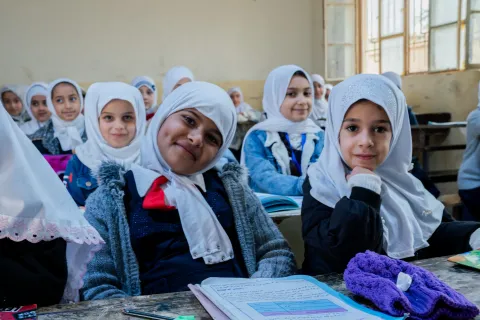
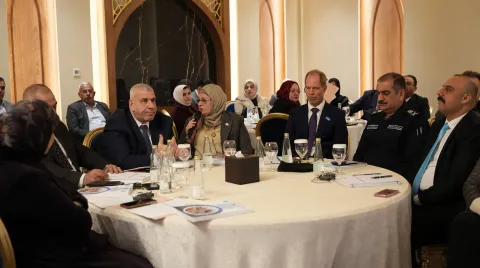
Basra, Iraq, 12 June 2024 The Ministry of Health, UNICEF and WHO launched a nationwide vaccination campaign to protect children from measles, mumps, and rubella. Funded by USAID, this campaign aimed to reach over 7.5 million children aged 6 to 12 years, attending primary schools and kindergartens.
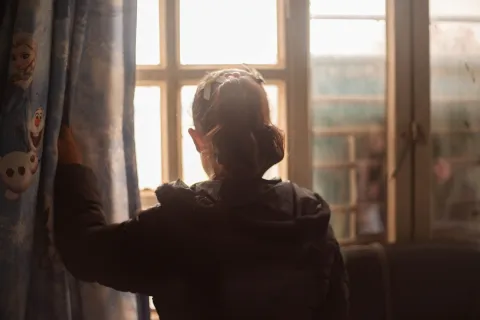
At Duhok International School, 7-year-old Zainab was patiently waiting for her turn to get vaccinated. She usually goes with her parents and little brother to the nearby health center to get vaccinated. The idea of getting vaccinated at school without having her parents made her nervous.
But when it was her turn, Zainab bravely took her shot. "At first, I was scared of the needle," she admitted. "But then I saw my friend taking it without crying, and that made me feel better." With the help of her teacher, Zainab didn't even feel the prick.

Immunization is a global health and development goal, which plays a critical role in achieving Sustainable Development Goal 14. According to the Ministry of Health, there has been an increase in the number of measles cases requiring a vaccination drive to interrupt transmission and save lives.
“Measles is a highly contagious disease that can be easily prevented through vaccination,” said Mr. Abbas Khalaf, Director General of Basra Health Directorate.
Out of the Government’s commitment to protect children from these vaccine preventable diseases, more than 30,000 frontline workers were deployed. These health workers visited schools to vaccinate students and conducted community awareness sessions and monitored the campaign.
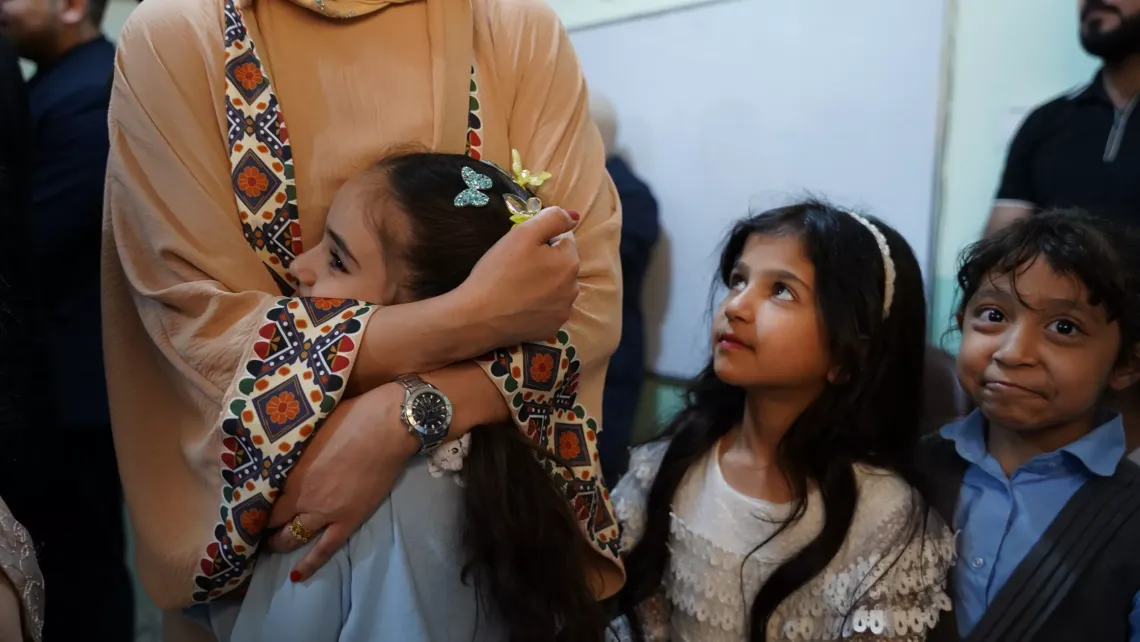
Iraqi schools and health workers unite for child vaccination and sustainable development
After getting vaccinated, Zainab felt proud and encouraged her classmates to do the same. "I learned in science class that vaccines help our bodies to fight diseases," she explained.
"I want to be a nurse when I grow up and vaccinate children. I want to tell them that vaccines don’t hurt, and I want to teach them about the importance of vaccines in saving lives, "added Zainab.

Zainab believes that all children should get vaccinated to build a strong, healthy community. "Vaccines might prick a little, but it not only saves our lives but those in our communities."
Over the past five decades, vaccines have saved up to 3 million lives every year, adding to a total of more than 130 million people. Vaccines alone have increased infant survival by 30 per cent. As one of the cost-effective and most efficient public health interventions, it is critical to continue to prioritize vaccines to reach every child.