Empowering youth to tackle water scarcity in Iraq
water scarcity

- English
- العربية
Erbil, Iraq, 25 Dec. 2024 — Sami Abdulrahman Park, one of Erbil’s largest and most iconic public spaces, is facing an escalating challenge - water scarcity.
For years, the outdated irrigation systems have drained vital drinking water resources, putting additional pressure on Erbil's limited supply. The park, which requires about 8,000 cubic meters of water per day, has seen five of its 20 groundwater wells run dry, highlighting the urgent need for sustainable solutions.
A new initiative, under the leadership of the Kurdistan Regional Government (KRG), funded by the German Development Bank - KfW and in partnership with Hasar Organization, UNICEF is transforming the park into a model of sustainability. The wastewater treatment system project uses cutting-edge recycling technology to treat and reuse wastewater for irrigation. What makes this project truly remarkable is its focus on engaging young people as drivers of change.

Young people: agents of change
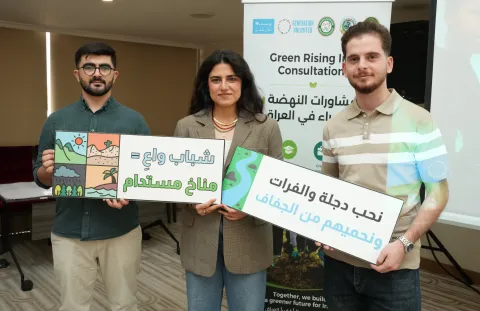
More than 1,000 young volunteers across Kurdistan Region of Iraq, many of them from Hasar Organization, worked together to realize this project. It reflects their passion and commitment to climate action.
“We didn’t realize how much water was being wasted every day at this park,” said Sana Qubad, 26, a graduate of the Faculty of Agriculture. “It has inspired us to raise awareness and conserve water in our communities.”
Abdulbari Abdulkhaliq, 27, explained the impact of the moving bed biofilm reactor (MBBR) technology. “Recognizing how technology can solve real-world problems has inspired me to explore how we can implement these solutions across Erbil,” he added.
Through community outreach, young people like Sana and Abdulbari are gaining hands-on experience in water conservation and sustainability while raising awareness about the broader impacts of climate change.

A Vision for Sustainability
“This project goes beyond just treating wastewater,” added Sana. “We’re shifting mindsets. By involving young people, we are creating a ripple effect that will drive lasting water conservation.”
Aligned to the Climate Landscape Analysis for Children and Young People, which was launched by Iraq’s Ministry of Environment and UNICEF last year, UNICEF is not only protecting children from the impact of climate change, but also empowering them to become agents of change to design and implement sustainable climate policies, innovations, and investments for Iraq.
"Our generation has the most at stake if we don’t act now," emphasized Abdulbari.
This water project at Sami Abdulrahman Park stands as a powerful example of how youth-led solutions can address global challenges, where national governments can take it to scale. UNICEF Iraq will continue to empower young people to lead climate action in their communities.