UNICEF Innovation Watch List: Five Promising Solutions in East Asia and Pacific
Problem-driven innovative solutions making impact for children and their communities

UNICEF’s East Asia and Pacific Regional Office (EAPRO) coordinates and supervises work in 27 countries – ranging in population size from the Pacific island of Niue, with 1,700 inhabitants to China, with 1.4 billion – comprising a vast and varied region in which an estimated 30 million children are born every year.
In this dynamic context, UNICEF is meeting diverse challenges with groundbreaking innovations in areas such as education, youth training, clean water, gender equality and pollution.
Here are five promising solutions:
Climate Change
Real-Time Air Quality Monitoring | Sustainable Development Goal (SDG) 3, 11 & 13 | Lao PDR
The problem: air pollution costs the lives of an estimated 100 children under five every day across East Asia and the Pacific. It burdens health systems and increases national healthcare spending, and pollution-related illnesses mean children miss school, limiting their potential and productivity
The solution: developed by UNICEF with the Lao government and Arm, an open-source artificial intelligence (AI) model for estimating air quality combines affordable sensors with big data and machine learning to give authorities real-time air quality estimates that inform decision-making to protect children’s health and education
The impact: with 148 air quality sensors already installed in schools, and plans to reach every district in Lao, real-time monitoring of harmful air pollutants is becoming a reality, enabling data-informed policy decisions

Gender Equality
2. Game Changers Coalition | SDG 4, 5 & 8 | Cambodia, Malaysia
The problem: half of the roughly two billion video game players worldwide are female, yet only a quarter of those working in game development are women, meaning lost opportunities for the video games industry and for adolescent girls who do not transition from playing, to learning, to earning
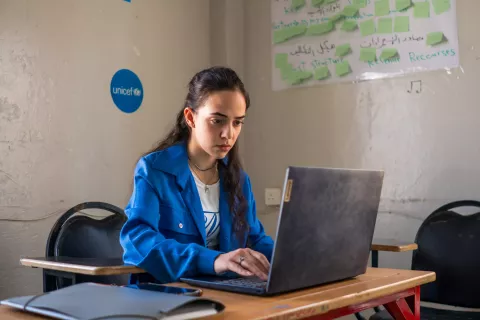
The solution: the Game Changers Coalition (GCC) curriculum – developed by UNICEF with partners including the Global Video Game Coalition, Bitget and Micron Foundation – bridges this digital gender divide by enabling adolescent girls to learn STEAM subjects (Science, Technology, Engineering, Arts and Mathematics) through video game development
The impact: GCC operates in eight countries, has engaged with 154,000 adolescent girls, parents and teachers, and aims to reach 1.1 million students by 2027, creating a new generation of young women equipped with the digital skills of the future

Learning
3. GigaMaps | SDG 4 | Cambodia, Fiji, Mongolia
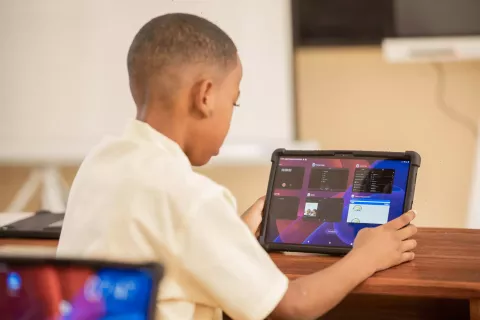
The problem: one-third of humanity lacks internet access and children at schools without connectivity have fewer opportunities to learn and fulfil their potential.
The solution: GigaMaps is a global schools mapping programme plotting each school and its connectivity level on a live, open access global map. GigaMaps is an essential step towards understanding the scale of the need and identifying gaps
The impact: 2.2 million schools have been mapped worldwide; 454,000 have their connectivity status mapped; and 98,000 supply real time data. The initiative is part of Giga, a joint UNICEF and International Telecommunication Union (ITU) programme aiming to ensure every school is connected to the internet by 2030

Water, Sanitation and Hygiene (WASH)
4. Managed Aquifer Recharge | SDG 6 | Timor-Leste
The problem: lack of safe water, sanitation and hygiene (WASH) has severe effects on the health of children and their communities
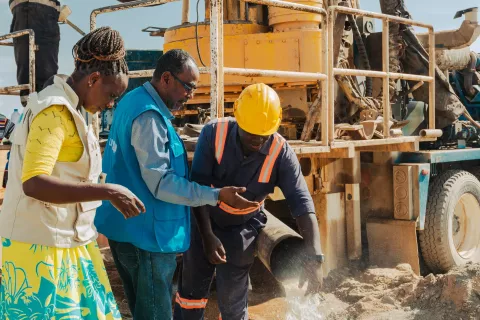
The solution: using local knowledge, managed aquifer recharge (MAR) is a low-cost solution for storing excess surface water during times of heavy rain which reduces flooding and makes more water available during dry seasons and droughts, as well as playing a vital role in mitigating the risk of saline intrusion in coastal regions
The impact: building earth dams, retaining ponds and terraces in four villages in Timor-Leste, helped conserve water within the local environment, and acted as proof-of-concept for MAR which has since been expanded to Africa with the aim of helping reduce the risk to 450 million children worldwide living in areas of high water vulnerability

Youth Skills
5. UPSHIFT | SDG 4 & 8 | Lao DPR, Thailand, Vietnam
The problem: education alone is not enough to prepare young people for the future, they also need skills like problem-solving, creativity, collaboration, leadership, communication and more
The solution: UPSHIFT is a social innovation accelerator in the form of a modular curriculum with adaptable trainings that equips young people with the professional, transferrable skills and the confidence to create meaningful change in their communities
The impact: over 5.2 million young people worldwide have graduated from UPSHIFT training in over 56 countries, learning the skills they need to tackle local challenges

The Wider Regional Innovation Ecosystem
These five promising initiatives are not all. Other innovative solutions being implemented in the region, aiming towards a wide range of SDGs include: YOSO, Eduten, Similie Timor, Learning Pioneers and Learning Explorers, the climate polices for children dashboard, FunDoo and Kits that Fit.
“Innovative approaches like these are essential to accelerating progress for children across the region,” says UNICEF Regional Director for East Asia and the Pacific, June Kunugi. “The challenges are many, but with our partners we can overcome them by harnessing human ingenuity and the drive to do better for children and humanity.”