Managed Aquifer Recharge: turning a hazard into a resource
An innovative, low-cost approach for conserving water

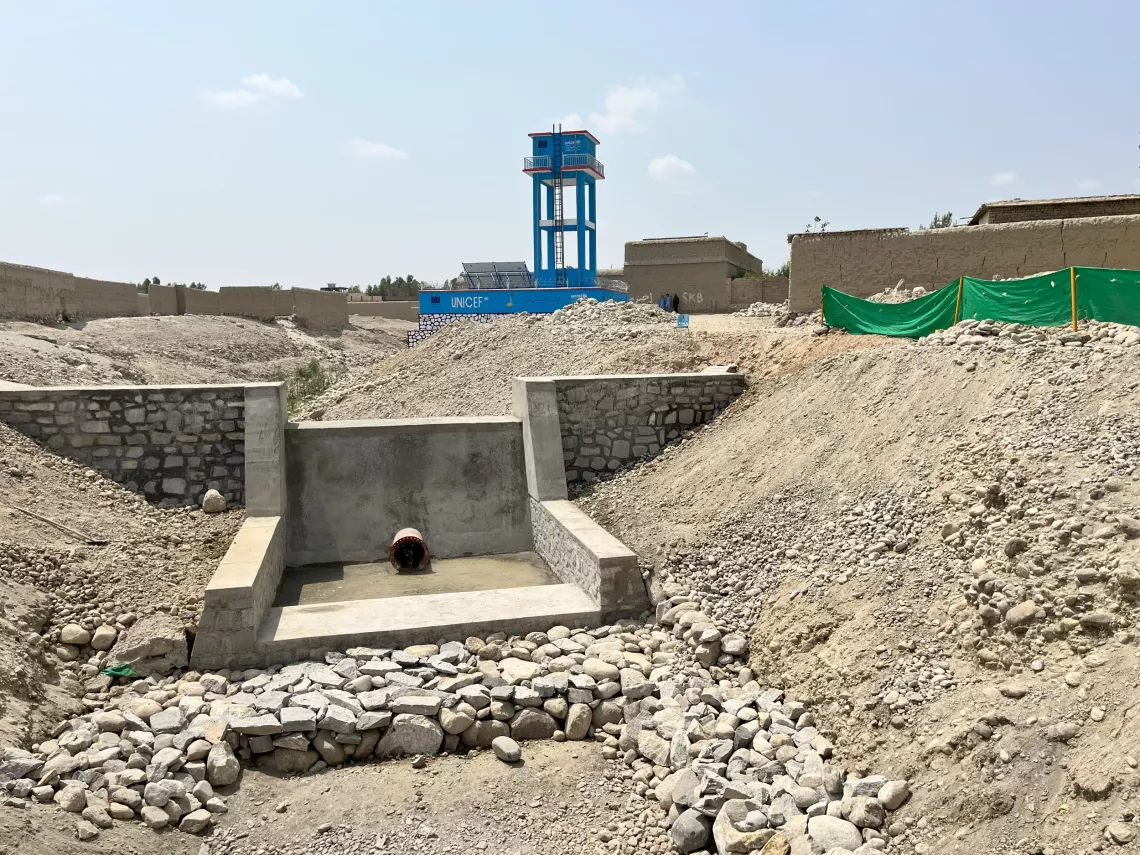
By slowing and storing floodwater during periods of higher seasonal rainfall through the use of terraces, dams, ponds and wells, Managed Aquifer Recharge (MAR) can make water available for use in dry seasons and droughts.
In coastal regions, MAR can play a vital role in mitigating the risk of saline intrusion, a threat exacerbated by rising sea levels associated with climate change.
Managed Aquifer Recharge: A climate-resilient solution
Acting now to accelerate the scale-up of low-tech, nature-based, climate-resilient solutions such as MAR could help a generation of children access safe, sustainable and climate-resilient water supplies.
Alarmingly, 450 million children live in areas of high or extremely high water vulnerability with long term consequences for their future. Water scarcity and lack of access to safe drinking water contributes to malnutrition, hinders education and puts children’s safety at risk, especially girls, as they walk long distances to collect water.
Water insecurity also fuels conflict, migration, and negative coping mechanisms like child labor and child marriage. Climate change further compounds these challenges, leading to more frequent and intense droughts and floods, making water availability, affordability, and safety increasingly precarious.
MAR approaches are diverse, ranging from large-scale, highly technical projects led by national governments to smaller, community-led initiatives. This adaptability means that MAR systems can be tailored to local contexts, with some maintained by communities with occasional external support and others requiring more engineered solutions.
UNICEF is conducting a feasibility study in Dollow, Somalia, to test MAR to help provide long-term water security for refugees, internally displaced persons (IDPs) and host communities.
“For children, this project means less time spent fetching water and more time in school.”
Innovating to tackle water scarcity in Dollow, Somalia
In Dollow, Somalia, UNICEF and the Somali government are pioneering MAR in a humanitarian setting to benefit children and families affected by conflict and climate change. The area faces recurring water shortages due to reliance on seasonal shallow wells and rivers. To address this, UNICEF is employing advanced groundwater mapping techniques, testing engineering solutions, and incorporating local knowledge to capture and conserve water during rainy periods. This initiative aims to improve water availability and quality for 210,000 residents, including IDPs and the host community.
Mohamud Hussein, WASH Officer, UNICEF Somalia outlines the game-changing impact of the innovation for vulnerable communities.
“For children, this project means less time spent fetching water and more time in school."
UNICEF's role: Accelerating scale for impact
The UNICEF Sustainable WASH Innovation Hub is providing technical and financial support to accelerate the scaling up of MAR and similar innovative approaches. The Hub fosters collaboration among academic and research institutions, government bodies, non-governmental organizations, and community groups. It also facilitates access to innovative finance and shares lessons learned from MAR projects worldwide, including those in Timor Leste, Nepal, Pakistan, Bangladesh, and Sudan. This knowledge sharing is crucial for creating replicable models that can be adapted to various regions and contexts.
UNICEF is committed to expanding MAR in Somalia, Iraq, Afghanistan, and other water-insecure areas. This involves assessing feasibility, replicating successful approaches, monitoring effectiveness, generating evidence to support expansion, and creating an enabling environment for investment.
The Sustainable WASH Innovation Hub continues to provide guidance and capacity building to ensure the sustainable management and implementation of MAR solutions.
Want to learn more?
About the Sustainable WASH Innovation Hub
The UNICEF Sustainable WASH Innovation Hub is dedicated to accelerating the scaling of transformative and climate-resilient WASH solutions for children and their families globally. To achieve this ambitious goal, collaboration is key.
Sign up to our mailing list for opportunities to learn more about WASH innovation and get involved.