Innovation Across Borders: Iraq
Muhammed Ali, UNICEF Iraq, describes how climate-resilient WASH innovation can replenish and store water for drier times
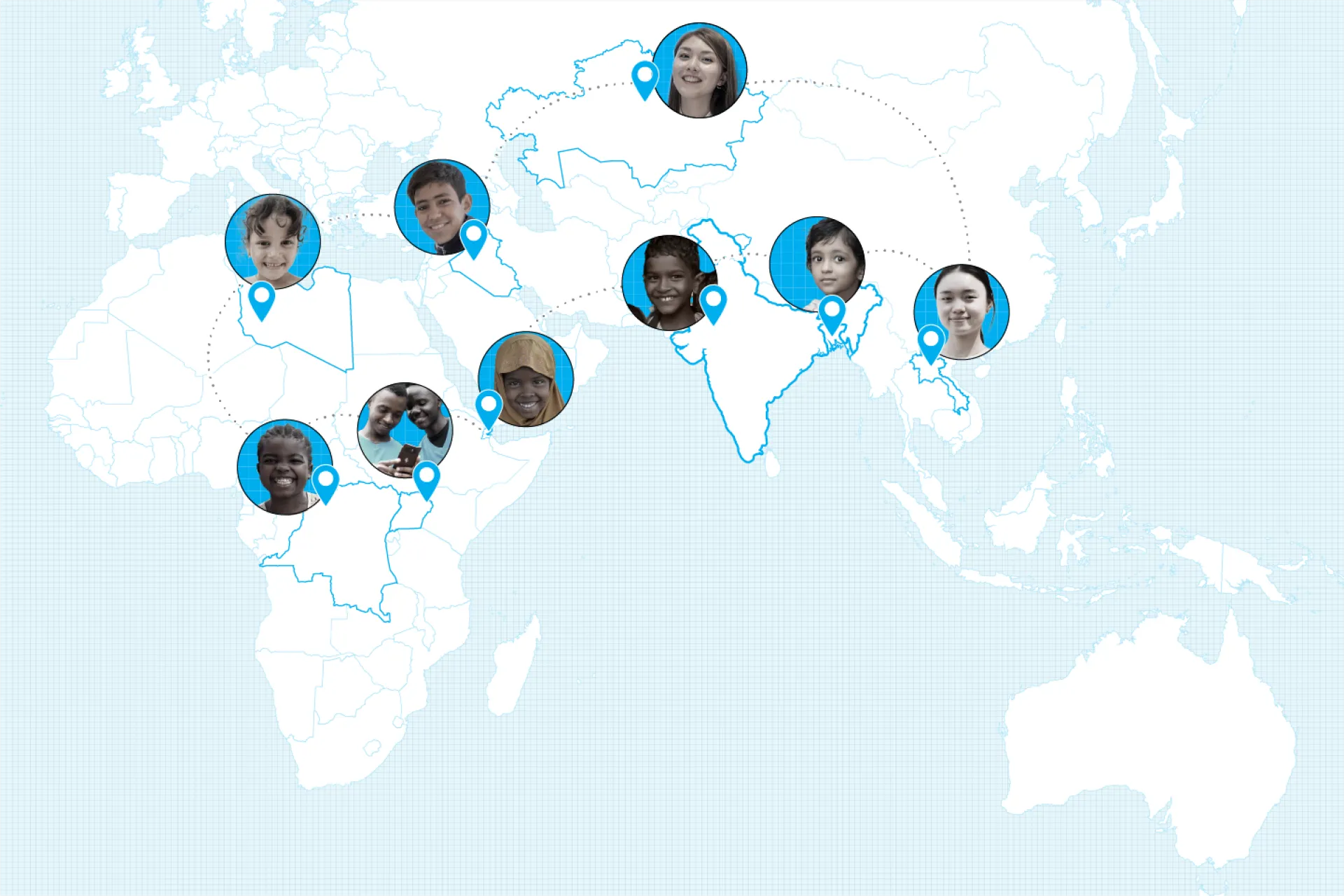
Across 190 countries and territories, UNICEF colleagues and partners are on the frontlines of the greatest challenges affecting the lives of children and young people. Innovation Across Borders highlights the experiences, successes and learnings of innovation champions, committed to making positive social impact.


How did you start your career in water, sanitation and hygiene (WASH)?
My first major role at UNICEF was to deliver emergency water and sanitation relief for children and families fleeing conflict in Syria in 2013. Since then, I’ve responded to several emergencies, but amidst the chaos I always kept an eye on what I could do to support sustainable water systems.
In 2024, I was proud to see the completion of a rainwater harvesting project that I had started, providing long-lasting and transformational impact for the local community. I met farmers who could now more easily water their crops, and young people with more hope for a climate-resilient future.
What WASH innovations are you working on now?
I'm working with the government to scale up the use of Managed Aquifer Recharge (MAR), a simple yet effective approach that uses various water harvesting techniques such as terraces, wells and ponds, to replenish underground reservoirs during high rainfall for use during the dry season. With growing water shortages in Iraq, innovating above and below ground is more important and urgent than ever.
Transient electromagnetics (TEM) is another exciting new development, which I helped test in Iraq for the first time this year, with the support of the UNICEF Sustainable WASH Innovation Hub. TEM uses electrical pulses to quickly and accurately assess the suitability of MAR sites by providing real-time data on conditions underground – saving time and money.


In addition to helping us scale up TEM by connecting us to technical support and enabling informed decision making, the WASH Hub is playing a key convening role in building knowledge and collaboration on the scaling of MAR in fragile contexts. This included a recent workshop in Nairobi, Kenya, which brought together WASH experts from water technology company Xylem, Dresden-based non-profit arche noVa, UNICEF and UNHCR with academics from Dresden University of Technology and government officials from Iraq, Kenya, Somalia and Sudan.

By 2060, half of Iraq’s population may not have sufficient access to water, and many other countries face similar challenges. The workshop was a valuable opportunity to cross-pollinate innovative and sustainable ideas to combat a growing and shared water security threat.
As climate change continues to exacerbate Iraq’s water, what gives you hope?
I’ll always remember the words of a farmer I met one summer. He told me, “Look at the land now, it’s bone dry. Come back in February, you will see a flood that will terrify you.” It gives me hope knowing that in a changing climate, the scaling of innovations like MAR and TEM can help speed access to sustainable and safe water for this farmer, his children and generations to come.