Every child can learn without barriers
Julieta’s journey with Accessible Digital Textbooks in Uruguay
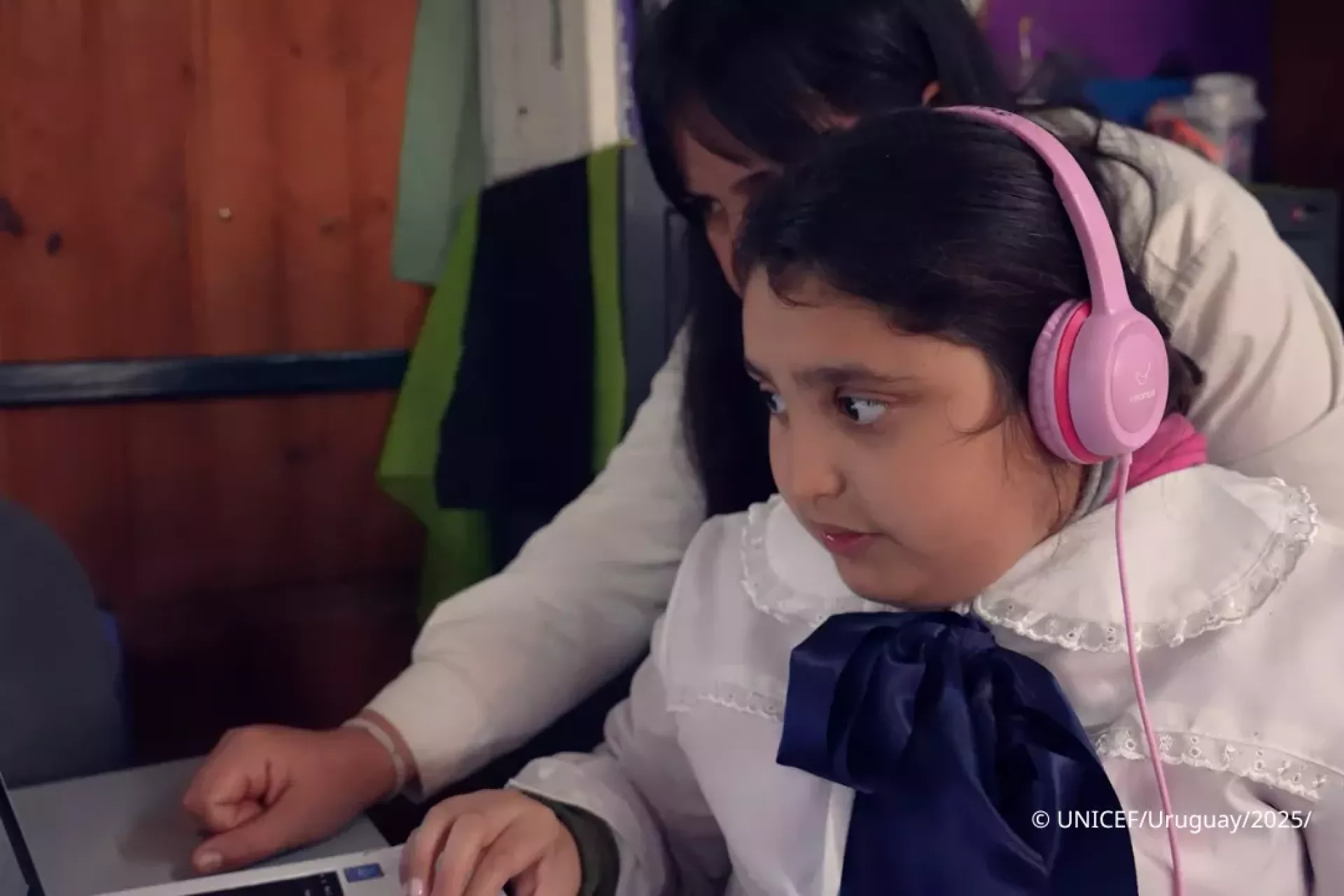
When Julieta first started school, her parents noticed that learning was more difficult for her than for other children. “We went to a psychologist, and they told us she had a learning disability,” recalls her mother, Erika. “Her level was lower than the others. She used to go just one hour a day to Special School 192.”
Now in fifth grade, Julieta attends classes twice a week on a full schedule, with additional therapy sessions at Timbó. Her days are busy, but they are also filled with joy and progress. “She’s built such a strong bond with her classmates since kindergarten,” Erika says. “Thanks to the audiobook, she’s progressing more. She’s no longer afraid to raise her hand or participate in front of others. She even claps for herself when she gets something right. It would be amazing if there were always books like these to help all children.”
Frontier technologies for accessibility
UNICEF and partners first introduced the Accessible Digital Textbook (ADT) initiative in 2018, giving more students access to inclusive learning but through a slower, manual process. With the recent introduction of an AI-generated solution, ADTs can now be created more quickly and cost-effectively, making it possible to expand from 11 countries today to 30 by 2030.
Uruguay, a long-time participant in the initiative and already the producer of two ‘classic’ ADTs, helped pilot the first AI-generated version. The project brought together the UNICEF country office, the National Administration of Public Education (ANEP), and Ceibal, the country’s Centre for Educational Innovation and Digital Technologies. Uruguay’s strong education technology ecosystem, multi-disciplinary expertise, and government commitment made it an ideal environment to test this new approach.
A classroom where everyone belongs
For Julieta’s teacher, Magalí, the introduction of ADTs has been transformative. “Before, whenever we worked with texts or materials, we had to adapt everything for different levels,” she explains. “Now, everyone can work on the same topic, in the same way, at the same time, without creating differences.”
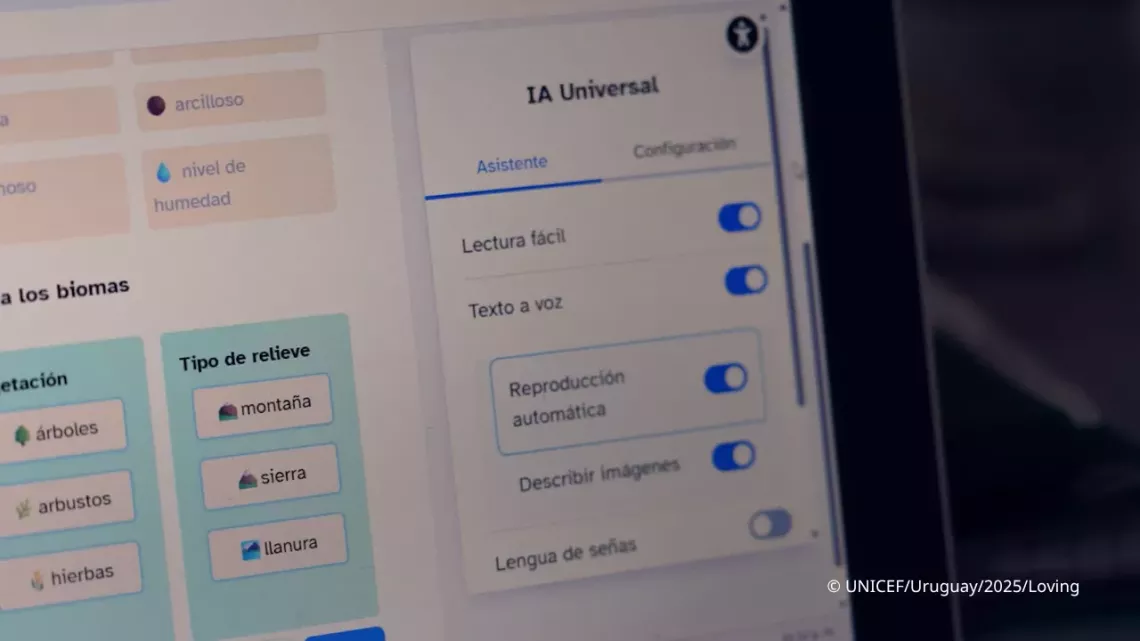
The ADTs offer features such as adjustable fonts, read-aloud options, sign language videos, image descriptions, and simplified ‘easy read’ content. These tools help all students engage with materials in ways that suit them best. “It’s a brilliant resource that really makes inclusive education possible,” Magalí says. “And the children like it. They find it appealing.”
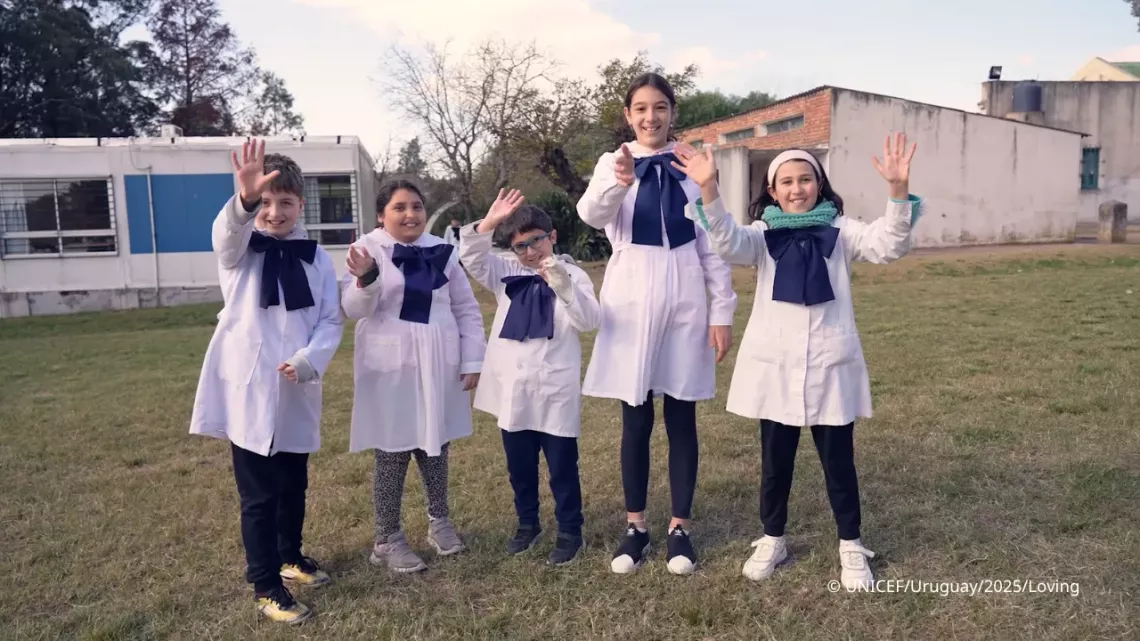
Just as important is the culture of peer support the ADTs encourage. In Magalí’s classroom, students naturally help one another. “Once we finish what we’re doing, we get up and go help,” says Francisco, a classmate. Juliana adds, “Maybe I understand one thing, but Marti understands another. So we help each other with what we each understand.”
What stands out most is how ADTs shift the atmosphere. Instead of dividing students by ability, they create a sense of shared purpose where every child feels capable of contributing. For Erika, Magalí, and Julieta’s classmates, the benefits are already clear. Julieta feels more confident, her teacher has more time to focus on teaching, and her peers share in the responsibility of learning together.
Scaling inclusion
For students, these partnerships mean real change. Children like Julieta can now learn alongside their peers with resources that adapt to their needs, while teachers gain tools to foster inclusion in every classroom. As Uruguay helps lead the way, the lessons learned will ripple outward, shaping classrooms across continents and bringing the promise of inclusive education to millions more children worldwide.