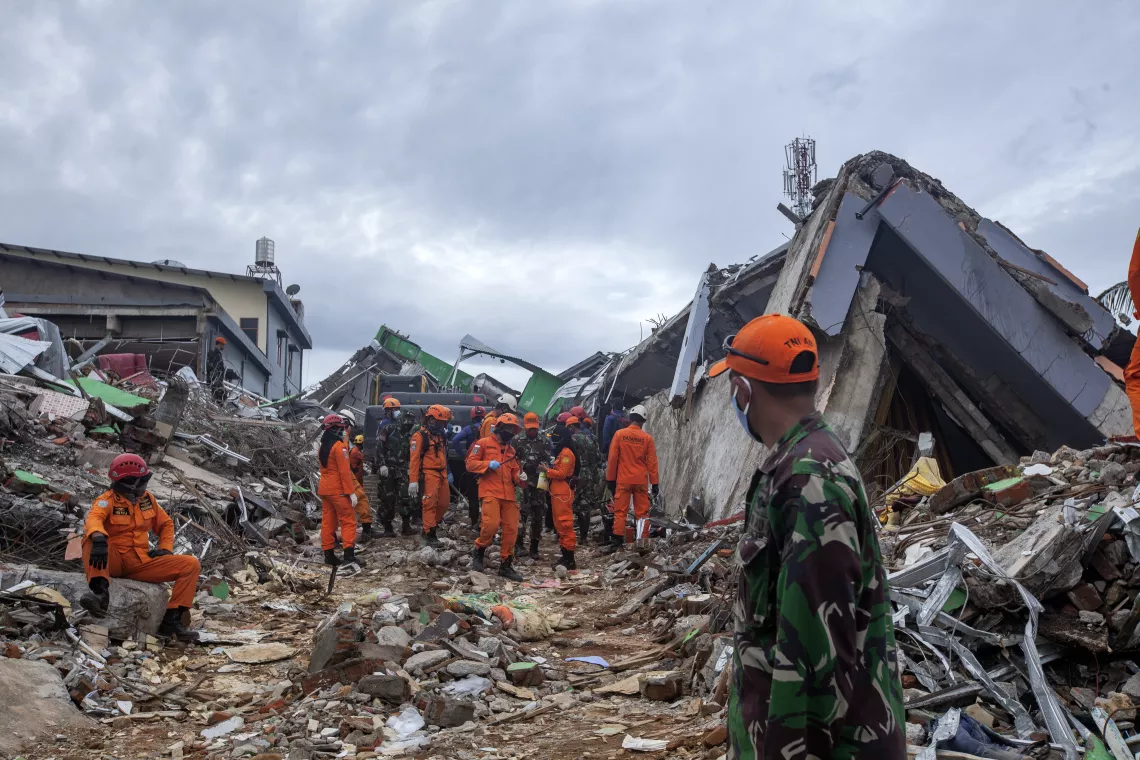
On 15 January, a 6.2 magnitude earthquake in South Sulawesi left over 81 dead

Powerful earthquake in Indonesia's Sulawesi kills at least 81, injures hundreds
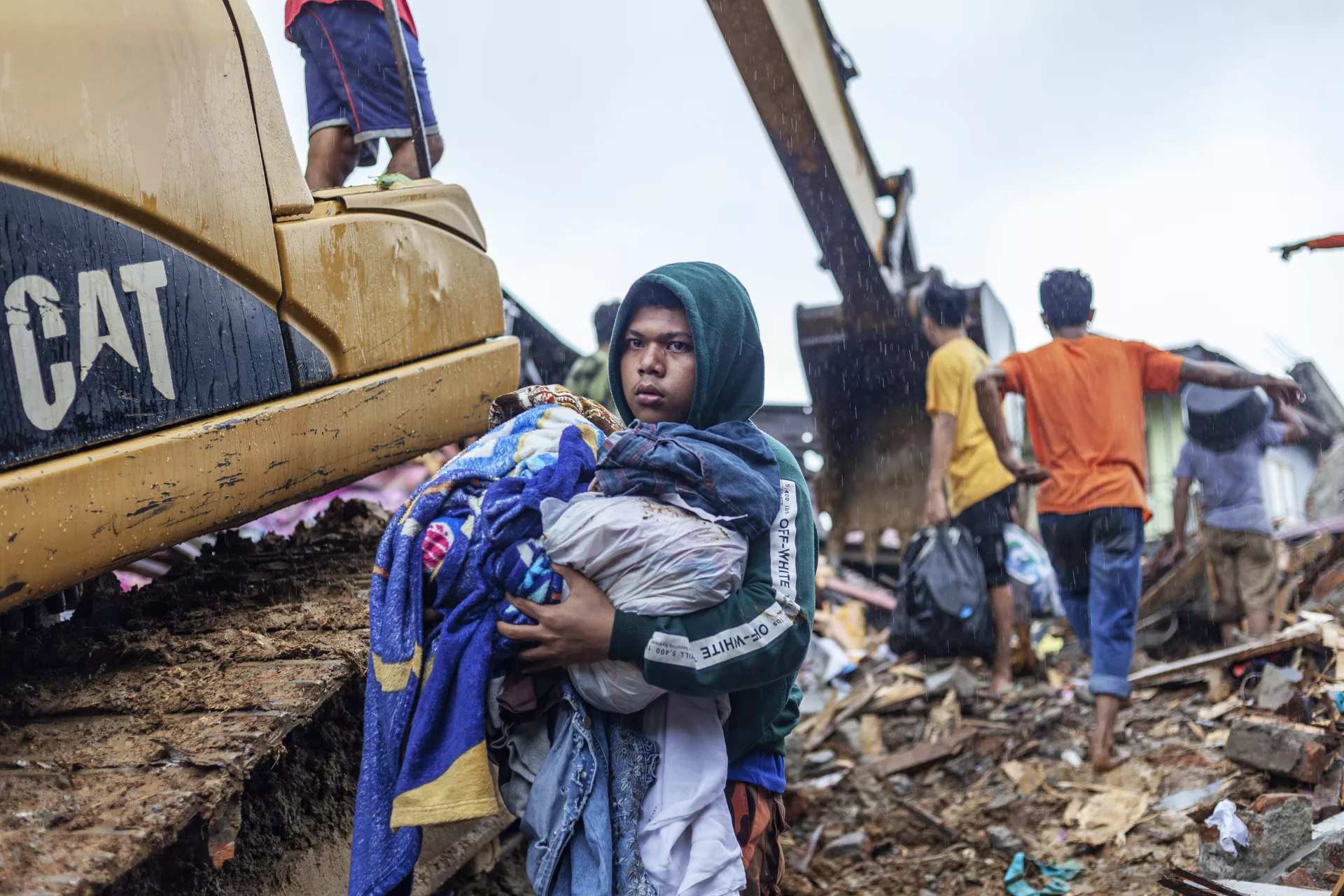
On 15 January 2021, a resident holds a pile of clothes after his house collapsed during a 6.2 magnitude earthquake in Binanga village, Mamuju, West Sulawesi, Indonesia, on 14 January 2021.
UNICEF/UN0400329/Yusuf Wahil
On 16 January 2021, rescuers evacuate residents in Mamuju Regency after a 6.2 magnitude earthquake struck the West Sulawesi Province of Indonesia on 14 January 2021.
UNICEF/UN0400330/Yusuf Wahil On 16 January 2021, rescuers evacuate residents in Mamuju Regency after a 6.2 magnitude earthquake struck the West Sulawesi Province of Indonesia on 14 January 2021.

On 15 January 2021, a 6.2 magnitude earthquake hit Majene, West Sulawesi Province in the early hours of the morning killing at least 81 people, injuring more than 630, and over 15,000 homeless.

The quake severely damaged buildings and houses, including a hospital that was completely flattened, trapping dozens of patients and staff in the rubble. Preliminary assessments indicate that 17 schools have been damaged.
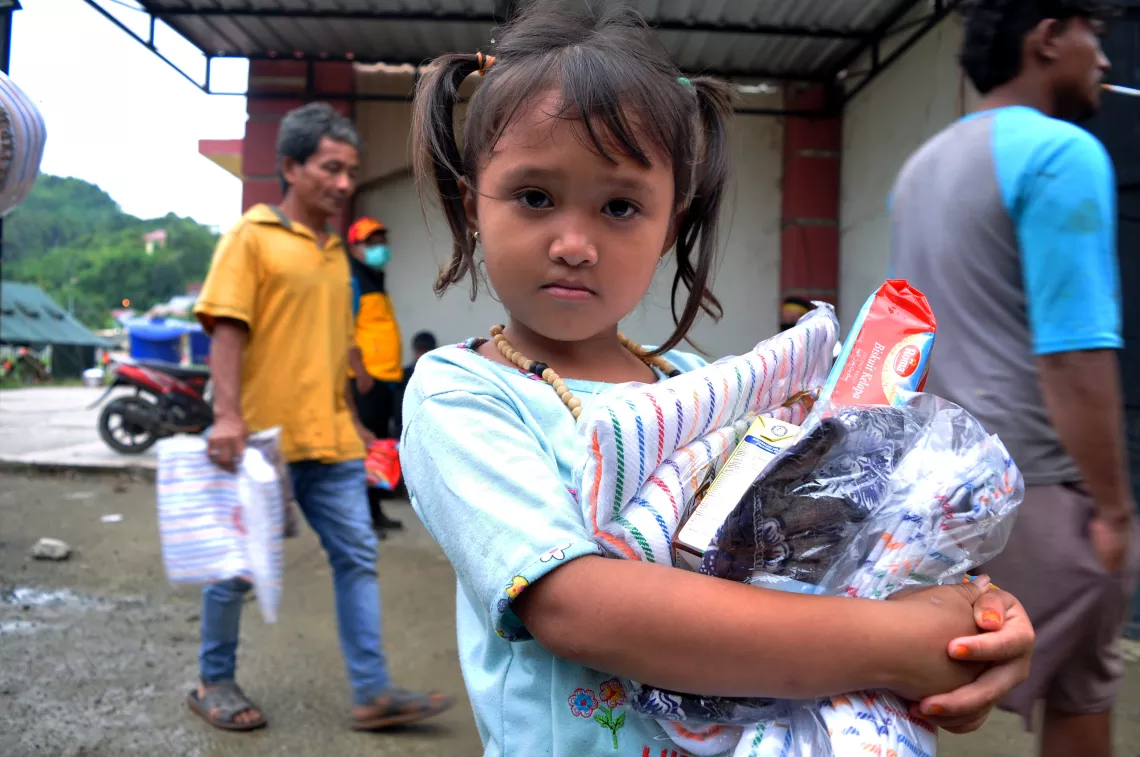
Tima, 5, carries food and a blanket she received from an aid distribution at a shelter at Manakarra Stadium in Mamuju Regency, West Sulawesi, Indonesia, on 17 January 2020.
UNICEF/UN0401212/M Iqbal Tima, 5, carries food and a blanket she received from an aid distribution at a shelter at Manakarra Stadium in Mamuju Regency, West Sulawesi, Indonesia, on 17 January 2020.

More than 15,000 people have been temporarily displaced in 15 IDP sites, and figures are increasing.
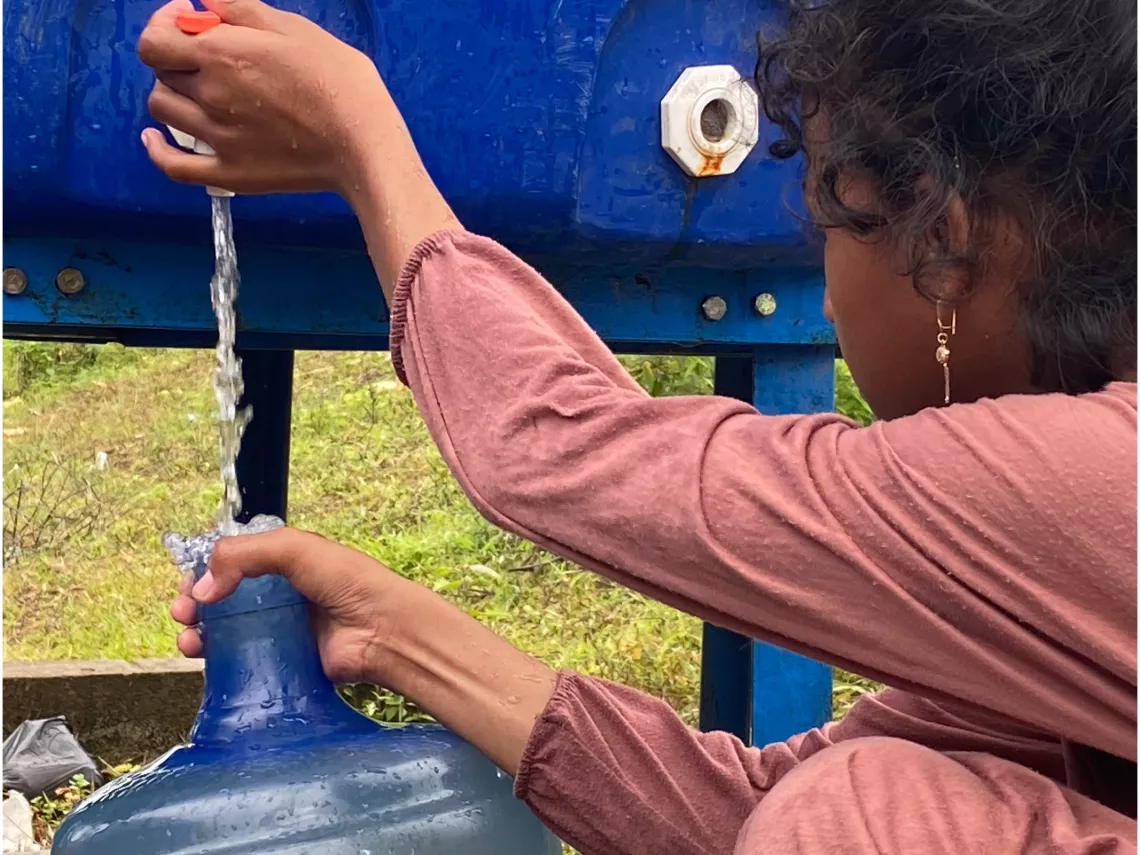
Kino, 11, helps her sibling collect water in a used gallon jug. After an earthquake hit, Kino’s family has limited access to water, forcing them to find water wherever they can.
UNICEF/UN0401201/M Iqbal Kino, 11, helps her sibling collect water in a used gallon jug. After an earthquake hit, Kino’s family has limited access to water, forcing them to find water wherever they can.

Heavy rains in recent days have made access very difficult, blocking the main road to the affected areas.

The first priority is to search for survivors who have been trapped under the rubble, and to tend to the wounded.
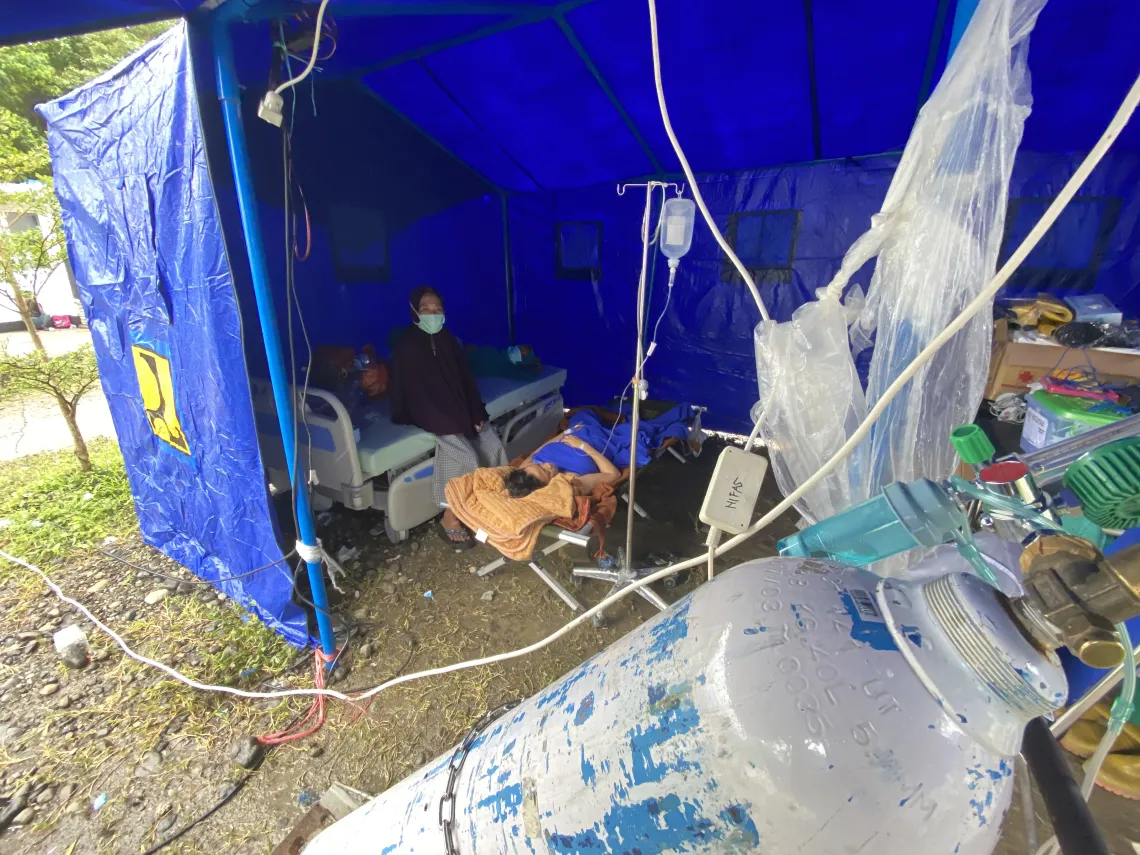
Suwinda, 23, receives medical treatment in a tent in Mamuju Regency, West Sulawesi Province, Indonesia, on 17 January 2021. Suwinda lost her baby daughter after she was unable to receive medical care as she gave birth during an earthquake that struck the Indonesian island of Sulawesi on 15 January 2020.
UNICEF/UN0401198/M Iqbal Suwinda, 23, receives medical treatment in a tent in Mamuju Regency, West Sulawesi Province, Indonesia, on 17 January 2021. Suwinda lost her baby daughter after she was unable to receive medical care as she gave birth during an earthquake that struck the Indonesian island of Sulawesi on 15 January 2020.

This disaster comes nearly two and a half years after a massive earthquake and tsunami killed thousands in Central Sulawesi. Indonesia sits within the Pacific Ring of Fire, the world’s most disaster-prone area marked by floods, tsunamis and earthquakes.
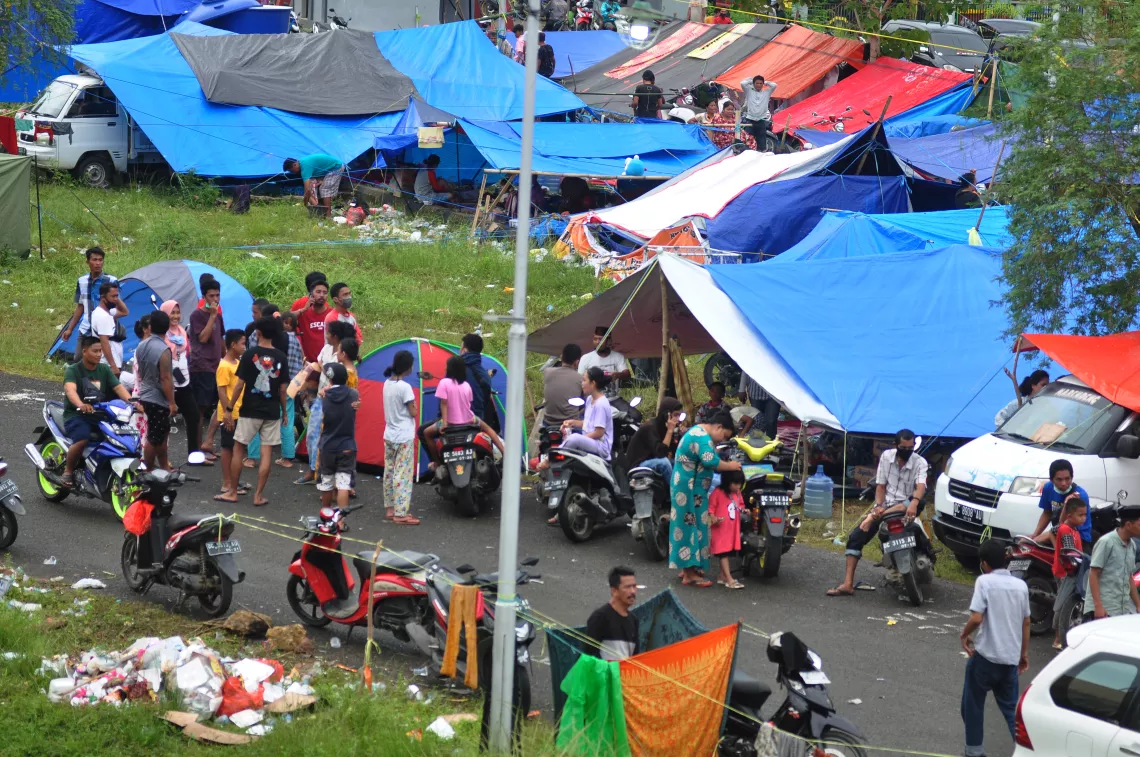
 

On 17 January 2020, earthquake survivors gather at a temporary shelter at Manakkara Stadium in Mamuju Regency, West Sulawesi, Indonesia. According to the National Disaster Mitigation Agency (BNPB), there are currently 27,000 survivors living in 30 shelters in Majene and Mamuju regencies.
UNICEF/UN0401216/M Iqbal On 17 January 2020, earthquake survivors gather at a temporary shelter at Manakkara Stadium in Mamuju Regency, West Sulawesi, Indonesia. According to the National Disaster Mitigation Agency (BNPB), there are currently 27,000 survivors living in 30 shelters in Majene and Mamuju regencies.

The National Agency for Disaster Management is leading the response with support from several government agencies including the Ministry of Social Affairs and the Ministry of Health and other organizations.
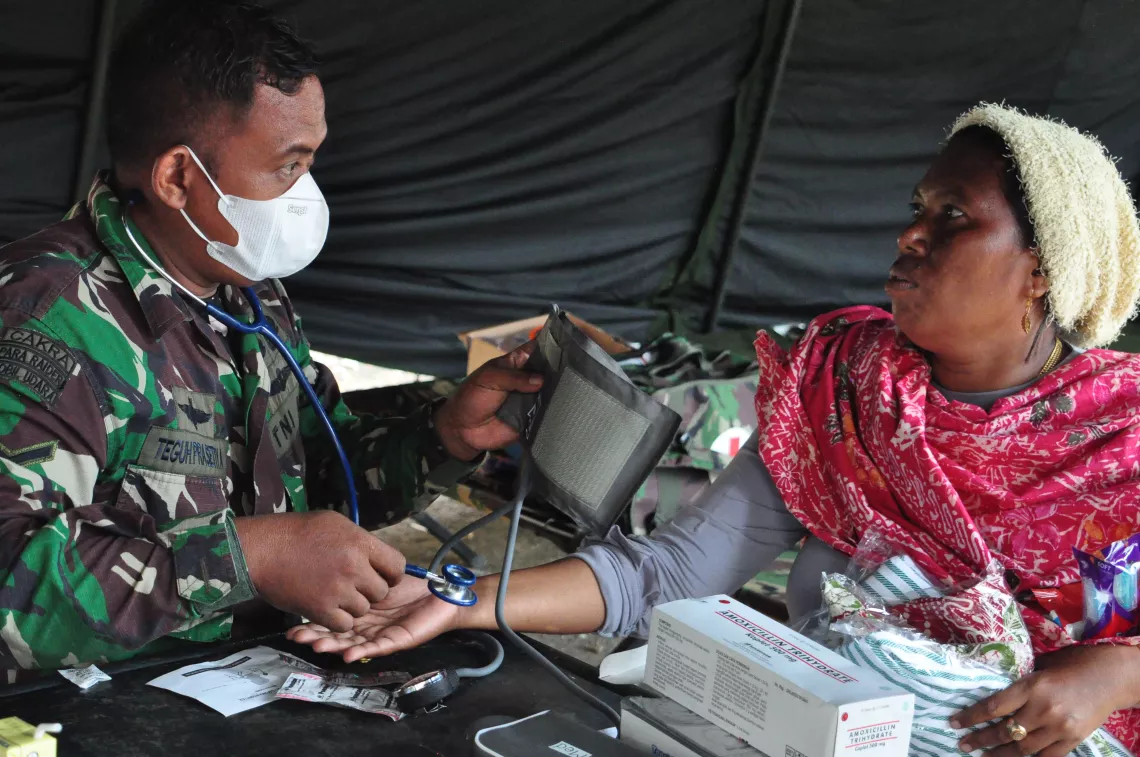
On 17 January 2020, a member of the Indonesian army examines an earthquake survivor in a shelter at Manakarra Stadium in Mamuju Regency, West Sulawesi, Indonesia.
UNICEF/UN0401214/M Iqbal On 17 January 2020, a member of the Indonesian army examines an earthquake survivor in a shelter at Manakarra Stadium in Mamuju Regency, West Sulawesi, Indonesia.

UNICEF is working with local authorities to conduct needs assessments from its field office in Makassar, located some 400km from the disaster site.

Already, UNICEF has provided assessment tools and technical support to the teams of social workers mobilized by the social protection agency and is supporting teams on the ground to assess water and sanitation needs.

UNICEF has also mobilized its teams and partners to be ready to provide additional help to ensure that in the coming days children’s lives will be minimally disrupted. Within this and any natural disaster, UNICEF aims to ensure that children can continue to learn, receive health care, access adequate nutrition and safe water, sanitation and hygiene services and are also safeguarded from exploitation and harm.
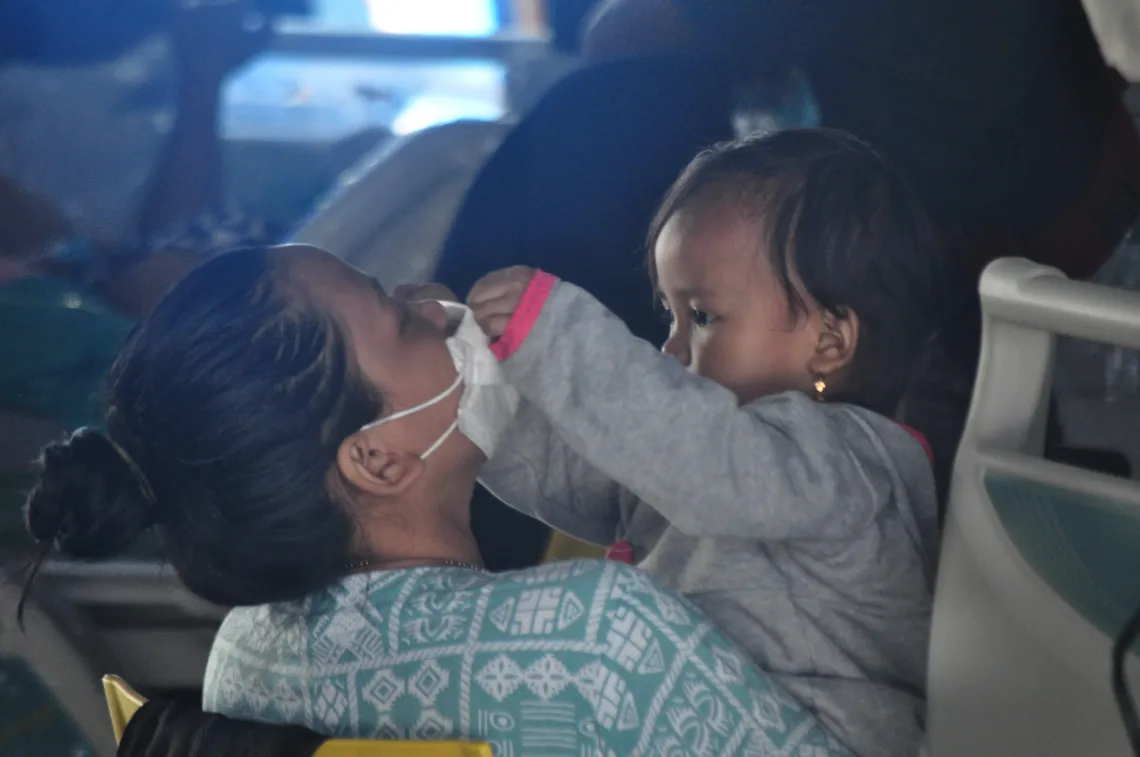
On 17 January 2021, a child puts a mask on her mother in a medical tent in Mamuju Regency, West Sulawesi, Indonesia.
UNICEF/UN0401208/M Iqbal On 17 January 2021, a child puts a mask on her mother in a medical tent in Mamuju Regency, West Sulawesi, Indonesia.

All support is provided in accordance with COVID-19 prevention protocols. The total cases of COVID-19 in West Sulawesi were 2,531 as of 15 January 2021, and the number is expected to increase due to this disaster. The earthquake also risks hampering the ongoing COVID-19 vaccination programme in that area.