

Driving Climate Action for Children in India
For every child, a healthy planet

Driving climate action for children in India is integral to UNICEF’s mission of realizing the rights of every child, especially the most vulnerable. Through its country programme, UNICEF partners with the Government of India to strengthen climate-resilient systems and services, scale up child-centred adaptation solutions across national flagship programmes, and empower children and young people to lead environmental action and build a more sustainable future.
UNICEF India advocates for and supports the integration of climate-sensitive approaches into national and sub-national climate, environment, sectoral and social protection policies, plans and budgets, including Nationally Determined Contributions (NDCs), National Adaptation Plans (NAPs), State Action Plans on Climate Change (SAPCCs), and sectoral programmes.
To inform policy and programming, UNICEF adopts an evidence-based approach, generating knowledge and analysis on areas such as climate-resilient WASH and health systems, the impacts of climate change on child nutrition, climate risks facing children, and green skills and employment opportunities for young people.
Building Climate-Resilient Water and Sanitation Service Delivery Models
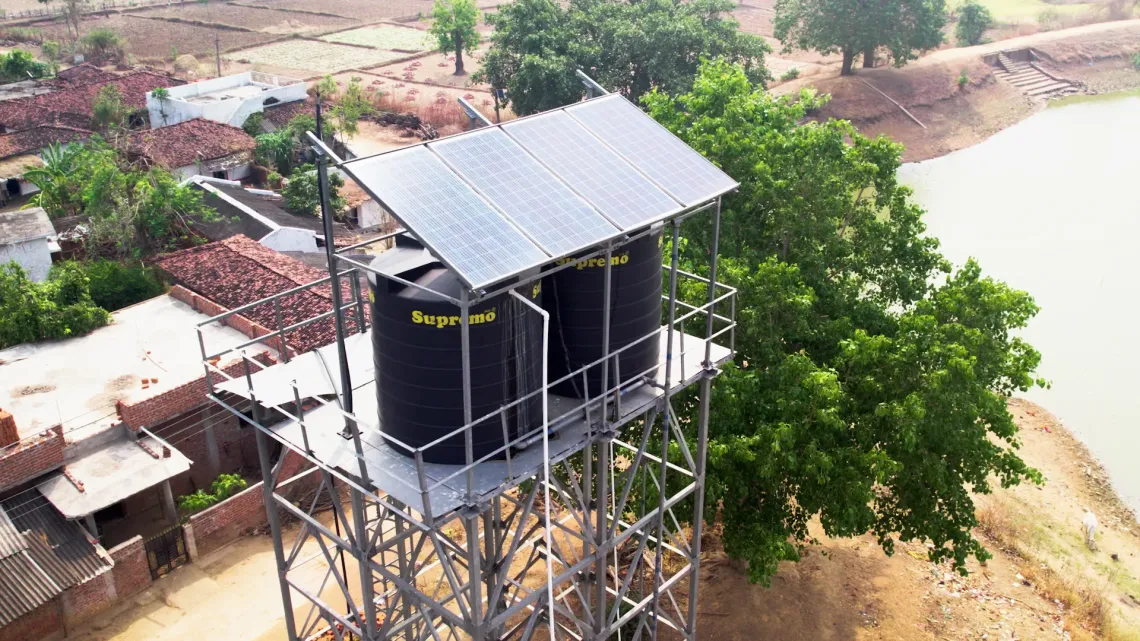
Climate change is placing increasing pressure on water resources and sanitation systems. UNICEF supports flagship government programs such as the Jal Jeevan Mission and Swachh Bharat Mission to strengthen climate-resilient water and sanitation services.
This includes promoting source sustainability and water resources management, expanding solar-powered water supply to reduce dependency on fossil fuels, and capacity building on climate-resilient sanitation infrastructure, such as flood-resistant sanitation infrastructure to withstand extreme weather events. UNICEF also supports greywater management, faecal sludge management, plastic waste management and its circularity, and other sustainable waste management and nature-based solution practices that improve environmental outcomes and community resilience.
Strengthening Climate-Resilient Health Systems
Climate change is increasing the burden of disease and placing additional pressure on healthcare systems. UNICEF partners with the Ministry of Health and Family Welfare through the National Program on Climate Change and Human Health to strengthen climate-resilient healthcare services.
This includes supporting climate action planning, promoting energy-efficient and solar-powered healthcare facilities, energy audits and advancing sustainable solutions that improve health system resilience, including cold chain and vaccination.

Clean and Green Schools led by WASH in Institutions
Under its Clean and Green Schools Programme, UNICEF supports the implementation of the Swachh Evam Harit Vidyalaya Rating (SHVR), India's five-star rating system for climate-resilient Water, Sanitation and Hygiene (WASH) in schools. Implemented across 1.47 million schools and reaching nearly 247 million children (Source: UDISE 2024-2025), SHVR recognizes schools for excellence in WASH and environmental sustainability through Eco-Clubs for Mission LiFE.
By promoting resource conservation, waste management, and climate action, the initiative helps create cleaner, greener and more climate-resilient learning environments. UNICEF serves as a key technical partner to the Ministry of Education, supporting the development of the framework, digital platform, capacity building and quality assurance.
UNICEF supports the integration of climate change into school safety programmes across eight states, strengthening the resilience of schools and children to climate-related risks and disasters. UNICEF also supports the national teacher training package on climate change education, including a Teacher Handbook and a Training of Trainers (ToT) Guide, to build educators’ capacity and promote climate literacy among students.

Promoting Sustainable Food Systems
Climate change affects food security, nutrition and livelihoods. Through its support to POSHAN Abhiyaan and partnerships with governments, United Nations agencies, and development partners, UNICEF promotes healthy, local, and seasonal diets while advocating for food systems that are resilient, nutritious, and environmentally sustainable.
Young People Leading Climate Action
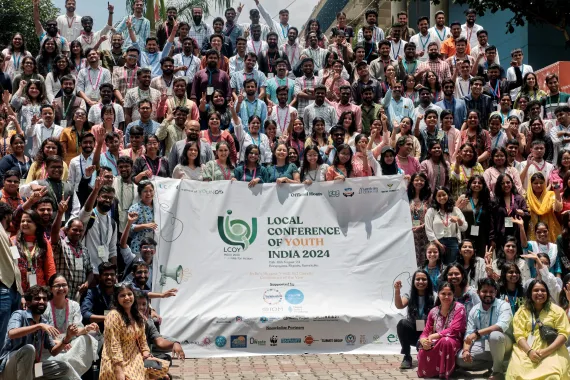
Young people are driving innovative solutions to climate and environmental challenges across India. UNICEF supports children and youth by strengthening their knowledge, leadership and participation in climate action through platforms like state-level youth conferences, hackathons, and youth-led awareness drives. Through dialogue, partnerships and capacity-building, we help ensure that young people are recognized as important stakeholders in climate policy, planning and decision-making at all levels.
Working Together for Every Child
Protecting children from climate change requires collective action. UNICEF India works alongside governments, civil society, academia, development partners, the private sector and communities to build resilient systems and environmentally sustainable solutions that protect children's rights today and for generations to come.
Together, we can create a future where every child grows up in a world that is cleaner, healthier, safer and more sustainable.
For every child, a healthy planet.