Restoring Health Services Through Health Commodities
Additional 35 metric tons of medical supplies land in Port-au-Prince to support UNICEF's efforts in restoring the crippled health system in Haiti.

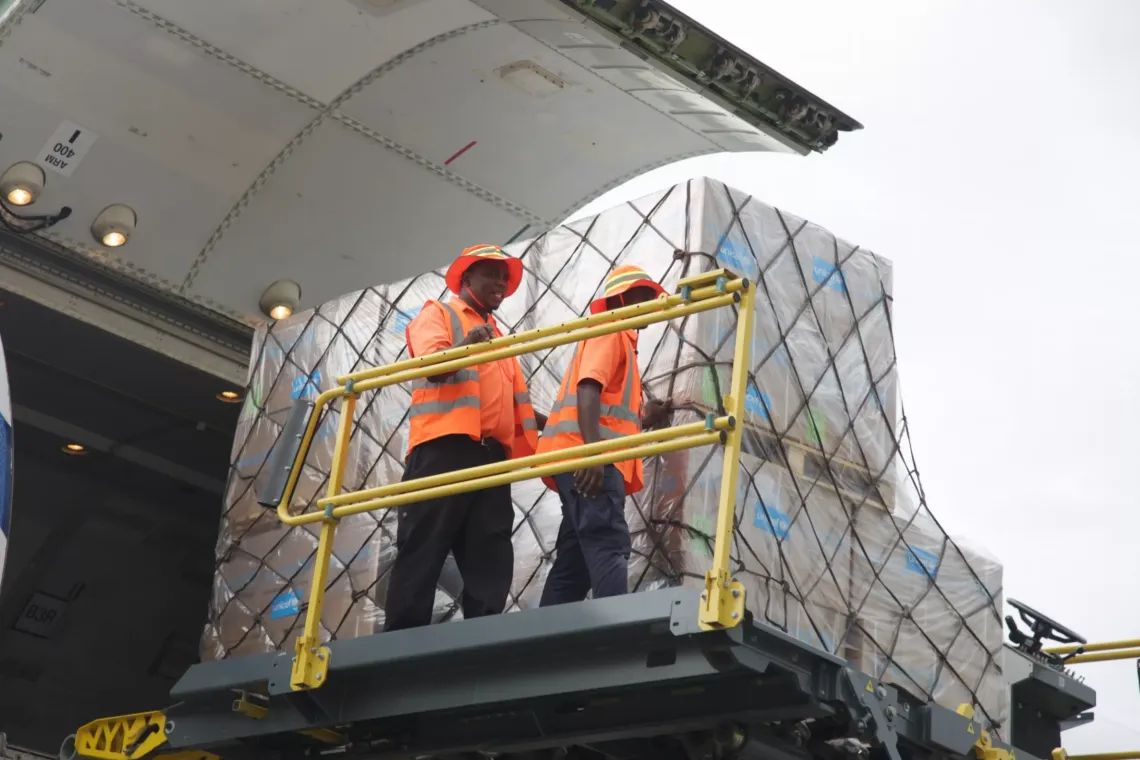
PORT-AU-PRINCE (Haiti), 17 June 2024 - Two cargo flights carrying over 35 metric tons of additional medical supplies landed in Port-au-Prince today to support UNICEF's efforts in saving lives and restoring the health system across the country. The supplies mainly consist of emergency health kits, obstetric and midwifery supplies, community drugs, acute water diarrhea kits, antibiotics, and other critical medical items for newborns, children, mothers, and families.
"Faced with a health system on the verge of collapse, UNICEF is committed to reinforcing essential commodities for health institutions and communities. These supplies are vital for strengthening the health system and saving the lives of children and women. They will be directed to hospitals and health centers heavily affected by the crisis, taking into account the significant movement of internally displaced populations from the metropolitan area of Port-au-Prince to other departments since March 2024. Additionally, some of the supplies will be prepositioned in anticipation of the cyclonic season that has already begun," explained Dr. Jean Bosco Hulute, Head of the Health Programme at UNICEF in Haiti.
Across the country, six out of ten hospitals are not operating due to shortages of electricity, fuel, and medical supplies, which have had a severe impact, particularly in the metropolitan area of Port-au-Prince, where less than half of the existing health facilities are fully functional, according to the latest assessment conducted by the Ministry of Health and WHO. Some hospitals and health facilities have been looted, vandalized, and forced to close due to safety concerns. In areas controlled by non-state armed groups in the Artibonite department, only one in four health facilities is functional.
The situation is further exacerbated by the rainy season, which may lead to flooding and a resurgence of cholera cases. As of May 28th, the country reports a total of 84,000 suspected cholera cases. The National Emergency Operations Center has announced a “hyperactive” cyclone season, predicting 23 phenomena between June and the end of November 2024, 11 of which could develop into hurricanes.
UNICEF is exploring ways to mobilize additional funding to assist health facilities in ensuring the continuity of essential and lifesaving health commodities. Furthermore, support will be provided to strengthen the supply chain and management for a more sustainable system in the near future. A strong medical supply chain is crucial for delivering safe and effective high-quality care.
"These investments aim to strengthen the availability of health commodities so that facilities can provide medicines, treat patients and those in need free of charge, enhance patient safety, maintain operational health facilities, ensure effectiveness and cost-efficiency, and build resilience against financial and operational capacity disruptions of the supply chain," concluded Dr. Hulute.