Grand Sud: new school infrastructure to support learning
In Haiti’s Grand Sud, two new schools were inaugurated in April 2026, thanks to Canada and the MPTF, making learning possible for more than 740 children.
- Français
- English
In Haiti’s Grand Sud, in both Ducis and Plaisance, school has never been just a building. For hundreds of children, it has long been a fragile space, sometimes improvised, often inadequate, but always essential.
In Ducis, in the South, as in Plaisance, in Nippes, children studied for years in difficult conditions. The lack of appropriate infrastructure, the impact of the August 2021 earthquake, a national context marked by a volatile security situation, and limited access to public services all weighed heavily on their education. Whether under temporary shelters, in courtyards, or in classrooms that were not suited to learning, they continued to come to school, despite everything.
But in early April 2026, something changed.
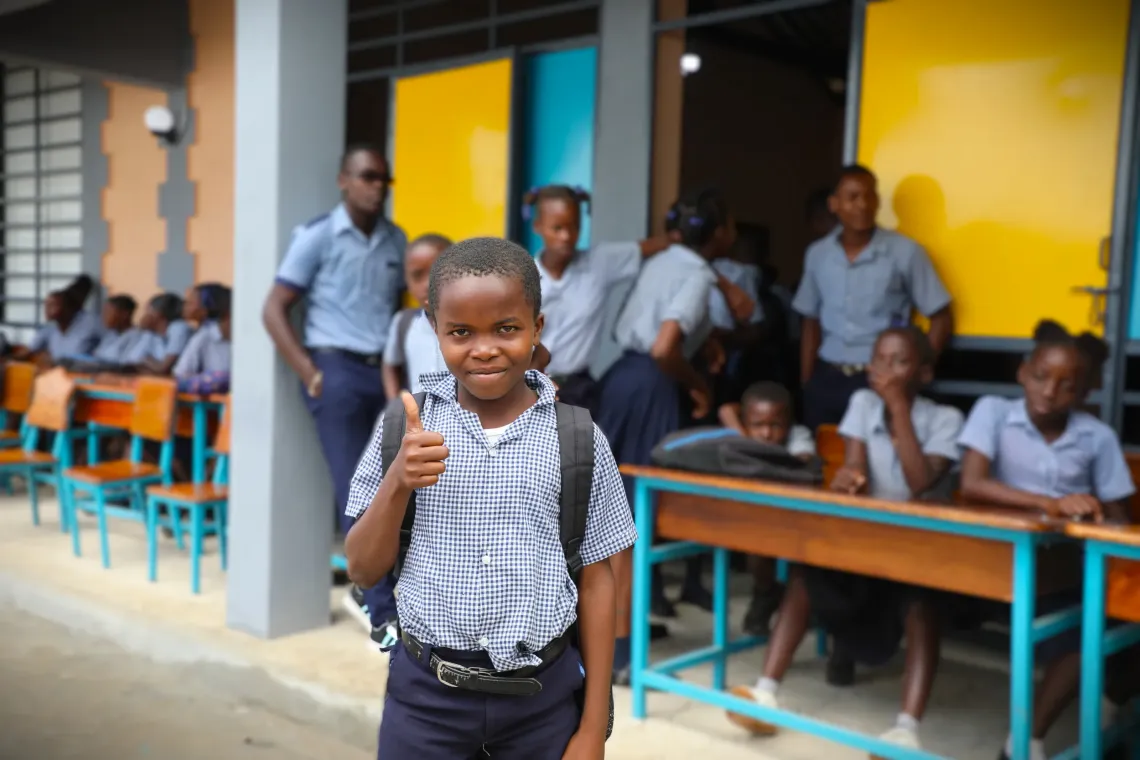
Clavens, 11, a Grade 5 student at Ducis National School, entered, for the first time in a long time, a complete classroom, with walls, a roof, a large blackboard and rows of desks.
“Today, I can finally learn in a real classroom,” he says, smiling.
In Plaisance, children were also discovering their new school. Among them was Mickerline, 10, a Grade 5 student, who looked around the courtyard, the classrooms, and the other students as they gradually made this new learning space their own.
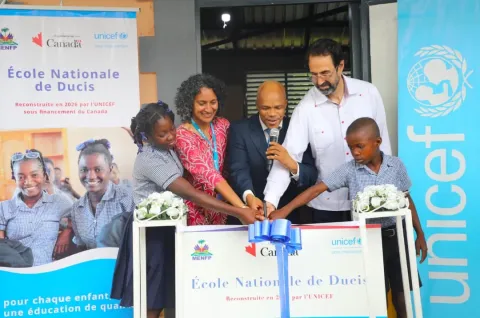
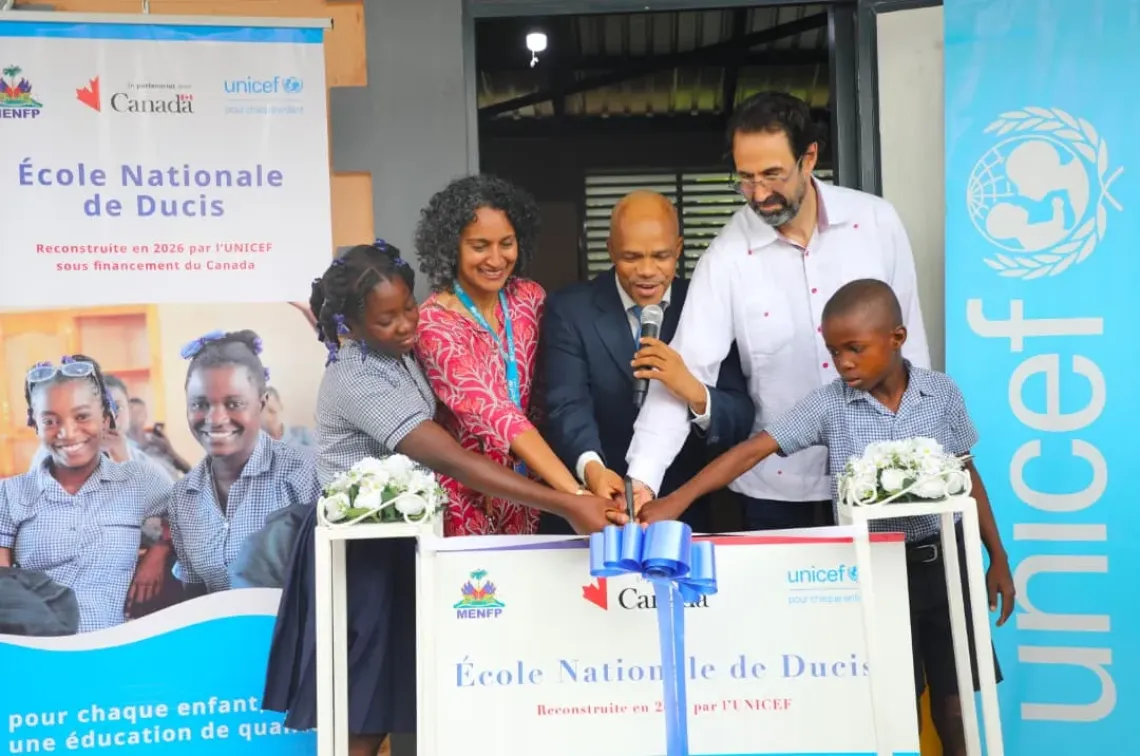
This new chapter was marked by two inauguration ceremonies.
On 7 and 8 April 2026, the Ministry of National Education and Vocational Training, in partnership with UNICEF and with financial support from Canada and the Multi-Partner Trust Fund, officially inaugurated two schools in the Grand Sud : Ducis National School, in the South Department, and Plaisance National School, in Nippes.
Each school includes nine classrooms covering the three cycles of fundamental education, from Grade 1 to Grade 9, two rooms dedicated to preschool, a school canteen with a lunch room, kitchen and storage area, an administrative block for school management, separate sanitation facilities for girls and boys, and access to solar energy.
During the ceremonies, each child received a school kit containing notebooks, pens and essential supplies to help them continue the school year.
In communes where families have already endured the consequences of the earthquake, insecurity and limited access to essential services, these kits represent much more than school supplies. They allow children to return to school with the tools they need to learn. They are also a concrete sign that a future remains possible, and that school, despite everything, can begin again.
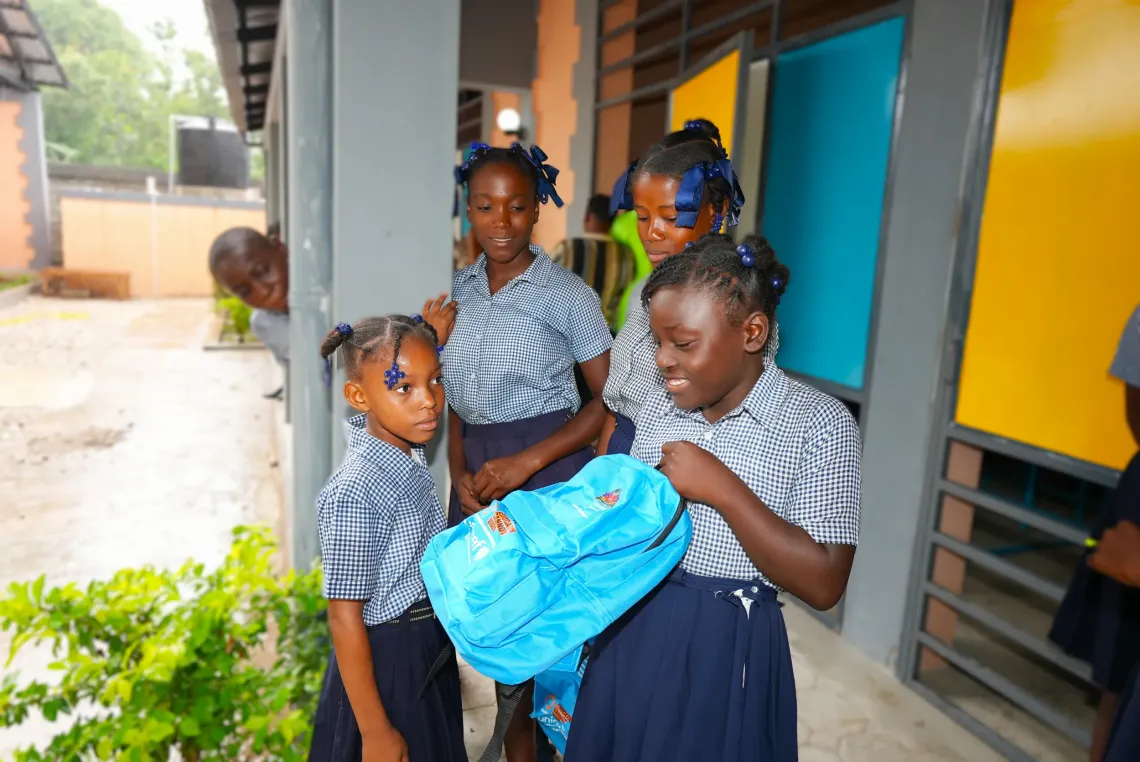
Nadine, 11, a Grade 6 student, did not hide her emotion. “Receiving this bag makes me want to never give up on school,” she says innocently, holding the bag close to her like a treasure.
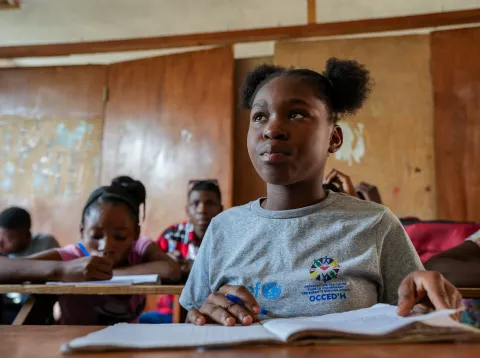
In Ducis, this return to school could be seen in the children’s simple gestures: the desks once again in use, the open notebooks, and the eyes turned toward the blackboard. For Clavens and his classmates, entering this classroom meant regaining a sense of stability.
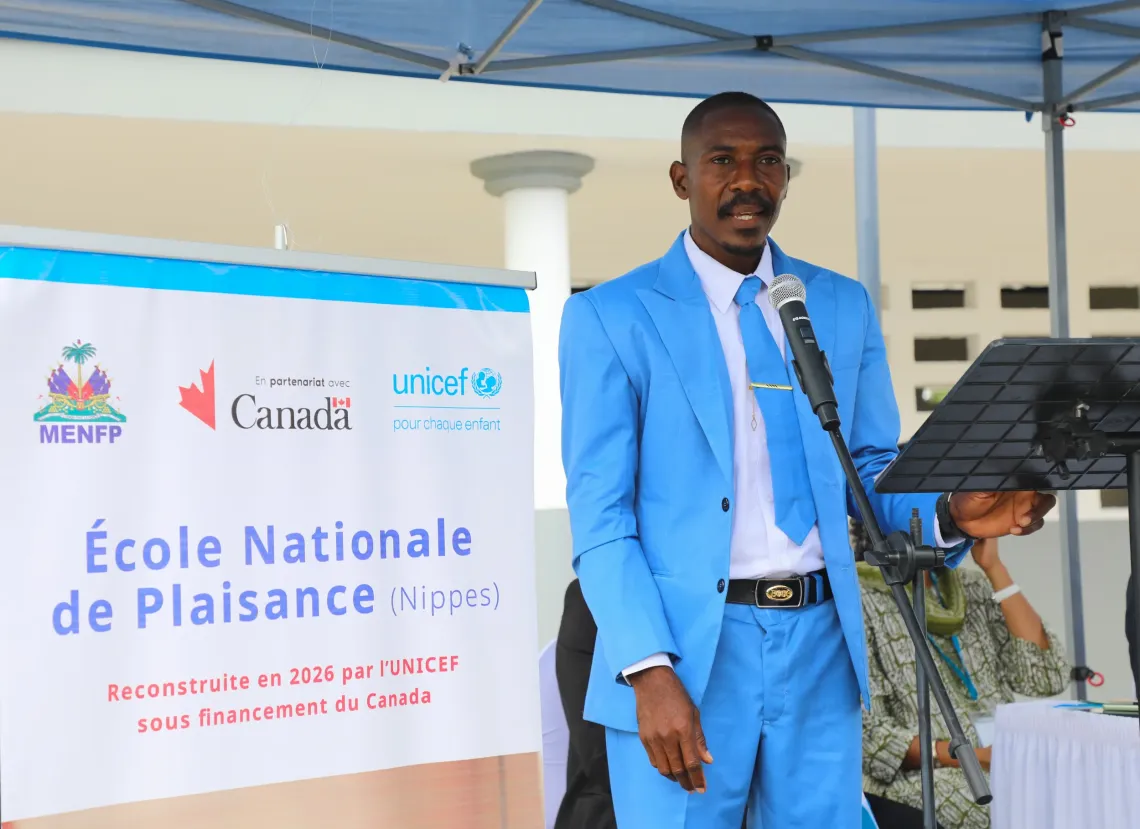
In Plaisance, Director Estephane Lyslin reflected on the journey of the school community and the difficult conditions it had overcome. For him, the new infrastructure gives concrete form to years of perseverance, rigour and commitment.
“We chose the most difficult path, one rooted in rigour and respect for values. As long as we protect this institution, uphold its dignity and preserve its mission, nothing will turn us away from our commitment, because to abandon it would be to abandon the future,” he says with great pride.
These two schools are part of a broader effort to restore access to education in the Grand Sud. Since 2023, UNICEF has supported to the construction of 19 schools in the region, alongside the Government of Japan, the Carlos Slim Foundation, the Government of Canada, the main contributor to the Multi-Partner Trust Fund, and other partners, including Brazil and Guyana. Each new learning space offers a concrete response to an education crisis that has affected thousands of Haitian children for years.
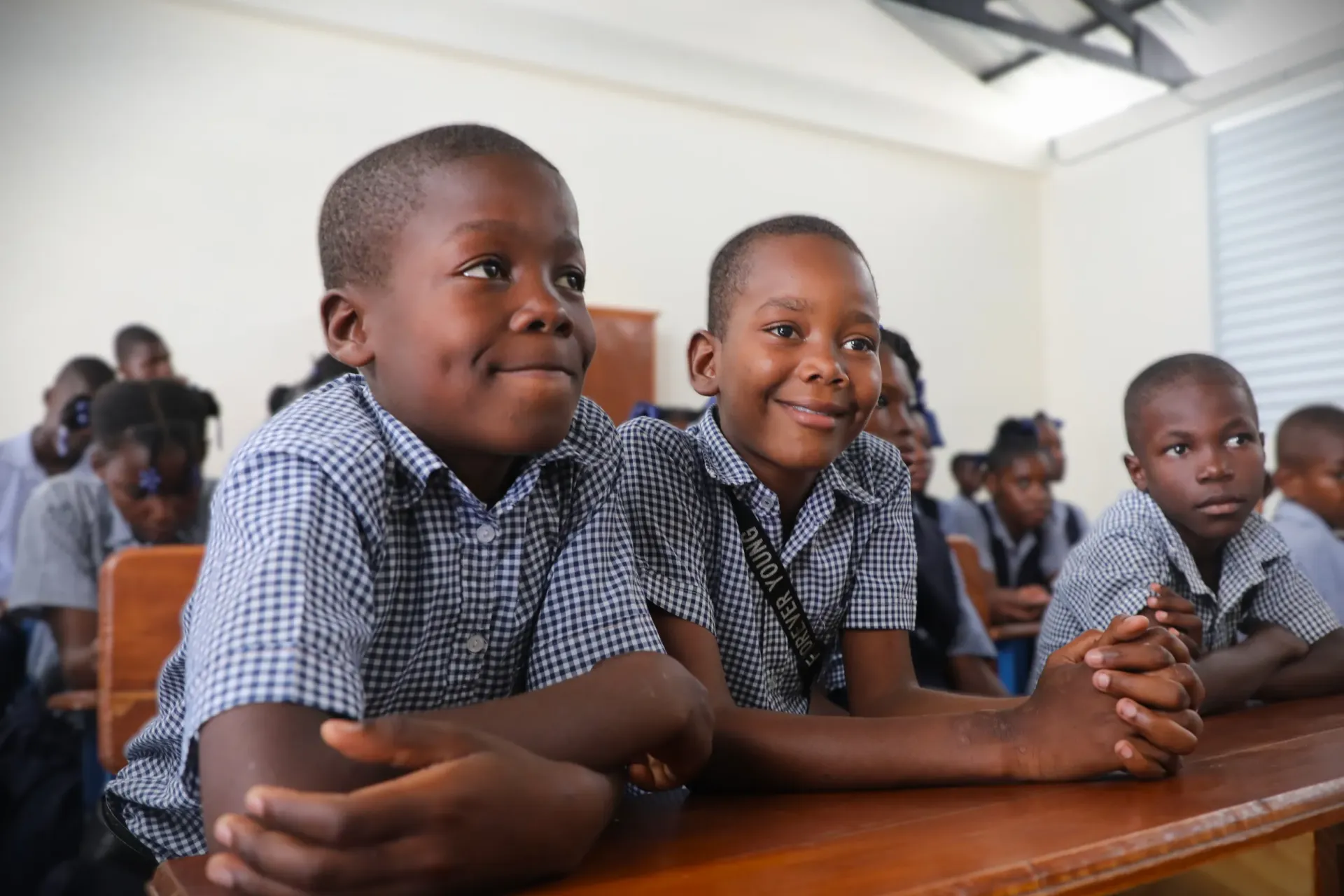
In the new classrooms, children sat at their desks with their notebooks and school kits. For many children around the world, this may seem like the minimum. But for those in Ducis and Plaisance, after years of difficult conditions, it marked an important step towards a more stable, safer and more dignified learning environment.
For Clavens, Nadine, Mickerline and hundreds of other children, the question is no longer whether they will have a place to learn tomorrow, but how far that place can take them.