A U-Report poll highlights insecurity and financial struggles as key barriers to Haiti’s back-to-school season.
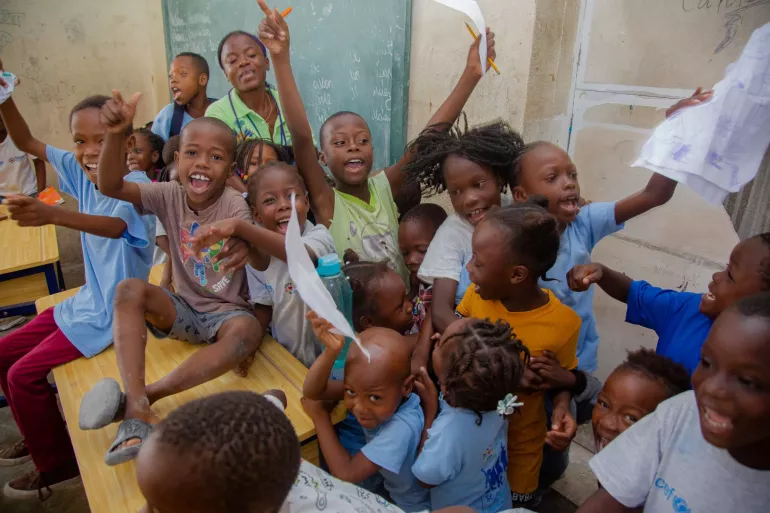
PORT-AU-PRINCE, October 1st, 2024 – A recent U-Report poll reveals that insecurity affecting children and schools is a major concern as the back-to-school season approaches in Haiti. The combined challenges of violence and the financial difficulties faced by parents are severely complicating the return to school for many vulnerable families.
According to a poll conducted on the U-Report platform, 50 per cent of the young participants, totaling over 3,000, believe that security is one of the main obstacles to their return to school.
Since January 2024, more than 900 schools out of nearly 20,000 schools have been closed or suspended operations due to attacks and fears of violence or because they have been repurposed as shelters for displaced families. This situation has exposed children to greater risks, including gender-based violence and child labor. The escalating violence in Port-au-Prince, which is now spreading to other municipalities, has severely disrupted school attendance, threatening the education of over 300,000 children affected by school closures and displacement across the country.
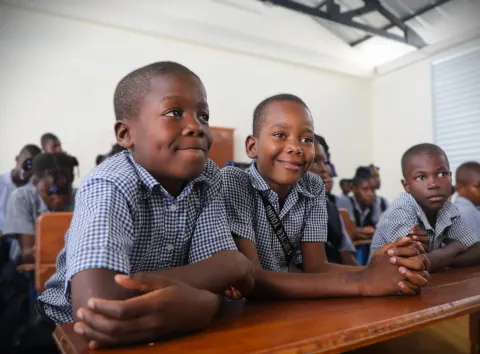
For Haitian children and their families, school has always been a symbol of hope. Indeed, 93 per cent of the young polled expressed that school is essential, offering not only learning opportunities but also a safe space where they can envision a better future.
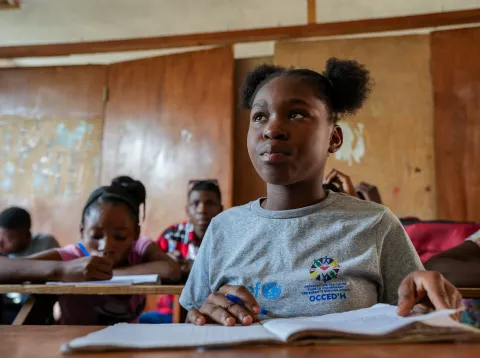
“I dream of becoming a doctor, but for that, I need to go back to school. Not going makes me sad because school is crucial for moving forward in life.”
The impoverishment of families, driven by widespread displacement and the destruction of homes, has heightened pressure on already vulnerable communities. As the school year is approaching, 64 per cent of young people believe that parents need financial support to help prepare their children for school.
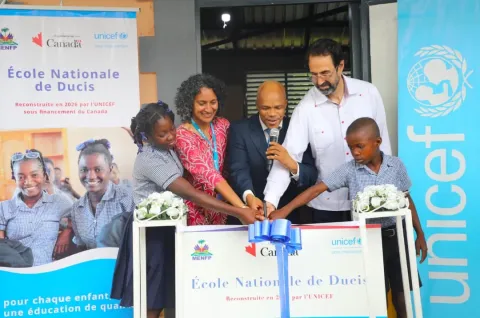
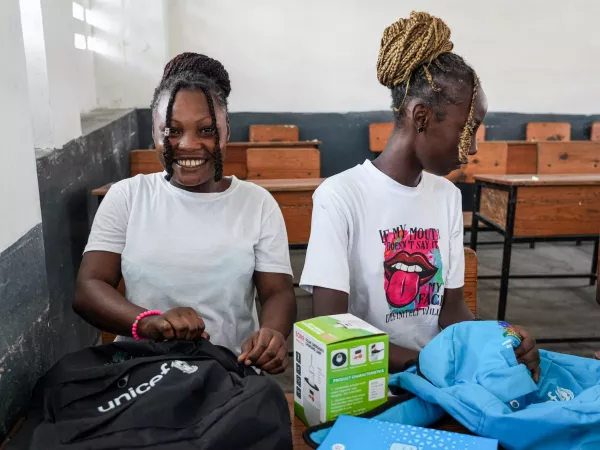
UNICEF is actively working alongside the Haitian government to ensure that displaced and out-of-school children have access to formal and non-formal education. The response includes the rehabilitation of schools, psychosocial support, offering cash transfer to the most vulnerable families, and the distribution of educational materials. UNICEF is also delivering early childhood education kits, school kits, hygiene kits, and is developing kindergartens in schools while distributing first aid kits.
“The impact of insecurity on children’s lives is devastating. It is essential that all influential stakeholders in Haitian society take action to protect students, educators, parents, and the educational infrastructure. Every child deserves the opportunity to return to school and to learn in a safe environment. This is a moment of hope for Haiti, we hold onto hope for Haiti’s children, and we must invest in hope through education.”
The government and UNICEF are committed to responding to this crisis and bringing hope for Haiti’s children. But UNICEF urgently needs $87 million to fully address the needs of this back-to-school season. As of August 1, 2024, approximately $5.4 million has been raised.
Note to editor: U-Report is UNICEF’s digital community for young people, by young people, where they can raise their voices and share opinions on topics that matter to them.
Media contacts
Additional resources
About UNICEF
UNICEF works in some of the world’s toughest places, to reach the world’s most disadvantaged children. Across more than 190 countries and territories, we work for every child, everywhere, to build a better world for everyone.
For more information about UNICEF and its work for children, visit the website: www.unicef.org.