Arriving in time saved Santos’ life before an acute malnutrition emergency
Anticipatory actions prevented an emergency

- Español
- English
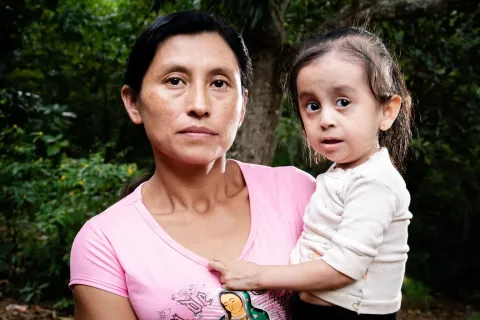
In the community of El Guayabo, Camotán, Chiquimula, lives Santos, a 2-year-and-4-month-old boy who today plays peacefully in the arms of his mother, Brenda (22). It is hard to imagine that not long ago his life was at risk. Santos’ story shows that arriving in time can change everything.
When Santos was born, he was premature, at just six and a half months of gestation. “He was very small and very thin,” recalls his grandmother Juana (50). Brenda’s pregnancy was complicated, and she herself was underweight. However, after Santos’ birth, Brenda was able to improve her nutrition and, thanks to breastfeeding, Santos gradually began to gain weight and strength.

In October, an illness affected several members of the family, including Santos. In a context marked by food insecurity linked to drought, Santos began to lose weight rapidly—an alarming sign that put his life at risk. In Guatemala, 28,415 cases of acute malnutrition were recorded in 2024, and 126 children died from this cause. In departments such as Chiquimula, part of the Dry Corridor, multiple risk factors converge, including poverty, limited access to basic services, and food insecurity.
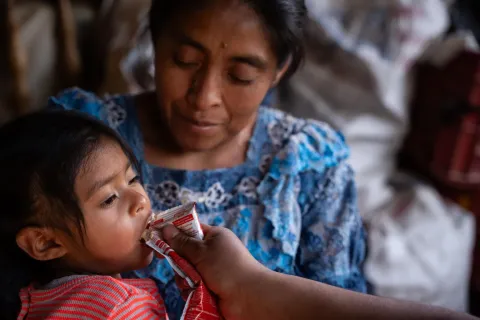
In these remote and hard-to-reach communities, what could have become a serious emergency did not. Thanks to timely access to essential health and nutrition services provided by UNICEF’s integrated brigades in support of the Ministry of Health—teams made up of one nutritionist and three nutrition assistants—Santos was identified in time as having moderate acute malnutrition, and his treatment began immediately.

“I am very happy because the brigades have helped us a lot. They have given us advice on how to feed and care for my son, and now Santos is getting better”
Santos’ recovery was not only the result of timely nutrition care; the family and community environment also played a key role. Gumercindo, his grandfather, is a member of the SAHTOSO community committee (Sustainable Total Sanitation and Hygiene), a methodology promoted in Guatemala by UNICEF and led by the community itself. It encourages behavior change and the adoption of attitudes and practices aimed at eliminating fecal–oral contamination to reduce diseases linked to human waste.
From this role, Gumercindo (50) now promotes essential hygiene practices to prevent illness. Actions such as handwashing, proper food cleaning, and household water treatment to ensure safe consumption were key to preventing Santos’ acute malnutrition from worsening. These practices, strengthened through water, sanitation and hygiene (WASH) interventions, are now part of the daily life of both the family and the community.

Nutrition and WASH interventions are part of a comprehensive and complementary package of Anticipatory Actions aimed at reducing or preventing the impacts of drought. These actions, financed by the Central Emergency Response Fund (CERF), have benefited more than 7,000 families in the municipalities of Camotán and Jocotán, Chiquimula.
As part of these integrated anticipatory actions implemented in El Guayabo, Santos’ family also received support to strengthen their food security. Chickens provided by FAO (the Food and Agriculture Organization of the United Nations) helped incorporate foods with higher nutritional value into Santos’ diet, accelerating his recovery. In addition, unconditional cash transfers provided by WFP (the World Food Programme) helped cover the purchase of maize, grains, medicines, and essential supplements at the time they were most needed.
We learned that hygiene and clean water protect the family’s health, especially that of children. And with the chickens and the cash assistance we received, we can now give them better food and prevent them from getting sick.

Continuous follow-up, timely treatment provided by the integrated health and nutrition brigade, and strengthened community capacities made it possible for Santos to recover quickly. Today, he is a child growing up with better opportunities, in a more protected environment.
Santos’ story demonstrates that integrated anticipatory actions are an effective model: they place families and communities at the center, strengthen essential services, and make it possible to anticipate risks before they turn into emergencies.
Anticipating is investing in childhood. Every action we take today helps build a healthier, safer, and more dignified future for all girls, boys, and adolescents—and for the communities where they grow up.