When every minute matters
Bringing emergency healthcare closer to mothers and children in northern Ghana

In Ghana’s Upper East Region, the journey to care can be long, dusty and uncertain. For a pregnant woman in a hard-to-reach community, every minute of delay can deepen the fear for her life and the life of her unborn baby. When complications begin, families often look first to the nearest Community-based Health Planning and Services (CHPS) compound, where community health workers must act quickly with the equipment and tools they have. Through the KOICA CHPS+ Phase II Project, implemented by UNICEF in partnership with the Ghana Health Service, that moment of fear is met with faster referral support, essential medical equipment, and a safer way to move mothers and children toward the care they need.
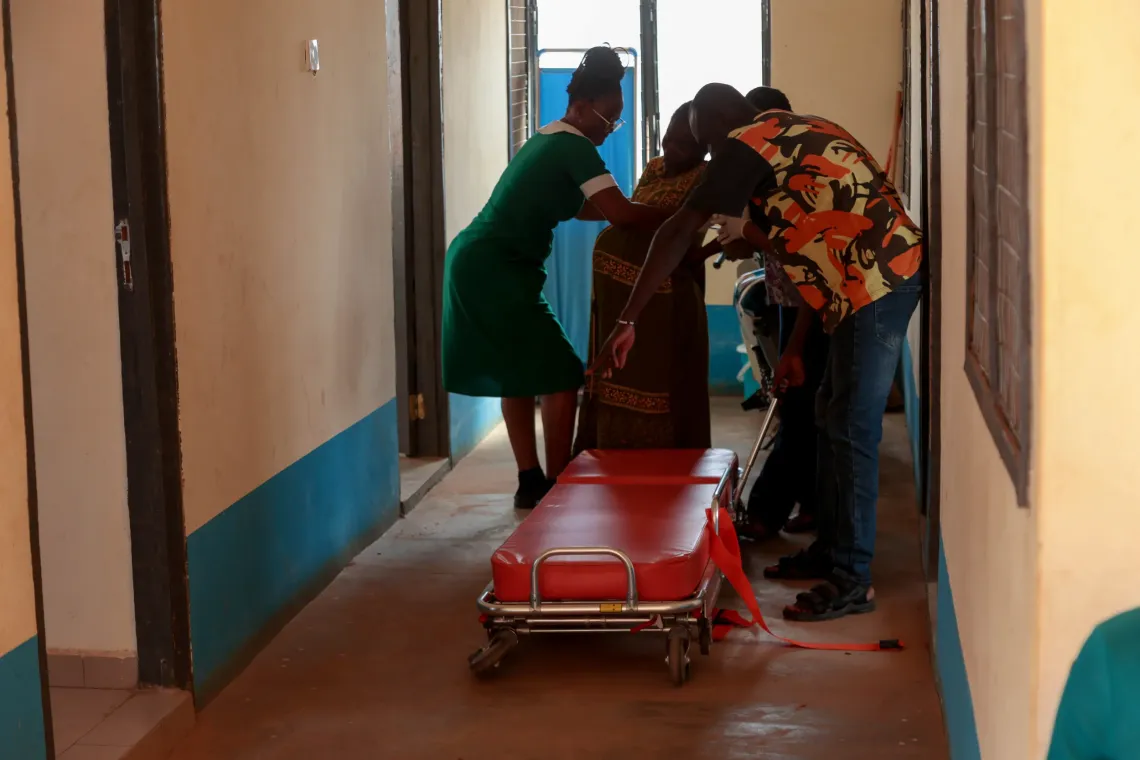
At Bowku CHPS in the Upper East Region, the compound's quiet changes when a pregnant woman needs urgent referral. Community health volunteers and health workers gather around her with care and speed, preparing her for transport in a Modified Tricycle Ambulance donated through the KOICA-UNICEF initiative. In that moment, the stretcher and the waiting ambulance represent more than equipment; they represent hope that help can arrive in time.
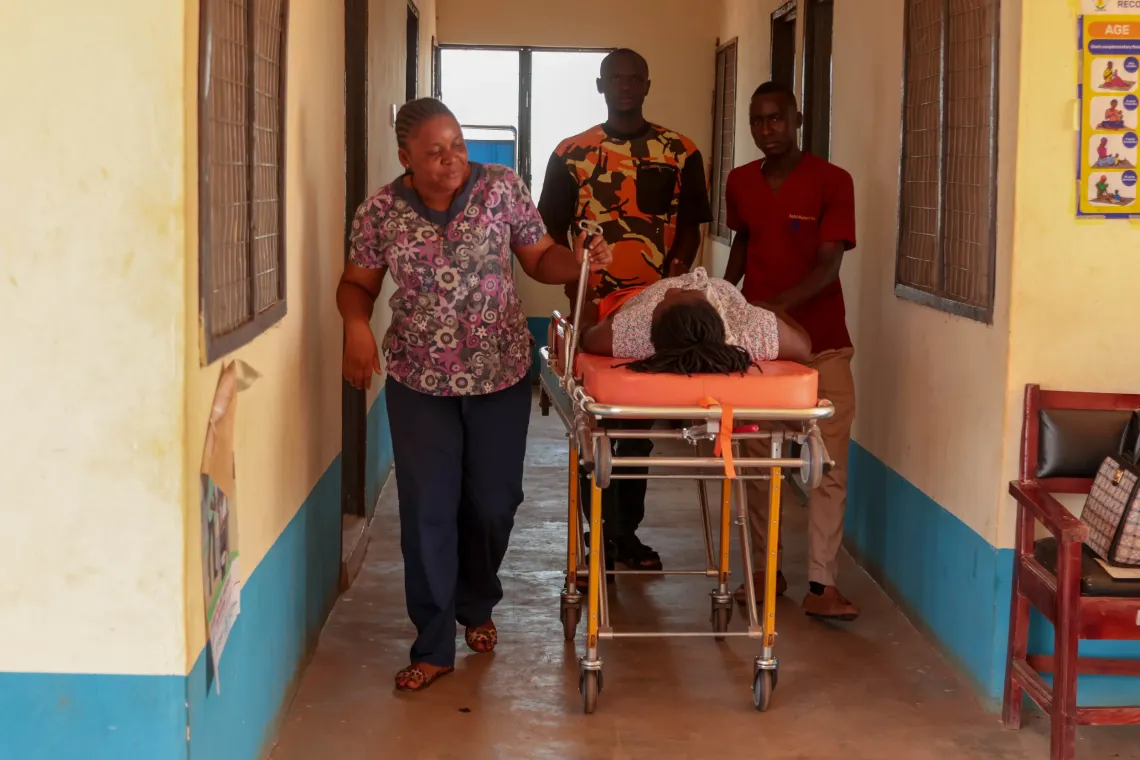
With gentle hands and focused faces, the team lifts the woman onto the stretcher and moves her towards the ambulance. Around her, everyone has one goal: to reduce the delay between danger and care. For a mother, that journey can feel frightening. For the health workers beside her, it is a race to protect two lives.

Parked in front of Bowku CHPS, the Modified Tricycle Ambulance shows what's possible when care comes closer to the people who need it most. In communities where rough roads and long distances can delay referrals, this ambulance helps turn uncertainty into action and gives families a safer path from the community to the health facility.

For health workers, emergency referral is not only a clinical duty; it is a commitment to protect a mother, a newborn, a child and a family waiting anxiously for good news. Community health volunteers, midwives and drivers each play a role in stabilising the patient, preparing the ambulance and keeping the referral pathway moving. The KOICA-UNICEF support strengthens this chain of care at the point where every decision can matter.
“Before, we sometimes felt helpless when a mother needed an urgent referral and transport was not available. Now, when the call comes, we know we can move faster and more safely. This ambulance gives us confidence that we can do more than comfort a family; we can help save a life.”

Inside the Modified Tricycle Ambulance, the stretcher, oxygen support and basic emergency equipment offer something many families in remote communities urgently need: a safer journey to care. For a pregnant woman facing complications, these supplies can help replace uncertainty with dignity, protection and the chance of survival.

Before departure, health workers continue to monitor and support the pregnant woman inside the ambulance. Their calm, coordinated response reflects the purpose of the KOICA-UNICEF investment: to ensure that when danger signs appear, mothers, newborns, and children are not left to wait, worry, or travel without support.

Across northern Ghana, community health volunteers are often the first people families call when something goes wrong. They know the footpaths, the homes, the fears and the urgent needs of the communities they serve. With transport, equipment and training support, they can help identify danger signs, mobilise referrals and reassure families that they are not alone.

Behind the wheel, a community health volunteer driver stands ready to respond. His work may begin with the sound of an urgent call, but it carries the hopes of a family waiting for help. Through the partnership between KOICA, UNICEF and the Ghana Health Service, emergency transport is becoming part of a stronger, more responsive primary healthcare system for communities in northern Ghana.
For mothers and children in hard-to-reach communities, the impact is felt in the moments that matter most: a health worker arriving faster, a mother travelling more safely, a family holding on to hope, and a child given a better chance at life. What was once a difficult journey to care is becoming a faster, safer pathway to survival.