It Has Come”: How Ghanaian classrooms are shattering the stigma of menstrual health
How the Adolescent Girls Programme is breaking old taboos, turning anxious whispers into open conversations, and keeping girls in school.
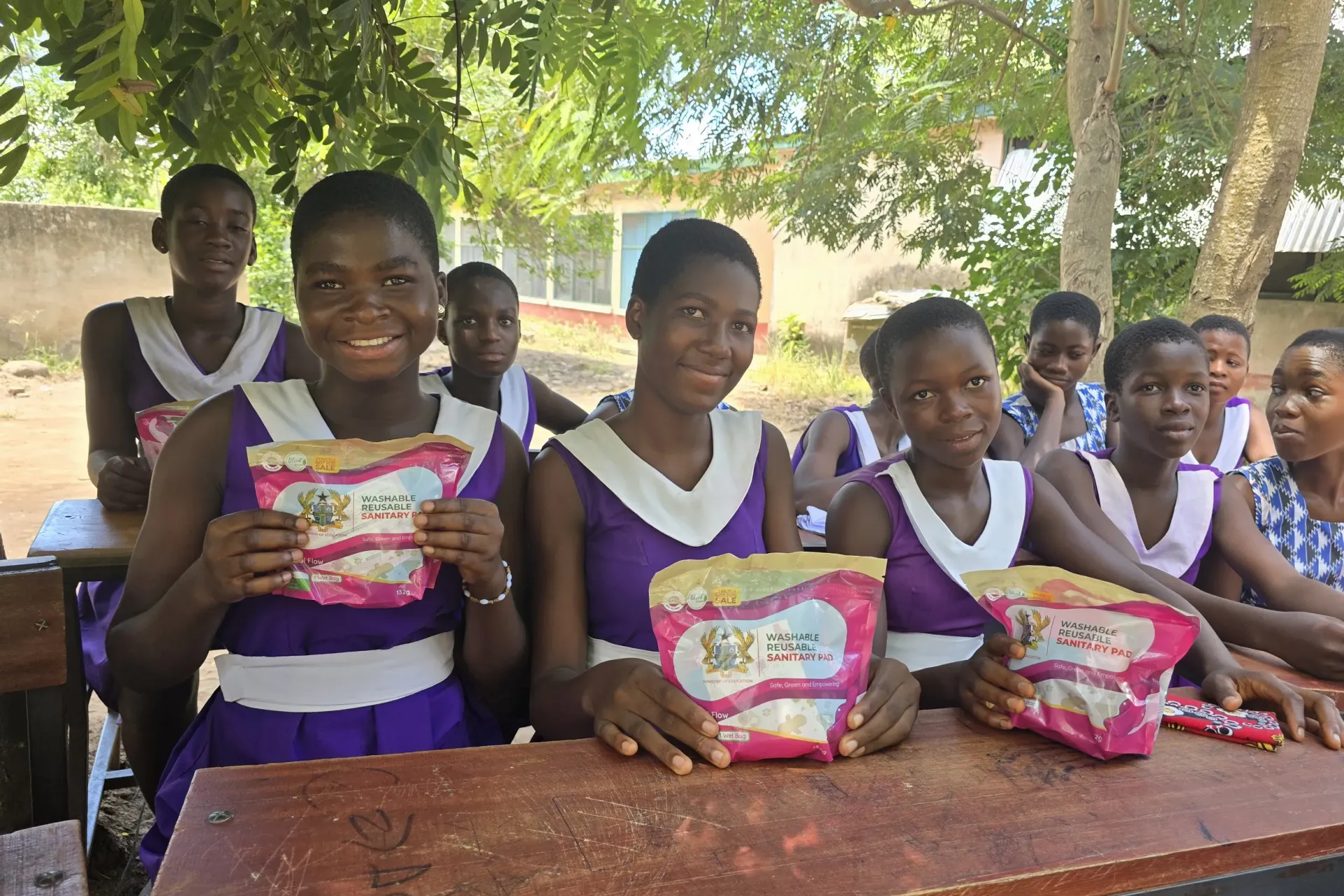
“Madam, it has come.”
This is how a headteacher at a Junior High School in the Volta Region proudly notes her female students come to her for support when they have begun their menstrual cycles. It is no longer communicated in anxious whispers, or with confusion and embarrassment, but now openly and matter-of-factly.
For her, this simple phrase represents something much bigger: girls are becoming more empowered to speak openly about reproductive health, ask questions without shame, and seek support exactly when they need it.
We saw this firsthand last week while visiting schools in the Central Tongu District alongside our colleagues from the Ghana Education Service (GES). We were there to monitor the implementation of the Adolescent Girls Programme (AGP) Phase II, a multisectoral joint initiative by UNFPA and UNICEF, funded by the Government of Canada. Central Tongu is one of 35 districts implementing this innovative programming, which weaves together education, health, nutrition, child protection, and social behavior change to help adolescent girls stay healthy, safe, and in school.
Launched to span from 2024 to 2030, the overarching goal of this partnership is to empower adolescent girls through improved access to reproductive education and rights-based, quality sexual and reproductive health services in Ghana.
Building the Ecosystem of Support
Within the education component, the programme focuses on equipping District Teacher Support Teams, teachers, school leadership, and student peer leaders with the skills and confidence to facilitate honest conversations. They tackle topics that are too often shrouded in silence: adolescent development, reproductive health, the prevention of pregnancy, re-entry for young mothers, gender-based violence, menstrual hygiene management, and general wellbeing.
This approach recognizes that schools are not just spaces for academic learning. They are critical environments where adolescents develop the confidence, relationships, and life skills that shape their entire futures.
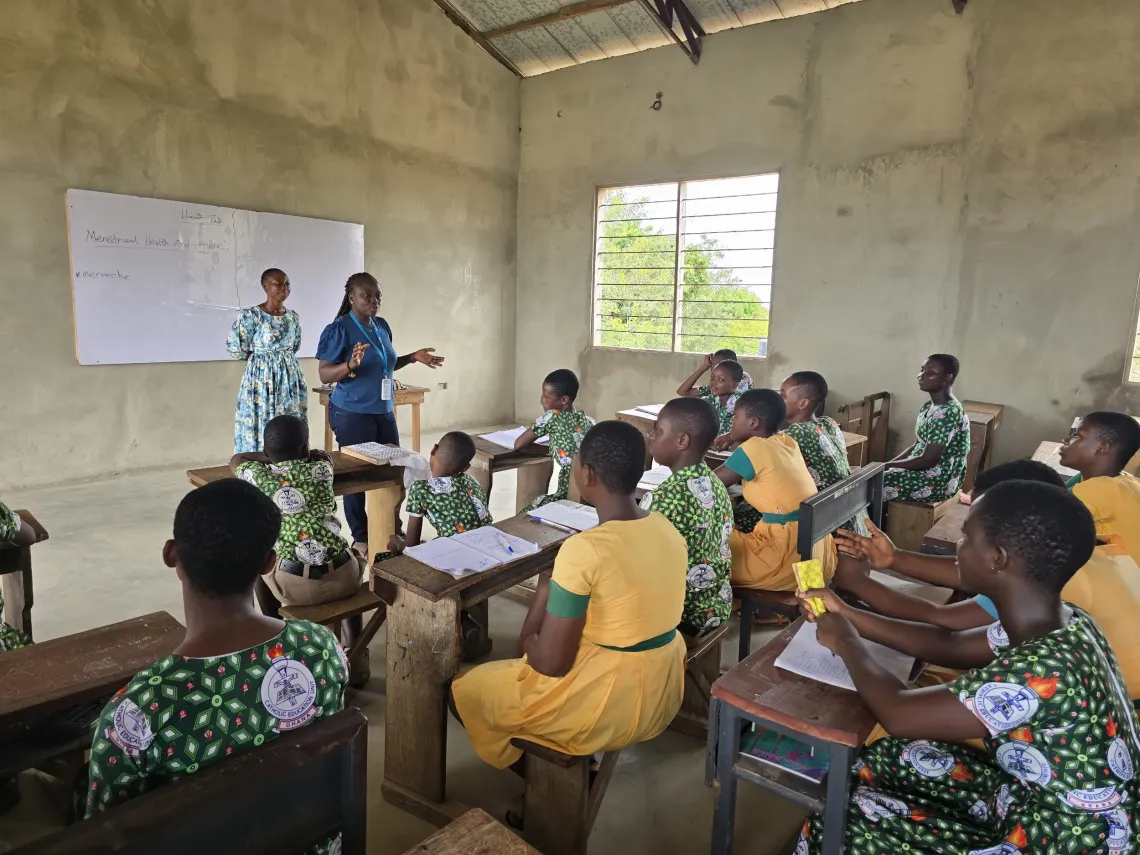
Earlier in the week, participating districts held intensive workshops for educators on how to integrate these vital topics into regular school activities. We watched teachers present mock lessons to their peers and receive structured, practical feedback from GES technical experts.
The momentum quickly cascaded directly to the classroom. Selected student peer leaders were trained to lead discussions and activities with their classmates through both formal and informal sessions.
Peer leaders are an essential part of student leadership structures in Ghanaian schools, typically drawn from existing roles like school and class prefects or club leaders. Within this initiative, they have played a key role in creating safe, relatable spaces—strengthening communication between students and teachers, promoting positive behavior, and ensuring student voices are genuinely reflected in school life.
From Sobering Realities to Classroom Allies
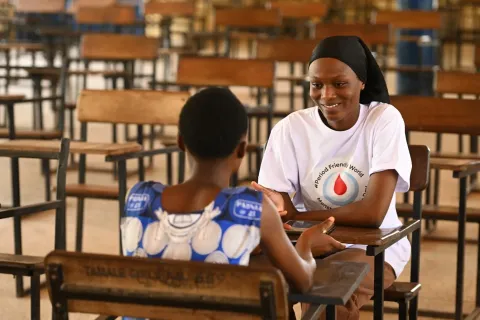
One of the practical, school-based trainings we witnessed focused on how to care for and safely use reusable sanitary pads. For many of the girls, this was their first time using this type of product, made available through Ghana’s Free Sanitary Pad initiative. The girls shared candid feedback on their early experiences, offered thoughtful suggestions to improve the product, asked sharp questions about hygiene, and reflected on deeply rooted cultural beliefs and superstitions surrounding menstruation.
Personally, we found these conversations both sobering and inspiring.
They were sobering because many of these adolescent girls are only just beginning their menstrual journeys, yet they already had difficult stories to share. They spoke openly about heavy flows, the sudden embarrassment and shame when blood stains became visible on school uniforms, the poor conditions of school washrooms, painful cramps, and being told to “just get on with it” when mood swings affected them.
But the conversations were also deeply inspiring because of how quickly the room opened up once a safe and supportive space was established.
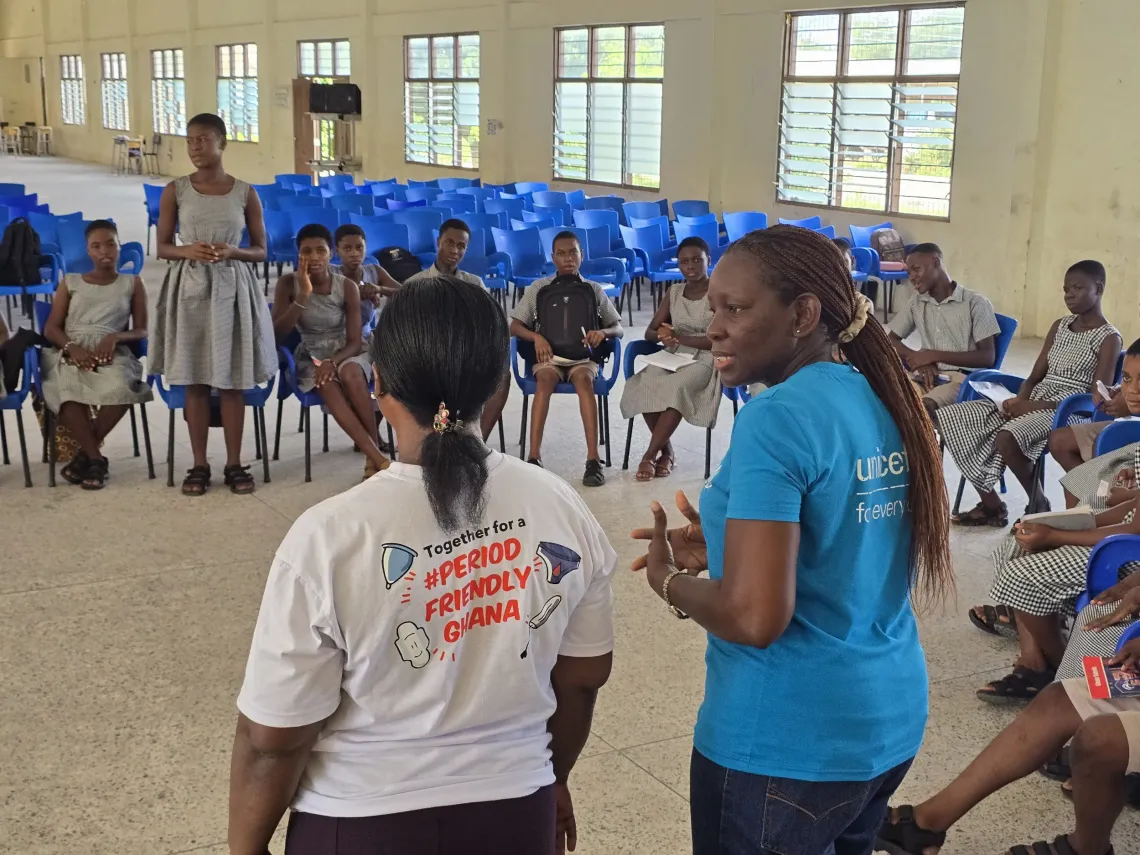
At one Senior High School, the discussion quickly evolved into an honest, empowering exchange. A few male classmates who joined initially sat awkwardly in their seats, laughing nervously and exchanging shy giggles. Yet, within 30 minutes, the atmosphere shifted entirely. The boys were actively participating, asking thoughtful questions, and offering genuine words of encouragement and support to their female classmates.
As momentum built, the hands never stopped going up. More questions, more stories, and more reflections followed. It became beautifully clear that the conversation could easily have continued for another hour or more.
Education Without Barriers
As Ellen Gyekye, a GES School Health Education Programme Officer, reminded learners during one session:“We want menstruation to be a positive and healthy experience for girls. Don’t let menstruation be a barrier to your education.”
That vision sits at the very heart of the Adolescent Girls Programme. Beyond distributing physical products and training materials, the programme is successfully creating safe spaces where adolescent girls and boys can openly discuss issues that society often treats with silence, stigma, or shame. It is nurturing a generation of young men who understand menstrual health and see themselves as active allies and supporters, rather than uncomfortable bystanders.
With support from the Government of Canada, these conversations are becoming possible in classrooms and communities across Ghana. And while they may begin with a simple lesson on menstrual hygiene, they are ultimately about something much bigger: building dignity, fostering inclusion, and ensuring that no girl’s education is ever interrupted by a natural part of life.