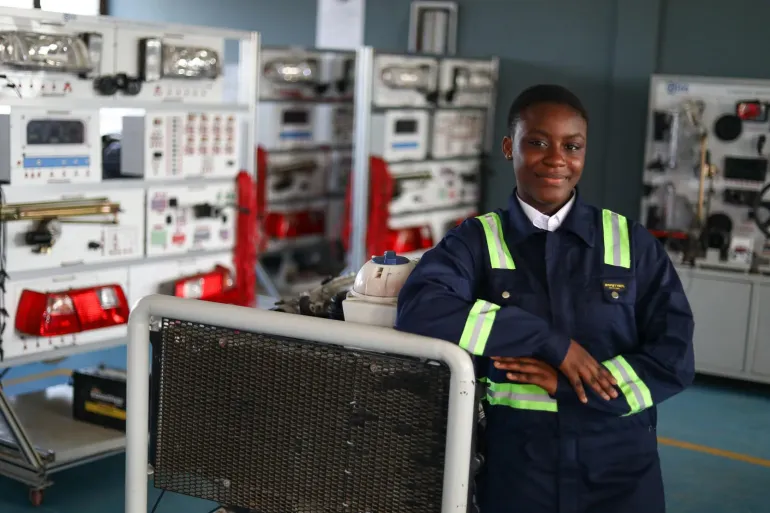
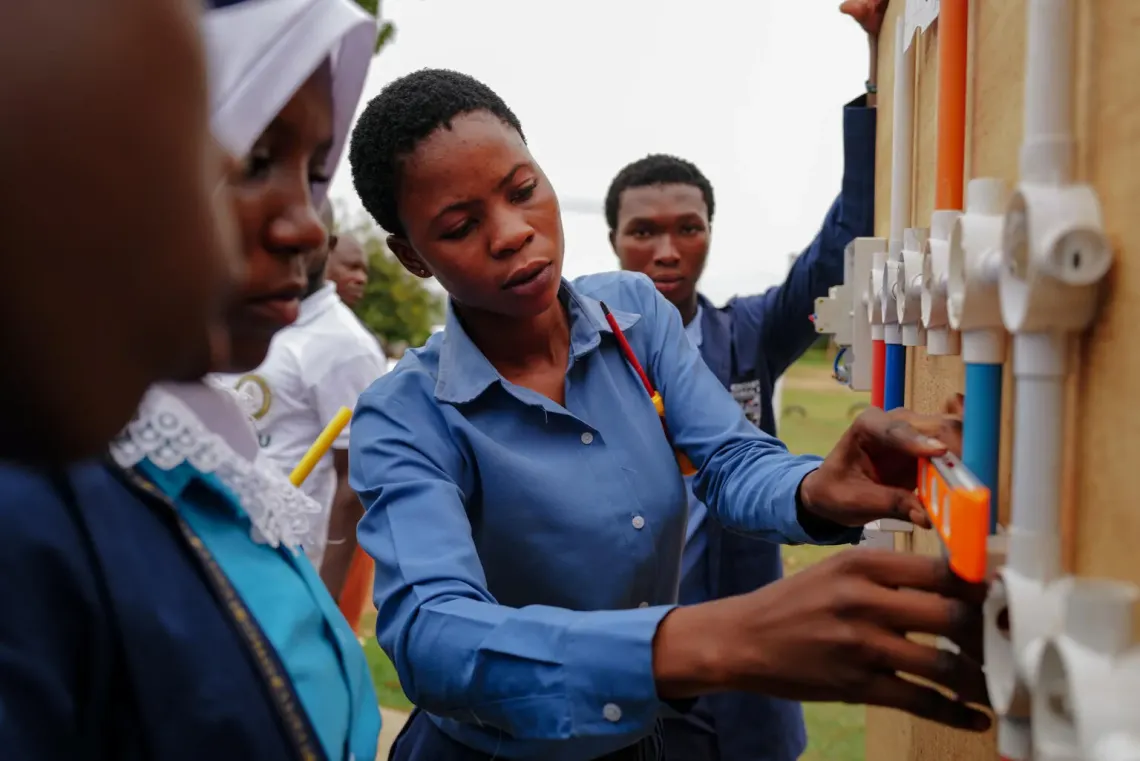
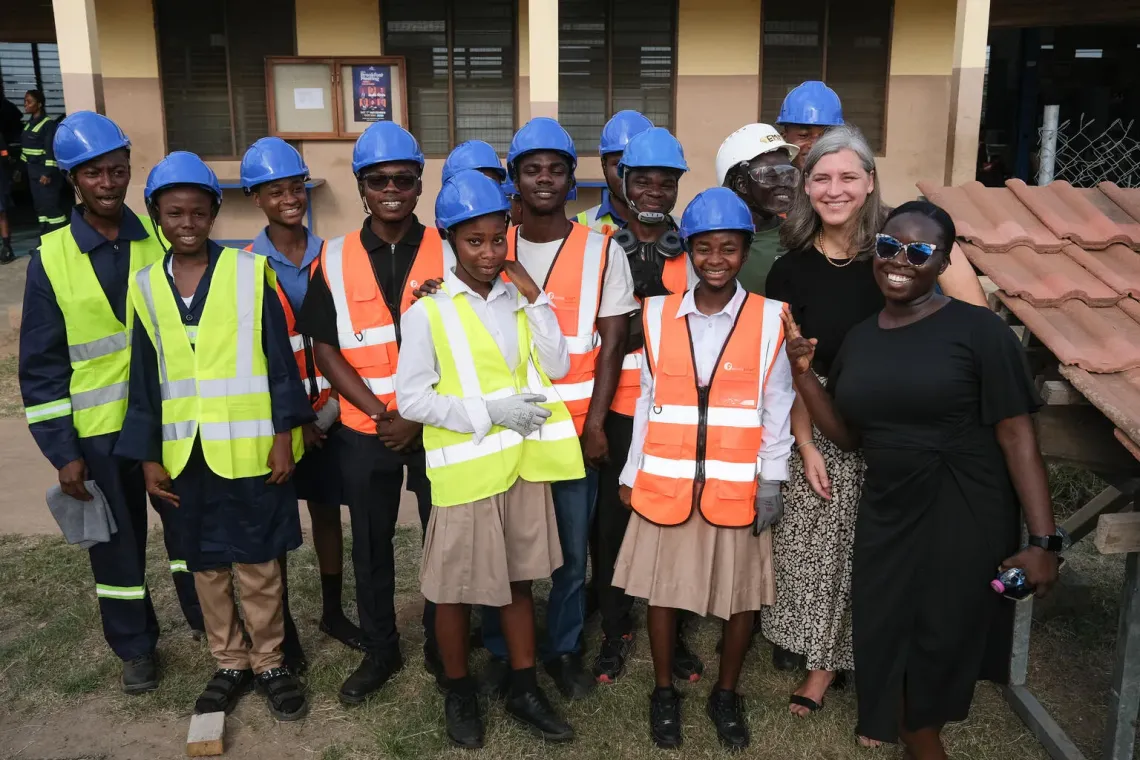
Among them was “Ama” (not her real name), a 16-year-old student at Assin Fosu Technical Institute. She was not standing nearby watching others work. She was actively wiring the building with confidence. For anyone familiar with Ghana’s Technical and Vocational Education and Training (TVET) landscape, the sight was striking.
Across many technical trades, including electrical and electronic technology, building construction, welding and fabrication, auto mechanics, and engineering, young women remain significantly underrepresented and are often discouraged by social norms that frame such professions as “men’s work.”
UNICEF has consistently championed girls’ participation in science, technology, engineering and mathematics (STEM) and Technical and Vocational Education and Training (TVET), recognising that girls should have the same chance to explore careers that are too often seen as “not for them.” With generous support from partners, including the UNICEF German National Committee, UNICEF is helping to build the evidence, strengthen safer and more inclusive learning spaces, and support more girls to enter non-traditional fields.
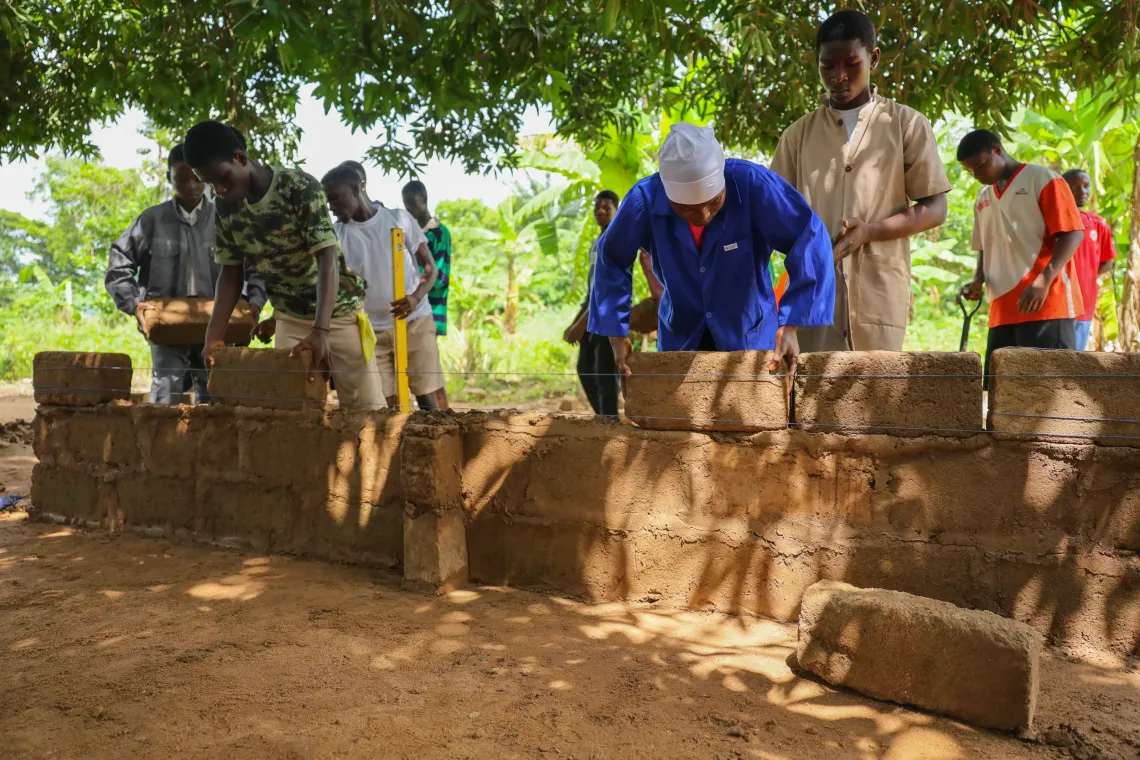
At first, it looked like any other construction site: unfinished walls, scattered tools and the steady movement of young apprentices learning on the job. But then I noticed one learner moving confidently between the electrical fittings. She was 16 years old, focused, and very much in command of the work in front of her.
This was during a recent UNICEF field visit to Assin South District, where we were monitoring UNICEF-supported youth skilling interventions for adolescents and young people in vulnerable communities. The visit was meant to show how these interventions are working in practice. What it also showed was how much young people are ready to do when they are given the chance.
The site was being renovated to establish a Youth Engagement Centre (YEC), a space intended to help young people access skills, mentorship, digital learning, and opportunities for civic engagement. Even before the centre officially opened, young people were already helping to bring it to life.
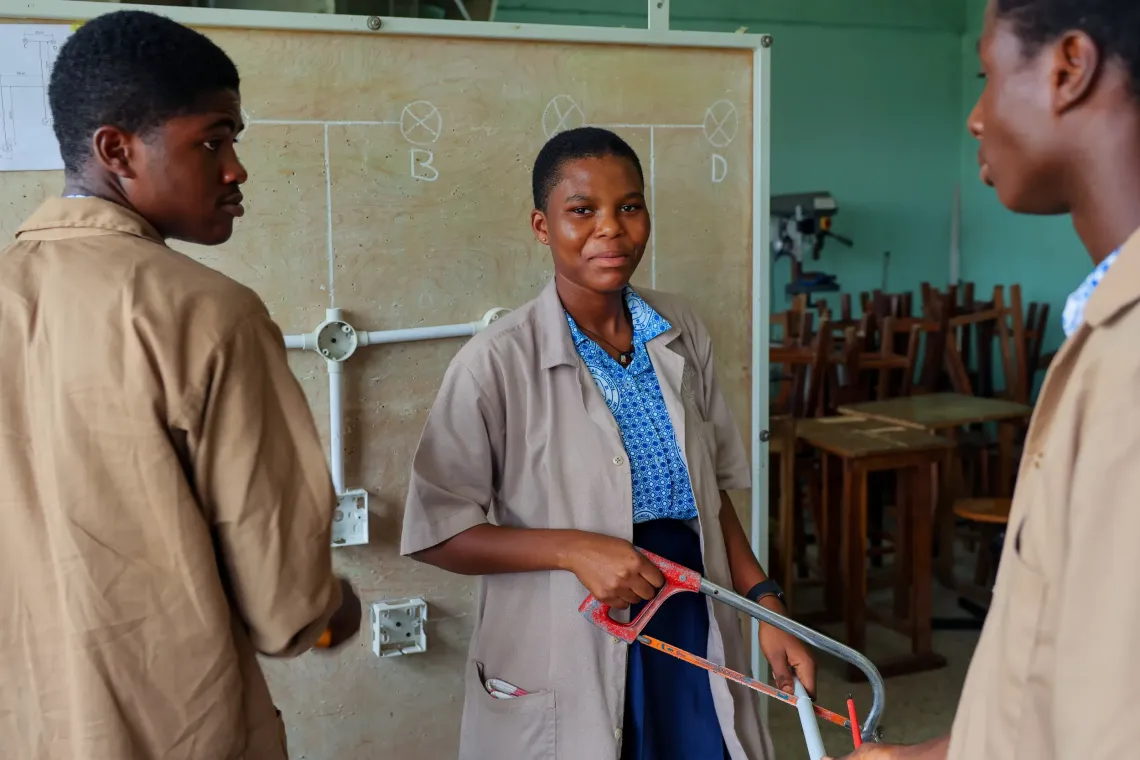
Ama’s story reflects both the challenge and the possibility.
A second-year electrical and electronic technology student at Assin Fosu Technical Institute, her interest in electrical work began in childhood while watching her uncle, an electrician, at work. What started as fascination gradually became ambition. Choosing that path, however, came with resistance.
“Sometimes boys mock me and say this work is for boys,” she shared.
Even family members initially questioned her decision. Yet she persisted.
Today, she combines classroom learning with apprenticeship training under a master craftsperson, using school breaks to deepen her practical skills through Work-Based Experience Learning (WEL) placements. But Ama’s story is not only about breaking gender barriers. It also points to a wider reality for many young TVET learners in Ghana.
Why practical learning matters
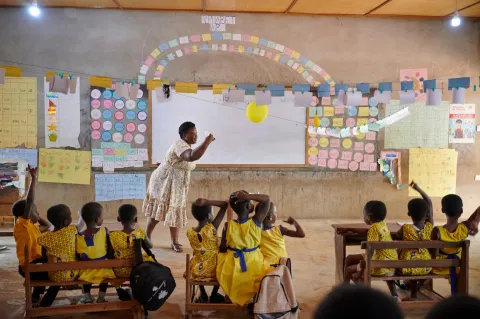
TVET is inherently practical. Its strength lies in practice: testing, troubleshooting, repeating, refining, and mastering skills through hands-on application. Yet conversations with Ama and the boys working alongside her pointed to recurring challenges: limited access to practical materials, overcrowded learning environments, insufficient workshop time, and too few opportunities for sustained hands-on exposure.
“We do more theory than practice,” one student explained.
These concerns reflect what UNICEF-supported research with the Ghana TVET Service has also found in the Ashanti Region: training does not always match what the labour market needs. The study pointed to overstretched infrastructure, inadequate equipment, limited practical exposure, shortages of qualified facilitators, and gaps between what employers expect and how ready many graduates feel for work. Although competency-based training is important for preparing students for employment, fewer than a quarter of institutions surveyed had fully implemented it.
For young people preparing for technical professions, these are not marginal issues. They directly shape employability. And yet, what stood out most in Assin South was not discouragement. It was determination.
Even within existing constraints, these young people are making the most of available learning opportunities. Through the Work-Based Experience Learning (WEL) component of their training, they are gaining practical exposure in real workplace settings, learning directly from master craftsperson's, and applying classroom knowledge in ways that strengthen their skills and confidence.
“What we learn here is different from what we are taught in school,” another learner reflected. “The master craftsperson teaches us in more detail.”
That resilience is admirable. But young people should not have to navigate these challenges alone. More must change.
TVET systems need stronger investment in modern workshops, adequate tools and equipment, more work-based learning opportunities, stronger instructor capacity, and better links between schools and the world of work. Training also needs to keep pace with sectors that are growing, including Information and Communication Technology (ICT), agriculture, construction, manufacturing, and green jobs. Young people need digital skills, entrepreneurial skills, and stronger connections with employers so they can move more confidently from learning into work.
This is the kind of gap UNICEF’s work in Ghana is trying to help close.
In partnership with the Ghana TVET Service and other stakeholders, UNICEF is supporting work to better understand young people’s needs, strengthen youth skilling pathways, and expand opportunities for adolescents and young people, especially in vulnerable communities. One important part of this work is the Youth Engagement Centre (YEC) model, which provides a safe, youth-friendly space where young people can access computers and internet connectivity, digital skills training, entrepreneurship support, mentorship, career guidance, and opportunities for civic engagement.
Since 2021, UNICEF and the Ghana Library Authority have established 18 YECs across 15 regions, reaching more than 134,000 adolescents and young people. When completed, the Assin South YEC is expected to offer similar opportunities for young people in the district: a place they can return to regularly to build their skills, explore career options, connect with mentors and peers, and prepare for the world of work. For young people like Ama, the journey from learning to earning should not end in the classroom or at a temporary workplace placement. It should continue in spaces that support their continued growth.
And importantly, UNICEF continues to champion inclusion, especially for girls entering spaces where they have historically been excluded.
Ama’s presence at the construction site was a reminder of why that matters.
When girls see what is possible
“Some girls say they will not go to school,” she said. “But when they see me doing this, I believe it encourages them.” Representation does more than inspire. It expands what feels possible.
There was something especially fitting about that moment. The Youth Engagement Centre (YEC) taking shape in Assin South is meant to become a space where more young people, especially girls, can learn, build skills, and imagine brighter futures. Yet even before its doors officially open, young people are already bringing that vision to life, not simply by helping construct a building, but by showing resilience, determination, and an unmistakable hunger to learn.
As I left Assin South, I kept thinking about Ama and the other young learners I met. What stayed with me was not just their talent, but their determination to keep learning despite the barriers around them. Ama’s confidence in a space where girls are still often underrepresented was powerful, but so too was the quiet persistence of the other apprentices who showed up each day ready to learn, adapt, and grow.
The visit reminded me that young people already carry immense potential. What they need are systems, opportunities, and environments that help unlock it. Seeing these learners in action reinforced why this work matters. Beyond programmes, projects, and policies, this is ultimately about young people whose hopes deserve real support. If they are showing this level of commitment to shaping their futures, then we all have a responsibility to make the path ahead clearer, fairer, and better connected to real opportunities.