Menstrual Hygiene Day: Accelerating Progress Toward Period Equity in Ghana
UNICEF calls for accelerated action and stronger data collection systems as Ghana marks Menstrual Hygiene Day.
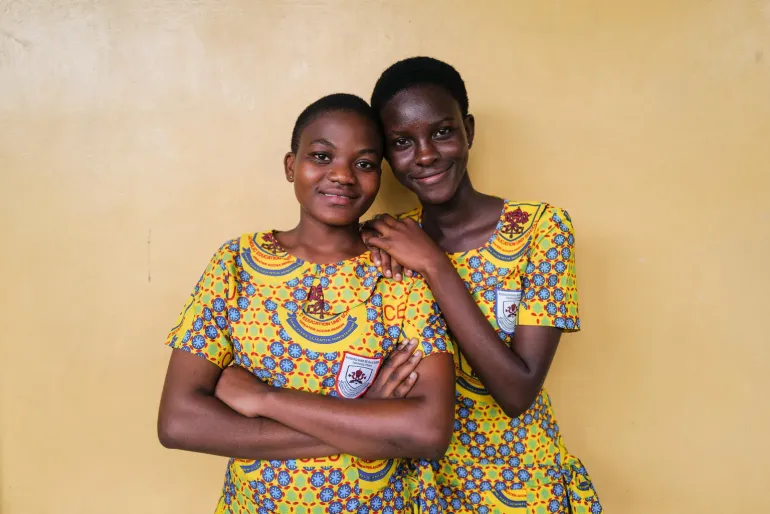
Accra 26, May 2026 Nearly two million school children in Ghana still lack access to basic water and toilet facilities, creating a severe barrier for adolescent girls trying to manage their periods with dignity.
While welcoming the government's Free Sanitary Pads Initiative which aims to reach schoolgirls all over Ghana, UNICEF noted today that addressing deep infrastructure gaps, tracking deficiencies, as well as promoting safe hygiene practices at various levels will be vital to sustaining national progress.
While a decade of policy gains has strengthened Ghana's menstrual health framework, data highlights a stark divide between policy and daily reality for millions of girls:
An estimated 1.9 million children lack water facilities in schools, and 1.8 million lack access to toilets, limiting a girl's ability to safely manage her menstruation.
Over 31 percent of adolescent girls have never received any menstrual health education, contributing to persistent social stigma and school absenteeism.
A lack of national tracking systems means vulnerable girls who are out of school are often left out of multi-sectoral planning.
Commemorating Menstrual Hygiene Day 2026 under the national theme “Together for a Period-Friendly Ghana,” UNICEF, in collaboration with development partners and civil society, proposes scaling up support and investments in three priority areas:
- Continuing the expansion of gender-responsive, period-friendly water, sanitation and hygiene (WASH) services in schools nationwide.
- Promoting safe hygiene practices at all levels to protect the quality of menstrual products post-production.
- Establishing robust data collection systems to better track, support, and deliver reproductive health services to vulnerable girls outside the classroom.
Menstrual health is a matter of fundamental human rights, dignity, and economic opportunity. UNICEF remains fully committed to supporting the Government of Ghana and partners to ensure no girl is left behind.
Media contacts
About UNICEF
UNICEF, the United Nations agency for children, works to protect the rights of every child, everywhere, especially the most disadvantaged children and in the toughest places to reach. Across more than 190 countries and territories, we do whatever it takes to help children survive, thrive, and fulfil their potential. For more information about UNICEF and its work, please visit and follow UNICEF Ghana on LinkedIn, X, Facebook, Instagram, TikTok and YouTube.