Empowering Young Minds: A Child Protection Toolkit for a Better Ghana
This toolkit fosters social change by building young people's confidence and challenging gender stereotypes.
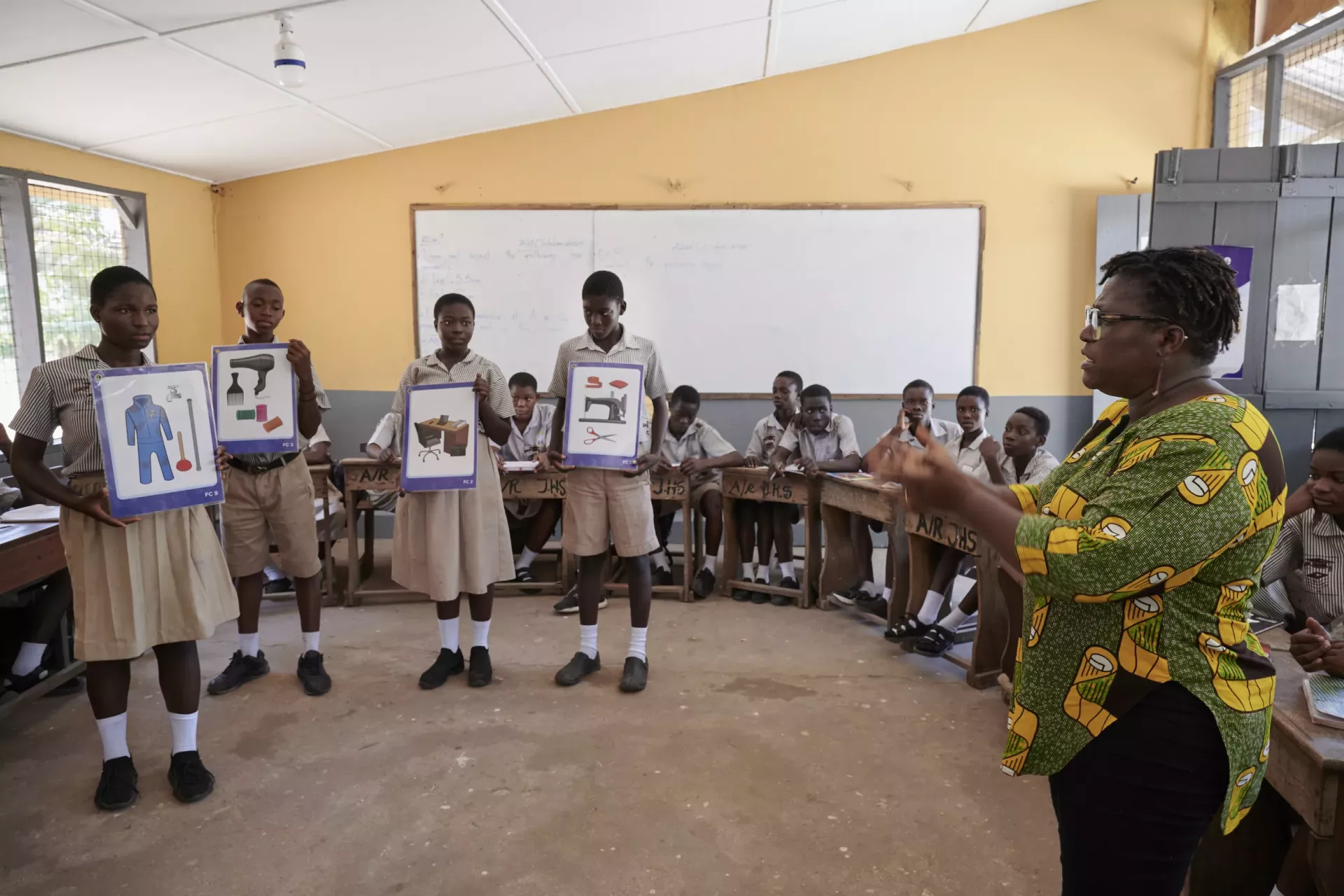
At 9:45 a.m., the break was over, and the bell rang at Accra Royal Basic School. As students trooped into their classrooms, the school headmistress made a special announcement: "We have guests today, and as you may know we will be having our co-curricular activities today.
Today's lesson focused on an activity from the Child Protection toolkits titled: Who does what? This activity empowers adolescents regarding gender roles and how they impact occupational choices and offers a platform to dialogue on how gender norms, roles and stereotyping affect decision making by adolescent about the kind of future career`s they want pursue. This is an activity on gender norms/stereotypes and aspirations (e.g. certain professions and who does them - to inspire them to dream big in what they want to become in life or start to challenge gender stereotypes that perpetuate inequality in societal roles or family dynamics).
Leading this session was Vicentia, a seasoned community development officer from the Department of Social Welfare and Community Development at the Accra Metropolitan Assembly (AMA), known for her work in advocacy for girls. She is no stranger to this toolkit; Vicentia was one of the first facilitators trained when the toolkit was first introduced in 2015. For her, facilitating these types of sessions is personal to her: "I don't see this as a job. As a mother, a sister, and a woman, I see this as a way of giving back to society," she explains.
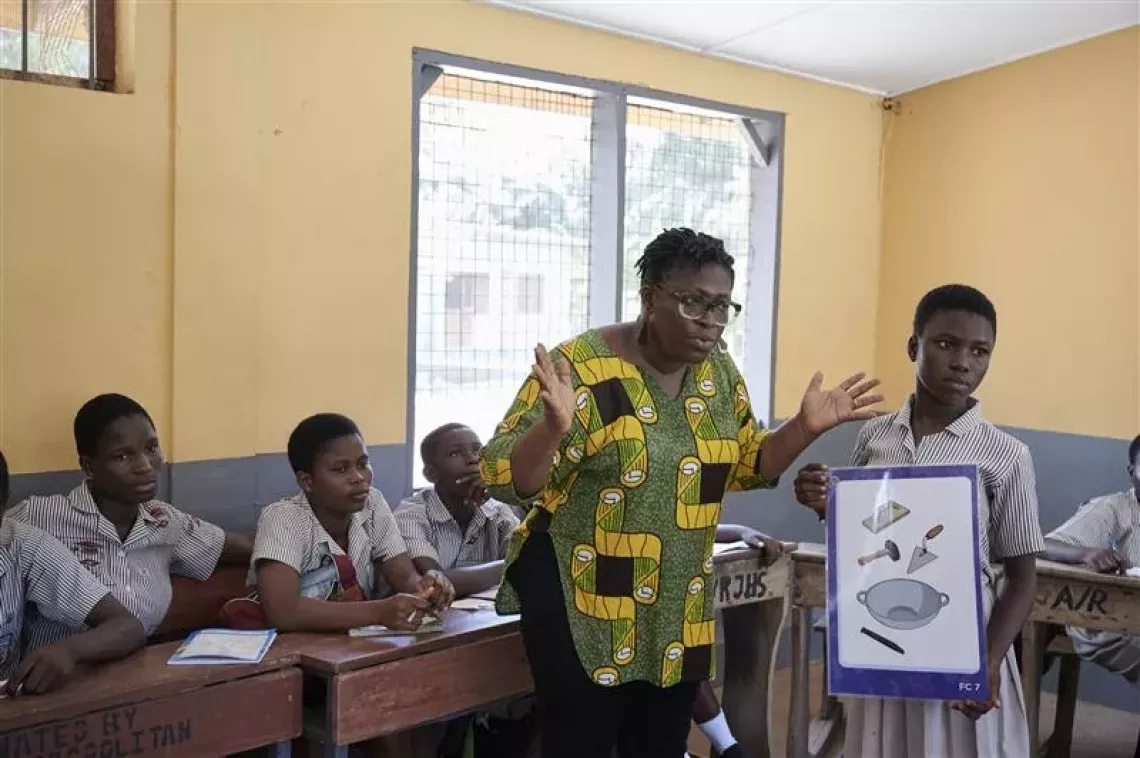
As a passionate advocate for young people, particularly young girls, she empowers them to know their rights and responsibilities and stand up for themselves. "I was once like them and needed this kind of support growing up. I can see how impactful this toolkit and training have had on the adolescents and the communities, which makes me proud," shares Vicentia.
Princess Quaye, 15, a student, is excited by these lessons. Prior to these school sessions, Princess did not see herself as interested in a career perhaps traditionally perceived to be reserved for men. Now, she believes she can do anything. "This has been a great learning curve for me through these lessons. I have been able to build my confidence, and I am now aware that both genders can do anything as long as we learn and practice," Princess asserts.
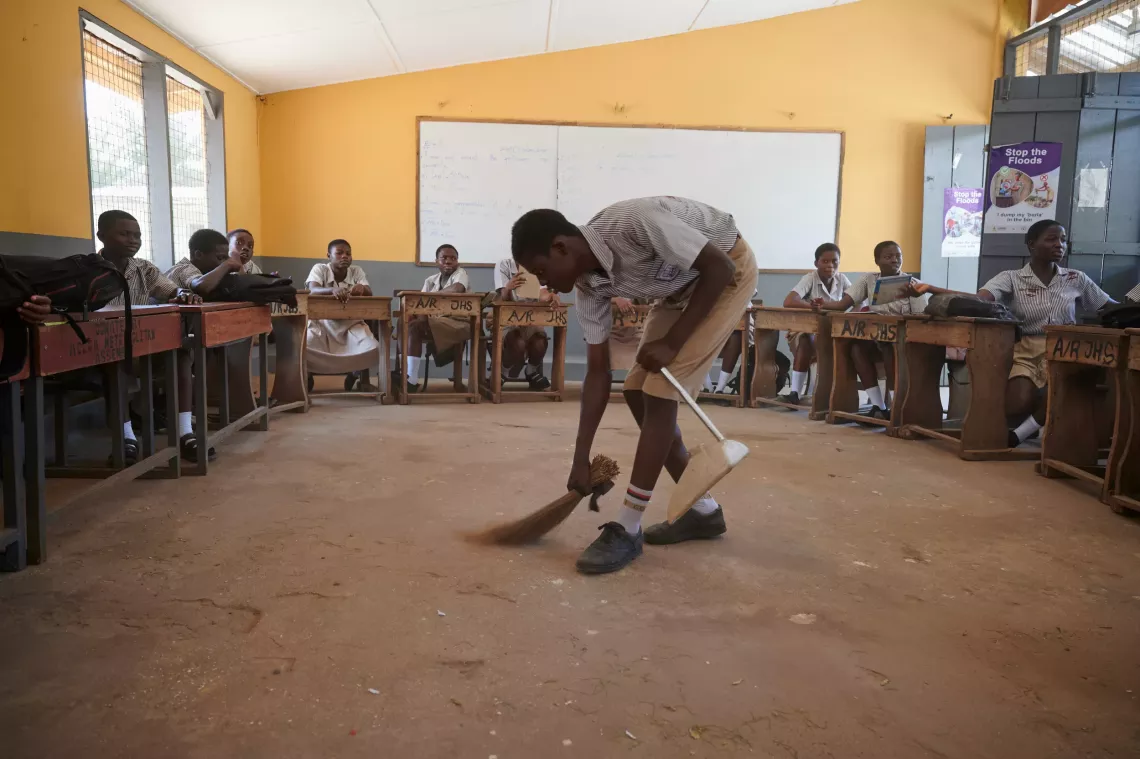
The boys are not left out of this initiative. Daniel ACQUAYE Acquaye, 17 years old, is another happy student. Daniel says, "I have learned to assist my female colleagues with activities in the school environment and at home." For him, understanding this did not start in the classroom but at home. His mother has always been fair in raising him and his three sisters. His mother ensures they work together, including equally dividing house chores, saying, "My mother always says taking on domestic roles is about your self-development because if you grow and live alone, who will do your chores for you?"
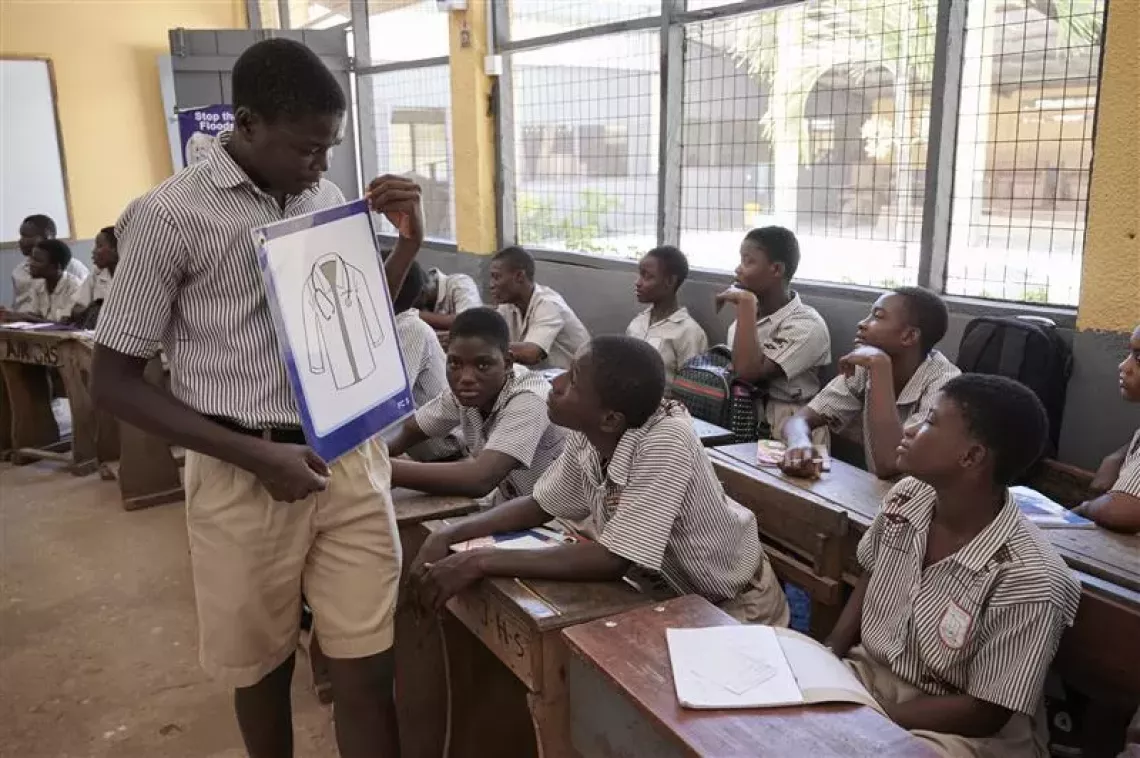
The conversation doesn't end for Princess and Daniel in school; it carries on at home. According to Princess, she talks to her friends who are not in school about it and believes their perspective is also changing. For Daniel, he encourages his male friends to understand that they are an essential part of society and should work together with everyone to drive away negative societal stereotypes about gender roles as they relate to career prospects.
Vicentia is pleased with this program's success. In today's session, for instance, out of 13 cards depicting various roles and jobs, the students identified ten as suitable for both genders, leaving only three as traditionally male-dominated roles. This marked improvement from the program's early days when such views were less common among young people.
According to Vicentia, the school and community empowerment sessions, creates the opportunity to identify issues young people are confronted with and are made aware that this session is a safe space for them to learn and explore, but they are reminded that the facilitators cannot solve all problems. Instead, they help young people build resilience. Some of the issues that sometimes come up include sexual assault, menstrual hygiene, and discrimination, among others. Therefore, the facilitators recommend and refer young people to the appropriate established bodies to assist, such as the Department of Social Welfare, Commission on Human Rights and Administrative Justice (CHRAJ), the Domestic Violence and Victims Support Unit (DOVVSU), Traditional Councils, etc.
A Promising Future for All
The Child Protection Toolkit was introduced in 2015 to engender social behavior change related to child protection. The child protection community facilitation toolkits and manual have been instruments used to stimulate and foster dialogue on child protection and gender related issues affecting young people in the community.
This initiative used flashcards, interactive games, roleplays and information packs to demystify gender roles and advocate a balanced approach to gender roles in societies. Over the years, this has helped empower young people to make informed and sound decisions about their lives and future career development.
For Princess and Daniel, this initiative has been an eye-opener and a springboard for them to explore and conquer their world, regardless of the career fields they choose to be in. They will not be defined and constrained by the social interpretation of what is appropriate for a male or female.