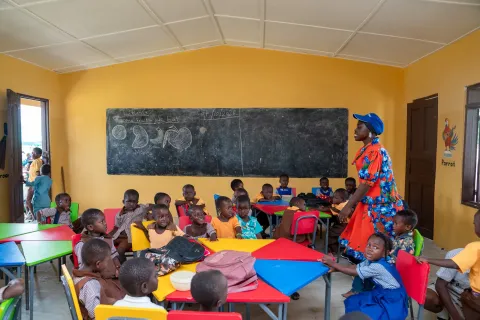
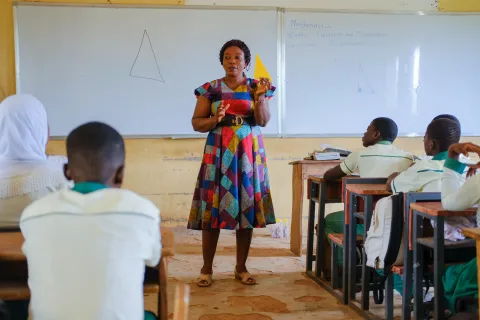
Early Childhood Education: Engaging Families and Community
Bridging the Gap in Ghana's Early Childhood Education

“It takes a whole village to raise a child.” ~ African Proverb
The early years of life are the critical stages for a child’s growth, development and learning. Any improvements caused by positive parenting during this period have short-term and long-term constructive implications for the school and community.
When parents, families and communities are sensitized and recognize the connections between child’s early learning at home and in school, it builds strong partnership between communities and schools, and gives parents the opportunity to actively engage more at school and home, increasing their support to improve on young children’s school readiness.
Yet parents in Ghana are not always empowered to support the learning of their young children. To bridge this gap, UNICEF supported the Ministry of Education and Ghana Education Service in developing the Early Childhood Policy in 2018, which highlights Family and Community Engagement (FCE) as one of six action areas for kindergarten education (Action Area Four) of the policy, to be used by different stakeholders including early childhood practitioners in Ghana.
UNICEF recognizes the vital role that families and communities play in children's development and believes that strong partnerships between these stakeholders and schools are essential for child development, quality early learning, child development and a strong foundation for children, creating supportive learning environment.

“It takes a whole village to build a society that trains a child.”
The purpose of FCE is to strengthen partnerships between the school and community and create opportunities for early childhood practitioners to interact with families on the child’s learning and wellbeing.
“These FCE Guidelines help parents to understand their roles in early childhood education and serve as a good resource and reference material. They are meant not only for teachers but also for families and parents to use as a guide for supporting schools and for schools to support families in the community. For example, ensuring schools organise activities that will demonstrate children’s work and give the parents the opportunity to interact with teachers during admission and Parent Teacher Association (PTA) meetings.’. — said Dr. Oduro (Retired Executive Director of the National Teaching Council)
“The FCE is essential for sustainability because it empowers parents by helping them understand how to support their children's learning both at school and at home within the community.”
Parents know their children best, and the home becomes a center for happiness and growth where children can learn and develop. It is therefore important for parents to build strong partnerships and to interact well with teachers to learn more about how their children are doing and coping in school and at home. Family and Community Engagement uses a variety of methods – role plays, dramas, picture charts, and other tools – to equip parents with ways to stimulate their child’s learning, which can lead to stronger learning for children both in and outside of school. Following these FCE activities, parents then utilise various engaging games during daily activities to reinforce school lessons at home. For instance, when preparing meals, they count the ingredients aloud together. This simple practice makes cooking more interactive and helps enhance children's counting skills in a fun and practical way and strengthens the bond between parent and child.
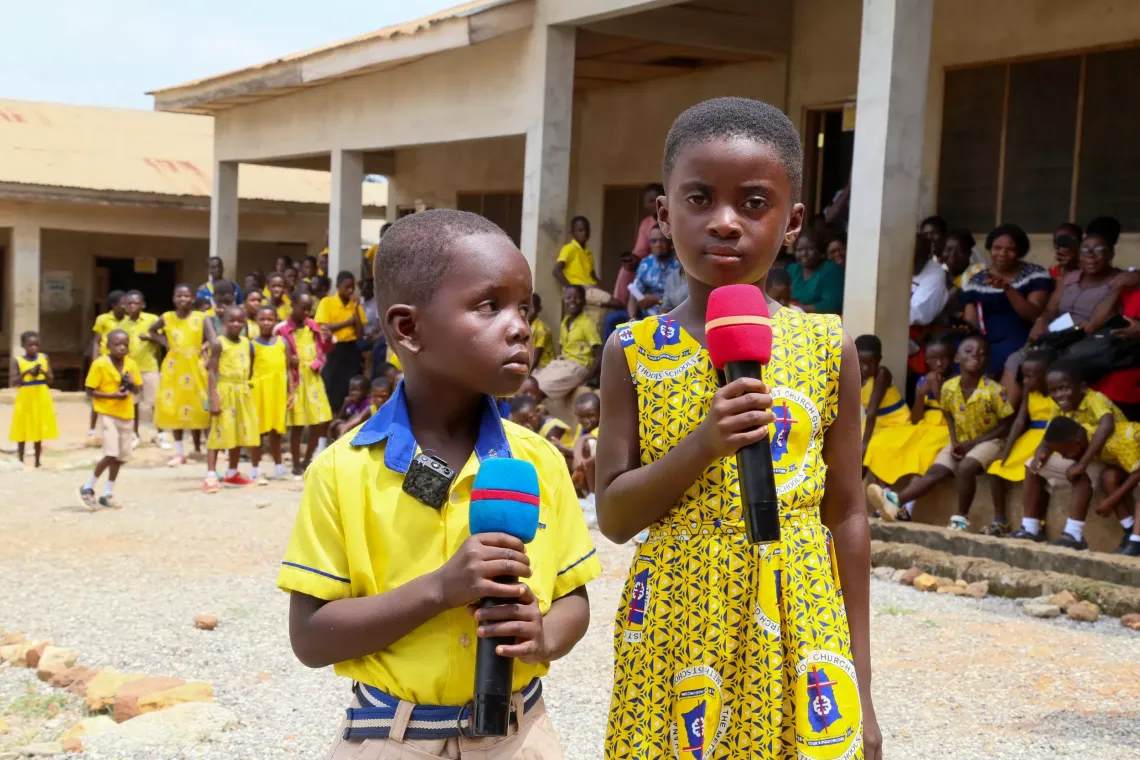
“If you learn, you will go far and become someone important,”
One of the children selected by the school to recite a poem on behalf of the students at New Bomfah Methodist School in the Ashanti Region.
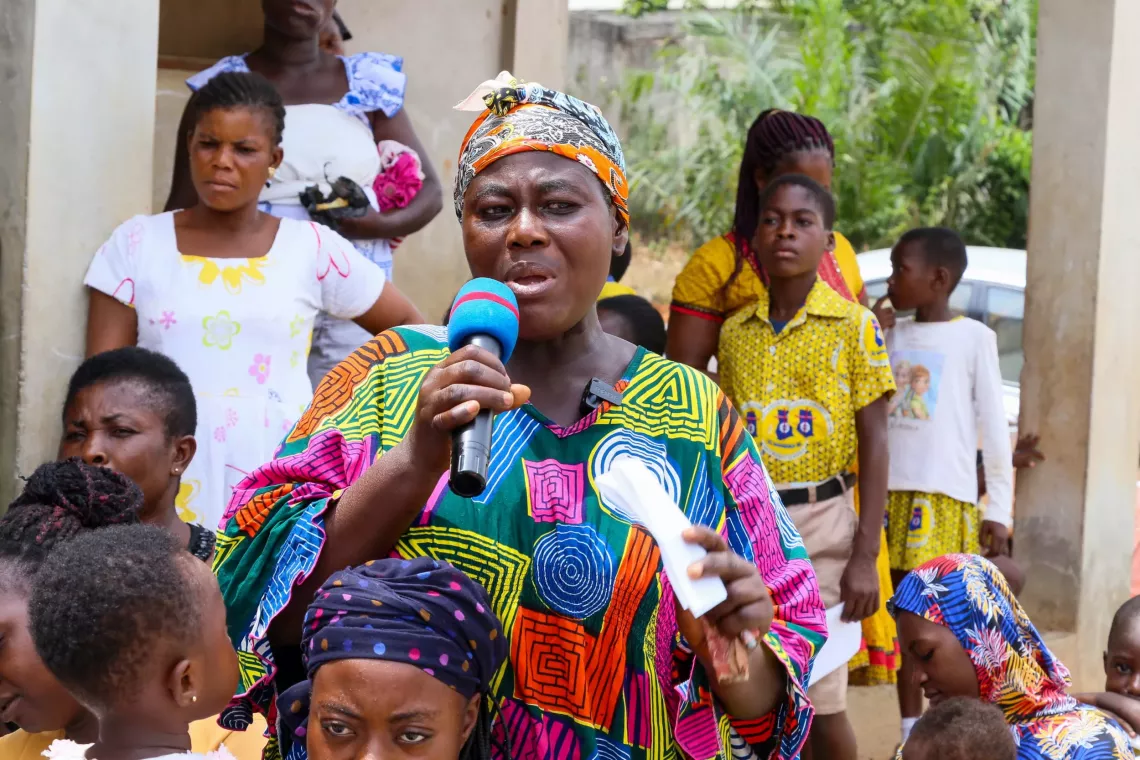
After engaging with the community, parents in New Bomfa Basic School happily received teachers’ messages in good faith and expressed eagerness to learn new ways to support and encourage their children's education.
“As parents, we need to pay close attention to our children and assist them with their assignments to help them succeed. If they face challenges with their homework, we should seek help from someone who can assist. I also urge teachers to visit our homes to monitor our child's progress,” said Zeriah, a parent.
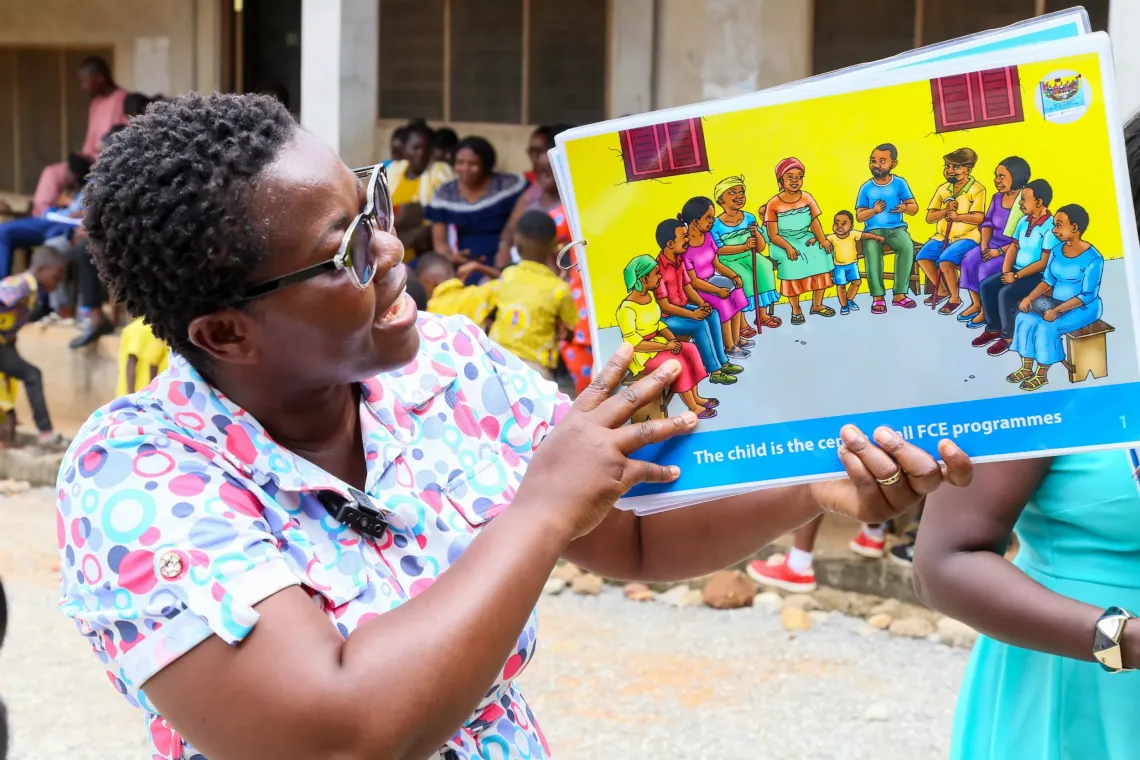
UNICEF continues to collaborate with the Ministry of Education and the Ghana Education Service to implement the Early Childhood Education Policy. This includes supporting the Ghana Education Service in implementing the FCE nationwide and thus creating a supportive community of learning practices among teachers and families throughout the country. This shared goal is to maximize children's survival, protection, learning, and growth through healthy development and participation.
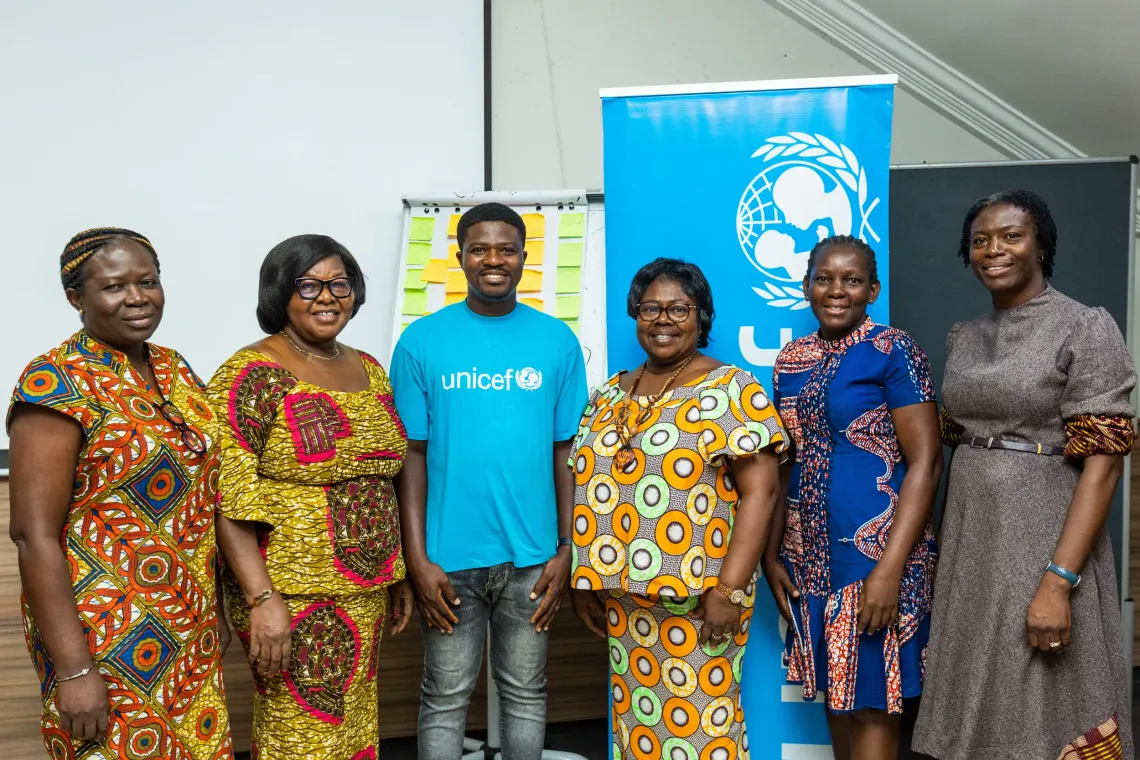
Let’s work together to bridge the gap between schools and the community. Teachers should engage meaningfully with children and their families to empower the next generation of leaders.
We thank the Belgium National Committee for supporting this collaboration among families, schools, and community members to make a lasting impact in the lives of children in Ghana.