UNICEF Ghana Welcomes 20 Social Impact Startups into 2026 Start-up Lab Cohort
The sixth cohort of the accelerator programme aims to scale tech-enabled solutions for children and youth across Ghana.
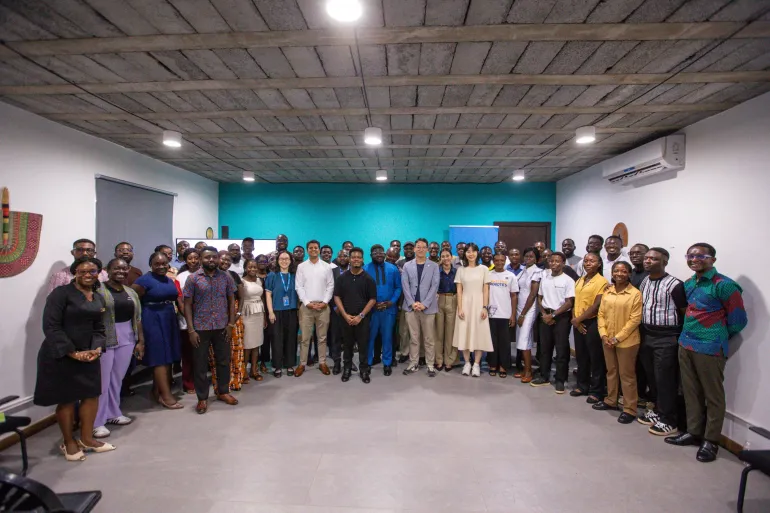
ACCRA, Ghana, 13 April 2026 – UNICEF Ghana welcomed 20 growth-stage, tech-enabled social impact startups into the sixth cohort of the UNICEF Start-up Lab. These ventures are developing innovative solutions to address critical challenges facing children and adolescents in education, health, nutrition, climate action, and financial inclusion.
Established in 2019, the UNICEF Start-up Lab is supported by the Government of the Republic of Korea through the Korea International Cooperation Agency (KOICA) and implemented by MEST Africa. This year’s cohort reflects the increasing maturity of Ghana’s entrepreneurial ecosystem in delivering scalable, locally driven development.
Over the next six months, the startups will undergo a rigorous venture-building curriculum. They will work alongside UNICEF programme specialists and industry experts to refine their products, strengthen business models, and build pathways toward international investment, including the UNICEF Innovation Fund and the Digital Public Goods ecosystem.
"We are proud to welcome this new cohort of innovators," said Christin Lucille McConnell, Chief of Education, UNICEF Ghana. "These startups demonstrate the creativity and commitment needed to tackle some of the most pressing challenges facing children today. We will work closely with them to connect them to technical experts and investors so they can scale their impact for children in Ghana and beyond."
Since its inception, the programme has supported over 100 startups, collectively reaching more than 250,000 children and young people. For this cohort, participating startups will receive equity-free prototype grants of GHS 65,000, with an additional GHS 165,000 awarded to three standout ventures via the Scale-up Fund.
Representing the Government of the Republic of Korea, Shinyoung Pyeon, KOICA Deputy Country Director, noted:
"KOICA is proud to have invested 2.2 million dollars over the past five years to support this initiative. This programme reflects Korea's belief that innovation and local entrepreneurship are among the most powerful drivers of sustainable development."
The 2026 cohort shows a strong focus on EdTech (40%), alongside ventures in FinTech, Agriculture, and Climate Action. Geographically, while 50% are based in Greater Accra, the cohort features representation from the Western, Northern, and Upper East regions, among others.
Notes to Editors:
About the Selection Process: Following a call for submissions in December 2025, 45 firms were shortlisted for interviews with a joint panel featuring UNICEF, KOICA, the University of Ghana, and MEST Africa.
The final 20 startups were selected after an intensive due diligence phase, including in-person validation and deep operational assessments to ensure scalability and social impact.
Cohort Demographics and Composition:
Sector Focus: The cohort is led by EdTech (40%, with 8 startups). The remaining 60% spans FinTech, Agriculture, Mobility, and Technology.
Regional Diversity: 50% of the startups are based in Greater Accra, with 20% in the Western Region. The remaining 30% represent the Upper East, Northern, Upper West, Bono East, and Central Regions.
Leadership: 75% (15) of the startups are male-led, while 25% (5) are female-led.
The Training Curriculum: The six-month programme includes six structured modules: Due Diligence, Product Development, Business Modelling, Finance and Unit Economics, Marketing and Communications, and Investor Readiness.
The 20 participating startups for the 6th cohort of the UNICEF StartUp Lab are:
- TruCredit Micro Credit is a Bank of Ghana-licensed micro-credit institution that enables entrepreneurs to fast, small-ticket loans by offering short-term working capital loans to underserved micro and small business owners in Ghana.
- InovTech STEM Center makes quality, hands-on STEM education accessible to schools across Africa by equipping teachers and students with the tools, training, and support they need to learn effectively, helping young people build critical thinking, problem-solving, and innovation skills.
- CodesRock is an innovative edtech company empowering children 3+ years with foundational coding, AI, and robotics skills through entirely screen-free, hands-on activities.
- Fihankra ComTech Ltd builds technology that helps people stay safe wherever they are, through their Shield Portal, they teach users how to respond to emergencies in simple, flexible, and affordable ways.
- Eastern Freshaura replaces plastic packaging while tackling both food waste and environmental pollution. By upcycling local agricultural and seafood waste, they create a sustainable, circular food preservation technology.
- Literacy For Life is a Ghana-based social enterprise addressing the persistent challenges of low literacy levels, limited digital access, youth unemployment, and economic exclusion among underserved communities.
- DOBIISON Ghana Ltd is a Ghanaian technology company developing immersive digital learning solutions to help students better understand difficult STEM subjects
- Chalegig Ltd is a digital platform addressing youth unemployment and inequality in Ghana by creating accessible pathways to income and skills development.
- Phundit is a fintech platform that helps young people aged 18–35 build financial resilience by guiding them to create and maintain emergency funds.
- Impact AI Labs is an AI-driven company building practical, high-impact solutions that address critical social and economic challenges across Africa by combining artificial intelligence with deep human insight.
- Konov is an AI education company building the infrastructure to prepare African children for an AI-driven future.
- STEM FOR ALL is a climate-focused education venture that develops low-cost Climate and Renewable Energy STEM Kits designed for basic schools in underserved communities.
- BorlaHub is a Ghana-based digital waste recovery platform tackling the growing challenge of poor waste segregation, inefficient collection systems, and plastic pollution in urban communities and schools.
- HackerBoost is a startup focused on expanding access to practical tech skills and digital opportunities for underserved youth, particularly in emerging markets like Ghana.
- Nboti Tech Initiative is a youth-led organization focused on equipping young people with practical STEM, robotics, and digital skills needed for the future of work, by developing and delivering school-based training programs and combining interactive workshops, project-based learning, and guided mentorships.
- Extech Agricultural Services is an agritech and climate-smart farming venture supporting farmers in remote areas to overcome challenges like poor market access by connecting farmers directly to reliable buyers through digital platforms while promoting sustainable agricultural production.
- SmartWatt Company Limited is an E-Mobility company that converts vehicles to electric power, develops battery technology, and provides electric vehicle servicing and maintenance in Ghana.
- Startups Cooperative Credit Union is a licensed financial cooperative that supports entrepreneurs by combining access to affordable loans with tailored business development services through mobile tools and community-based monitoring. They make managing finances more accessible, transparent, and accountable.
- EGGS N MORE transforms fresh eggs into high-quality, affordable egg powder and calcium-rich eggshell powder, which improve nutrition, reduce food waste, and provide convenient protein solutions for households, bakeries, and child welfare clinics.
- KOA Tutors is an education technology startup focused on improving access to practical, hands-on STEM education for learners aged 5 to 45, particularly in underserved communities where exposure to applied learning and emerging technologies is limited.
Media contacts
About UNICEF
UNICEF, the United Nations agency for children, works to protect the rights of every child, everywhere, especially the most disadvantaged children and in the toughest places to reach. Across more than 190 countries and territories, we do whatever it takes to help children survive, thrive, and fulfil their potential. For more information about UNICEF and its work, please visit and follow UNICEF Ghana on LinkedIn, X, Facebook, Instagram, TikTok and YouTube.