National Leadership Agrees on Seven "Strategic Pillars" to Bridge Critical Gaps for Ghana’s Children

AKOSOMBO, Ghana – Following a three-day intensive Strategic Planning Retreat (SPR), the Government of Ghana and partners have shifted from identifying challenges to a unified roadmap for impact. The National Development Planning Commission (NDPC) and UNICEF finalized seven "Calls to Action", a set of strategic pillars with fixed timelines to overcome the most persistent bottlenecks facing children nationwide.
While the initial launch focused on the spirit of collaboration, the retreat’s conclusion centers on a stark reality: despite Ghana's resilient 5.7 percent GDP growth, progress on child-sensitive targets is uneven. The 2025 Voluntary National Review (VNR) shows that:
- Survival: Neonatal deaths account for 43 percent of under-five mortality, signaling a need for ring-fenced health commodities.
- Poverty: Monetary child poverty has risen since 2020; currently, three out of four children face multidimensional deprivation.
- Education: Low foundational learning proficiency and a staggering 1.9 million young people classified as NEET (Not in Education, Employment, or Training) threaten the nation’s future human capital.
The roadmap for 2026–2029
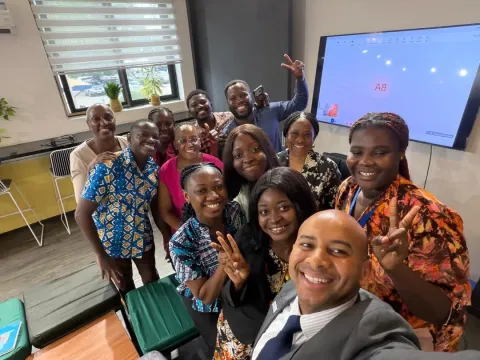
The Strategic Planning Retreat moved past generalities to establish time-bound milestones for seven intersectoral teams, presented to Her Excellency Vice President Professor. Jane Naana Opoku-Agyemang and 140 high-level dignitaries:
- Health Sovereignty (June 2026): Securing financing and supply chain efficiency for Maternal, Neonatal, and Child Health commodities.
- Nutrition and Sanitation (March 2026): Establishing an Inter-Ministerial Committee to address stunting, anaemia, and open defecation.
- Foundational Learning: Strengthening the Education Management Information System (EMIS) to drive equitable literacy and numeracy outcomes.
- District Accountability (2026): Mandating a 3 percent budget allocation for Social Welfare in all 261 Districts to implement Integrated Social Services (ISS).
- Adolescent Protection (2029): Full implementation of the Integrated Minimum Service Package to end child marriage and adolescent pregnancy.
- Legal Identity (December 2026): Integrating birth registration with the National ID system, assigning every child a single identity number from birth.
- Social Safety Nets (June 2026): Enforcing the Ghana National Household Registry as the authoritative data source for all social protection programs.
Voices of Commitment
Renowned playwright and motivational speaker James Ebo Whyte, popularly known as "Uncle Ebo," delivered a stirring keynote. Uncle Ebo urged officials to leave a legacy of hope rather than a debt of inaction. "A child is an uncut diamond; polish it and you will have a treasure," he noted, likening the agreed pillars to a "seven-course meal" of solutions.
NDPC Director General, Dr. Audrey Smock Amoah, reinforced that child wellbeing is a "Constitutional and moral imperative," while UN Resident Coordinator Zia Choudhury emphasized that the best results happen when ministries "put our sticks together to make a broom that will sweep away the issues facing children."
The retreat signals a transition from "fragmented approaches" to "impact at scale," ensuring that Ghana’s growth serves its most vulnerable citizens.
Media contacts
About UNICEF
UNICEF works in some of the world’s toughest places to reach the world’s most disadvantaged children. Across more than 190 countries and territories, we work for every child, everywhere, to build a better world for everyone. For more information about UNICEF and its work, visit: www.unicef.org