Unlocking Potential Early: Rebalancing Public Spending for Children in Ghana
New UNICEF analysis calls for earlier, fairer public spending to better support Ghana’s youngest and poorest children
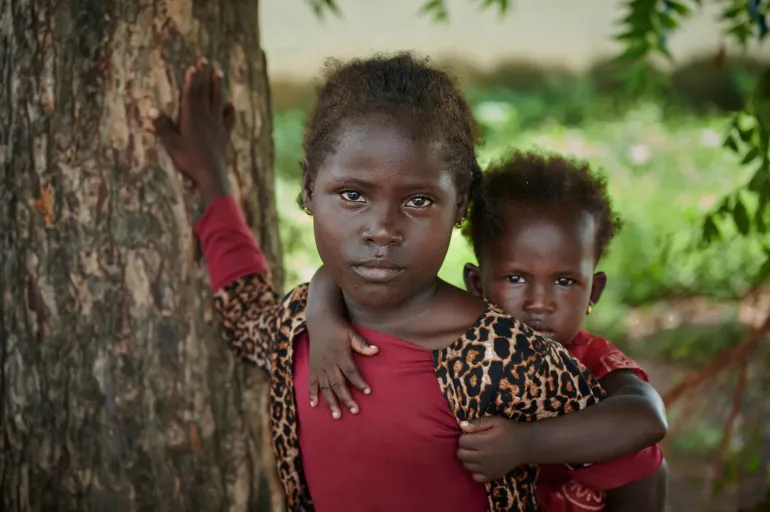
Accra, Ghana,17th June 2026 - A new study by UNICEF, Unlocking Potential Early: Rebalancing Public Spending for Children in Ghana, finds that while Ghana performs comparatively well on several child well-being indicators relative to the Sub-Saharan African average such as immunization coverage which reaches 95 per cent compared with a regional average of 74 per cent, under-five mortality is approximately half the regional average (35.9 versus 71.2 per 1,000 live births), and pre-primary education enrolment is among the highest in the region (88.1 per cent). However, even in Ghana, public spending on children is too small, too backloaded toward later childhood, and distributed unevenly, particularly disadvantaging the youngest and poorest children when investments would have the greatest lifelong impact. Fast-tracking and prioritizing implementation of the newly launched Early Childhood Care and Development Policy could be a game changer for Ghana and Africa.
This is the first age-based analysis of public spending on children in Ghana covering pregnancy through age 17, and the first to disaggregate spending by household income and rural/urban residence. The study shows not only how much Ghana spends on children, but which children benefit most and least from that spending.
Key findings
- Early years underfunded: Children aged 0–5 receive only about 13% of total public spending on children, despite making up roughly one-third of the child’s population.
- Large inequality by income and place: Children from the wealthiest households receive nearly twice as much public investment per capita as those from the poorest households.
- Significant rural–urban gaps persist, especially for education and access to services.
- Mixed performance on outcomes: Ghana performs relatively well on some indicators — immunization, under-five mortality and pre‑primary enrolment — but faces persistent challenges in nutrition, birth registration, child poverty and protection from violence.
- Spending composition and timing matter: Public spending is heavily concentrated on education (about 3.1% of GDP in 2023), while other critical sectors remain underfunded: social protection 0.23% of GDP, health about 2.0%, and child protection 0.03%.
Why this matters
The earliest years of life lay the foundation for children’s health, nutrition, learning, protection and future productivity. When public investment arrives late and is unevenly distributed, inequalities begin early and become harder and more costly to reverse. The study shows that public spending choices can either reinforce disadvantages or help break its cycle, particularly for children from poorer households.
Ghana’s pattern of relatively low overall child spending, and spending that is backloaded toward later childhood rather than frontloaded in the prenatal and early childhood period, contrasts with high-income countries where spending is larger, more balanced across the life course, and concentrated sooner when returns are highest. Across Sub-Saharan Africa, education absorbs the largest share with roughly nine out of every ten public dollars invested in children — a pattern Ghana mirrors. On the contrary, high-income countries spend almost 23 times more than Ghana and the SSA average and distribute resources more evenly across childhood stages and a balanced policy portfolio.
The report emphasizes opportunities to build on progress in Ghana, including:
- Spend more, spend earlier, and spend more fairly across childhood.
- Build a balanced child policy portfolio that strengthens income support for families (including expanded LEAP benefits for pregnant mothers),
- parental leave, childcare, child grants, nutrition, health, parenting services and child protection, while protecting gains in education.
- Implement reforms gradually and strategically, using the Early Childhood Care and Development (ECCD) Policy (2025–2035) as the framework for sequencing and scale‑up.
What change could look like
UNICEF modelling shows that a comprehensive, balanced package of investments, estimated at 7.2% of GDP could produce rapid and measurable gains:
- Child poverty would be eliminated within three years.
- Up to 18,000 premature child deaths would be averted.
- Significant reductions in stunting and 100% vaccination coverage.
- Achieve near universal birth registration.
- Improved school readiness and enrolment as more children enter school prepared to learn.
Media contacts
Additional resources

About UNICEF
UNICEF, the United Nations agency for children, works to protect the rights of every child, everywhere, especially the most disadvantaged children and in the toughest places to reach. Across more than 190 countries and territories, we do whatever it takes to help children survive, thrive, and fulfil their potential. For more information about UNICEF and its work, please visit and follow UNICEF Ghana on LinkedIn, X, Facebook, Instagram, TikTok and YouTube.