EU, UNICEF, and UNHCR Launch €2.7 Million Initiative for Displaced Persons and Host Communities
EU, UNICEF, UNHCR Launch €2.7million Initiative for Forcibly Displaced Persons and their Host Communities in Northern Ghana

Accra, Ghana – 2 July 2025: The European Union (EU), UNICEF and UNHCR, the UN Refugee Agency, launched a €2.7 million multi-donor initiative in northern Ghana to significantly strengthen the resilience and improve the lives of forcibly displaced persons and their host communities.
The two-year, “Supporting the Resilience of Forcibly Displaced People and Host Communities in Northern Ghana” project, known as the UNITE, is implemented by UNICEF Ghana and UNHCR, and co-funded by the EU.
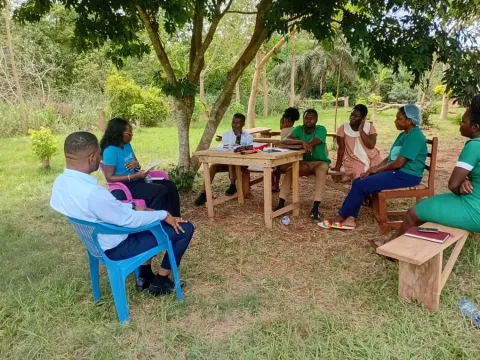
Implemented in the Tarikom and Zini communities of Ghana’s Upper East and Upper West regions respectively, the project will enhance the inclusion and access to basic services for forcibly displaced populations and host communities (particularly women and children) while also strengthening national systems for inclusive development.
This collaborative effort, delivered in partnership with the Ministry of Gender, Children and Social Protection, Ghana Health Service, Ghana Education Service, National Identification Authority, and local government and traditional authorities, seeks to improve access to essential services, foster social cohesion for forcibly displaced persons and other vulnerable groups, and promote long-term sustainable development, with the objective of aligning with national strategies and complementing existing efforts like the Gulf of Guinea Social Cohesion (SOCO) programme, as well as other EU and UN projects.
“Prolonged conflict in the Gulf of Guinea has forced thousands to flee their homes, with over 17,000 asylum seekers estimated to be living in the Upper East and Upper West regions of Ghana. Through the UNITE project and other initiatives, the EU is supporting forcibly displaced people and the communities generously hosting them. The EU will continue to play its role on the global stage and in Ghana to uphold refugees' rights, in line with EU and international law.” said Irchad Razaaly, EU Ambassador to Ghana.
“This initiative, profoundly supported by the European Union, is about restoring dignity, strengthening community resilience and building a future where every child and family has equitable access to the services and opportunities they deserve in a dynamic and changing environment” stated Osama Makkawi Khoghali, UNICEF Ghana Representative.
“UNHCR is committed to ensuring that forcibly displaced persons and their host communities in Northern Ghana have the protection and support to not only survive but thrive. This comprehensive program, with the generous backing of the European Union, allows us to work collaboratively to build sustainable solutions that empower these communities and foster peaceful coexistence,” added Needa Jehu-Mazou, Head of UNHCR Office in Ghana.
The project is also being replicated in Côte d’Ivoire, Togo, and Benin, highlighting a concerted regional approach with a total financing amount of €12million (€10million from the EU and €2 million from four UN agencies: World Food Programme (WFP), International Organization for Migration (IOM), UNICEF and UNHCR).
EDITOR'S NOTES
Background Information
Key Areas of Intervention for UNICEF and UNHCR (with EU support) under the Supporting the Resilience of Forcibly Displaced People and Host Communities in Northern Ghana, known as the UNITE project include:
- Health and Nutrition: The project will enhance healthcare delivery by upgrading facilities (e.g., Tarikom CHPS, Tilli Health Centre, Zini Health Centre), training health workers, improving supply chains, and expanding National Health Insurance Scheme (NHIS) access for over 2,000 children and mothers.
- Water, Sanitation and Hygiene (WASH): Addressing poor sanitation and water scarcity, the initiative will rehabilitate and construct WASH infrastructure in schools, health centres, and communities, including solar-powered water systems, gender-segregated sanitation facilities, and hygiene promotion activities.
- Child Protection and Legal Identity: Focusing on preventing gender-based violence (GBV) and child exploitation, the project will deliver community-based awareness campaigns, strengthen case management systems (e.g., UNICEF-supported ISS and SWIMS), and support birth registration and legal identity for all children, including those born outside Ghana.
- Education and Social Cohesion: To ensure continuous learning, the project will implement catch-up education programmes, rehabilitate school infrastructure, and provide teaching and learning materials. It also includes psychosocial support, peacebuilding training, and community engagement to foster inclusive education environments.
- In Ghana, over 17,000 refugees are present in Ghana’s Upper East and Upper West Regions because of the spillover of the crisis in the central Sahel countries.
- Housing and Electricity: UNHCR will prioritize access to safe, dignified, climate-resilient, and appropriate housing for the most vulnerable, alongside expanding access to electricity in underserved communities.
- Socio-Economic Data and National Services: UNHCR will lead on collecting and analyzing socio-economic data to improve access to national services such as education, health, and livelihoods for refugees and asylum seekers.
Media contacts
About UNICEF
UNICEF works in some of the world’s toughest places, to reach the world’s most disadvantaged children. Across more than 190 countries and territories, we work for every child, everywhere, to build a better world for everyone. For more information about UNICEF and its work, visit: www.unicef.org