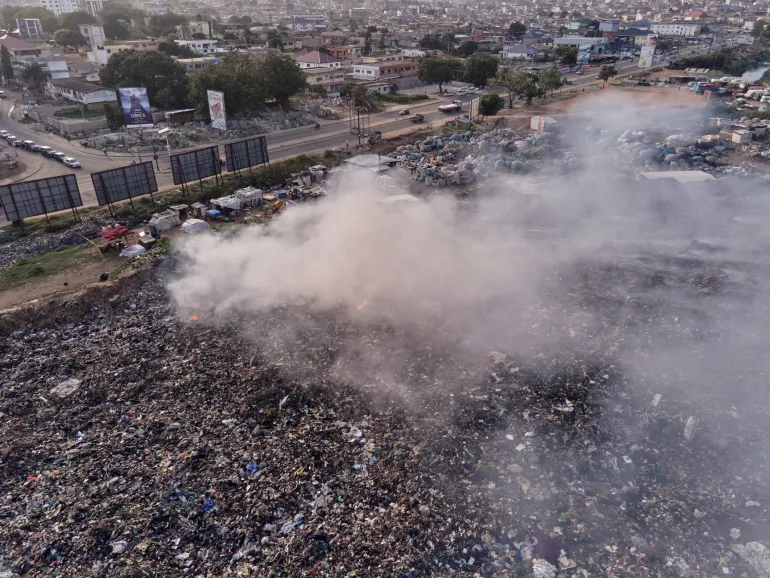
In our everyday lives, plastics offer undeniable convenience, playing crucial roles in countless technologies and applications. However, beneath this surface lies a startling economic and public health crisis. Recent findings from The Lancet Countdown on health and plastics - The Lancet reveal that plastics generate over $1.5 trillion in annual health-related economic losses globally. These include direct health-care costs (hospitalisation, medication, physician services) and indirect productivity losses from disease, disability, and premature death. Alarmingly, these costs are often hidden, disproportionately impacting vulnerable communities while allowing producers to profit.
For countries like Ghana, where the informal recycling sector and urban waste management pose significant challenges, the stakes are particularly high. The burden of plastic pollution is not equally shared; low-income populations and communities near disposal sites endure the most health risks associated with several toxic substances commonly found in plastics. Key to this environmental crisis is the link between a number of toxic chemicals—such as polybrominated diphenyl ethers (PBDEs), bisphenol A (BPA), and di-(2-ethylhexyl) phthalate (DEHP)—and substantial health costs. These chemicals are associated with several diseases, including heart diseases, strokes, liver and kidney damage, and some cancers. They also cause disruption in the normal metabolism of the body (endocrine disruptors). In the United States alone, these substances accounted for over $675 billion in health-related losses in recent years. Ghana’s health cost burden from plastics could also be substantial.
The report highlights the urgent need for preventive policies, drawing parallels with successful historical interventions, such as air pollution controls and lead abatement. Investing in measures to reduce plastic production and eliminate toxic additives can yield significant economic returns through improved public health and productivity.

Moreover, the role of fossil fuel subsidies cannot be overlooked. These subsidies artificially lower the costs of plastic production, encouraging overuse and locking us into an environmental crisis. By removing these incentives, we can shift toward more sustainable practices that benefit both the economy and the environment.
Ghana, like other nations, must heed this urgent call to action. By measuring local impacts, eliminating harmful subsidies, and prioritising preventive interventions, we can promote health in our communities, safeguard natural resources like water bodies and land, and foster a more resilient economy. Investing in prevention yields high returns — for instance, every $1 spent on air pollution control in the US since 1970 has generated about $30 in benefits. The time for change is now—our health and future depend on it, and we cannot afford to forego development.