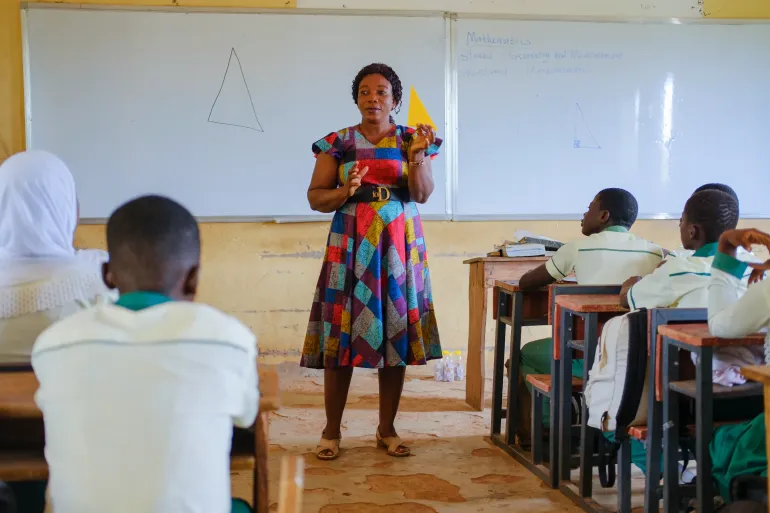
For Maria Antoinette, the most rewarding words in her mathematics classroom are simple: “Madam, one day I want to be like you.” At a junior high school in Kintampo South, Ghana, she wants girls to see mathematics not as a subject reserved for boys, but as a doorway to their own ambitions.
A UNICEF-supported training programme, funded by Hapag-Lloyd through UNICEF Germany, strengthened that commitment. It helped Maria make lessons more practical and ensure girls have opportunities to ask questions, solve problems and take part alongside boys. The approach supports learning in science, technology, engineering and mathematics, known as STEM.
The training helped me use more teaching and learning materials, making lessons practical and enjoyable, especially for the girls
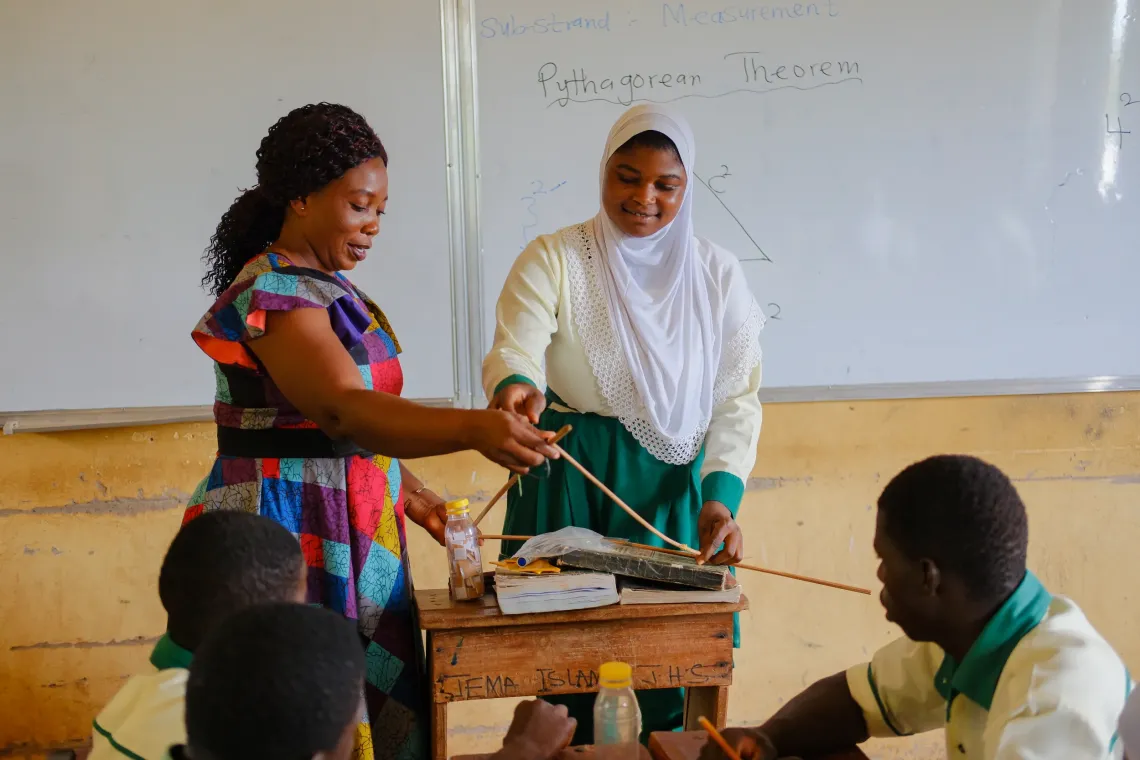
At the training, only three of the sixty mathematics teachers were women, the district’s only three female mathematics teachers, according to the reporting team. The gap extends beyond one district: a UNICEF study on teacher deployment in Ghana reports that fewer than one third of junior high school teachers are women, with very low numbers in the sciences.
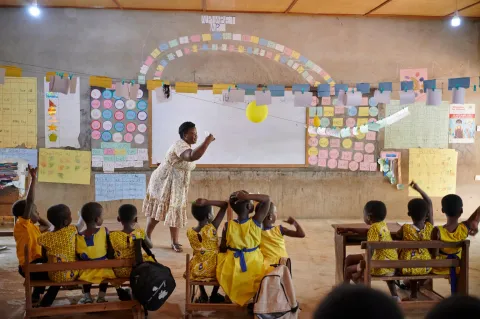
Inspired by this realization, Maria transformed her teaching approach. She moved beyond traditional lecture-based methods and began incorporating hands-on activities and real-life demonstrations. During lessons on geometric construction, for example, she takes learners outdoors to explore mathematical concepts in practical ways that make learning more meaningful and relatable.
Maria says girls who once hesitated to participate now ask questions, tackle problems and contribute during lessons.
When girls see something, they remember it. When they practice it themselves, it stays in their minds
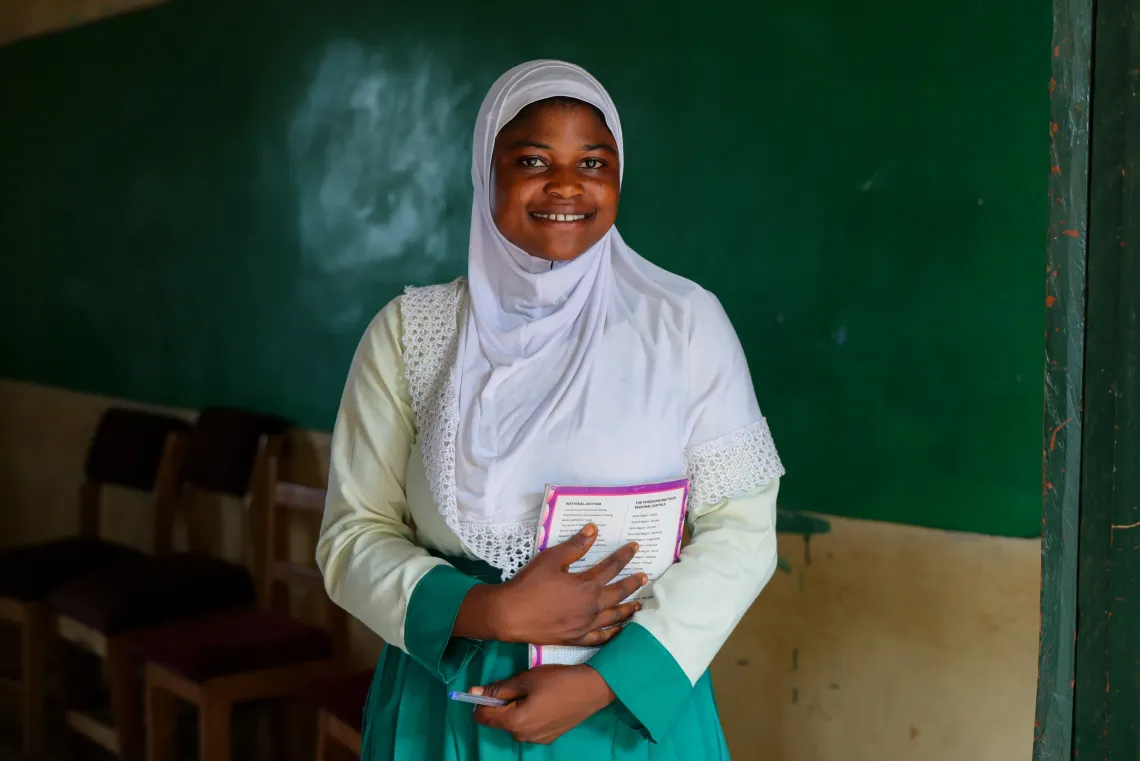
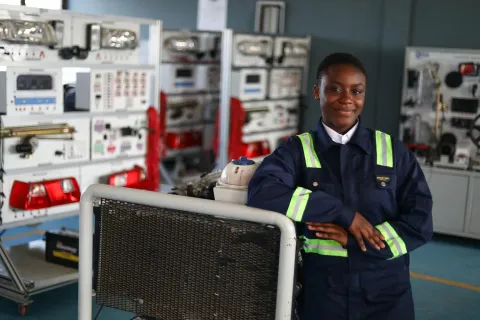
Her support continues beyond the classroom. Maria mentors girls, offers extra help and introduces them to women working in STEM, showing them possibilities they may not have imagined. That encouragement comes at an important stage: performance in the Basic Education Certificate Examination (BECE), taken at the end of junior high school, shapes entry into STEM programmes at senior high school. Building confidence and a strong foundation in mathematics and science now can help girls keep those pathways open.
For Angela, a second-year junior high school student taught by Maria, clear explanations, hands-on learning and a woman role model are making mathematics feel within reach.
“Girls can also learn mathematics and science. Seeing my mathematics teacher, Madam Maria, gives me confidence to love mathematics and to be like her one day,” she says.
"I like my teacher because she teaches very well, explains things clearly, and allows us to ask many questions," says Angela. "She makes learning practical and fun."
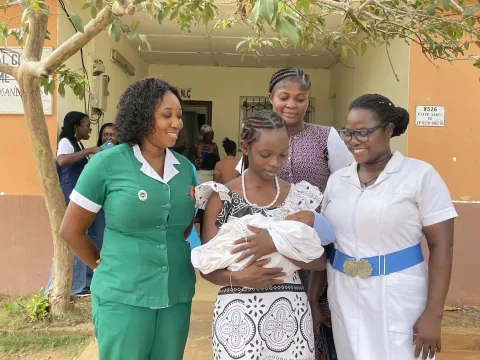
As part of her mentorship efforts, Maria invites female professionals working in STEM fields to interact with students. One encounter with a female doctor had a profound impact on Angela.
"When I saw a female doctor, it gave me confidence that I can also become a doctor," she says. "Meeting women in STEM motivates me to study mathematics and science and work towards my dream."
Angela's story demonstrates how investments in gender-responsive STEM education are helping to increase girls' confidence, participation, and aspirations. Through practical teaching methods, mentorship, and exposure to female role models, girls are gaining the skills and motivation needed to remain engaged in school and pursue opportunities in STEM careers.