From the Hospital Ward to the Village, No Mother Goes Alone
In a maternity ward in the West Coast Region and a village in the North Bank, two initiatives are working to make sure every Gambian baby's first meal is breast milk.

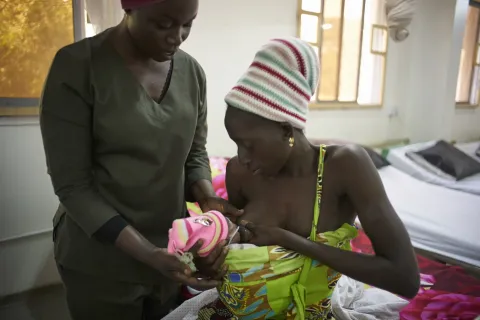
At Bwiam General Hospital in the West Coast Region, the maternity ward begins its day before the sun is fully up. Mothers rest with their newborns. Nurses move quietly between beds. And somewhere in the early hours after a birth, a ritual takes place that most people outside these walls know little about.
A newborn's first meal is not formula. It is not water. It is colostrum, the first press of breast milk, guided by a health worker who knows that what happens in those first thirty minutes of life can determine whether a child thrives or does not.
"The Baby-Friendly Hospital Initiative is a series of guidelines we have adopted to help support, promote and protect breastfeeding," says Isatou Bah, a senior nursing officer and head of the maternity unit at Bwiam General Hospital. "We understand the crucial importance of breastfeeding, both for the baby, the mother and the community at large."
The Baby-Friendly Hospital Initiative, commonly known as BFHI, is a global programme led by UNICEF and WHO to ensure that health facilities create an environment that supports breastfeeding and mother-baby bonding from the very first moments of life. In The Gambia, Bwiam General Hospital is among several health facilities that have adopted the initiative, adapting its globally recognised Ten Steps to Successful Breastfeeding to reflect the realities of their local context.
The clinical case for early breastfeeding is compelling. Isatou, who has spent years on the maternity ward, explains it plainly.
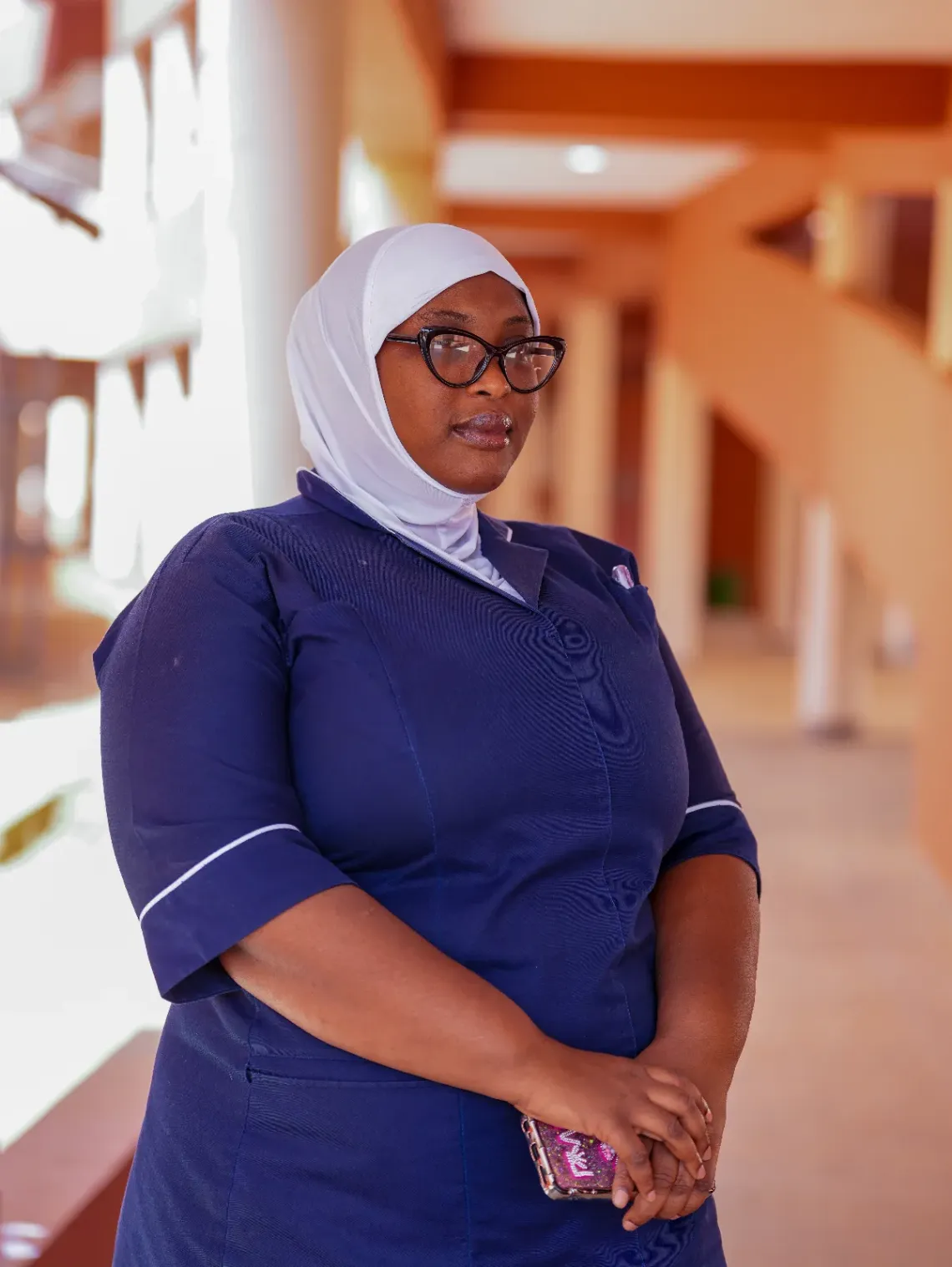
Postpartum haemorrhage is one of the leading causes of maternal death in The Gambia and in sub-Saharan Africa. We understand that exclusive breastfeeding, initiated within the first thirty minutes of birth, helps to reduce the incidence of postpartum haemorrhage, thereby reducing maternal mortality.
But a hospital can only do so much. A mother leaves the ward and returns to her village, her family, her routines. And in many communities across The Gambia, those routines have for generations included practices around feeding and childcare that do not always align with exclusive breastfeeding. Changing them requires more than a hospital policy.
That is where the Baby-Friendly Community Initiative, or BFCI, comes in.
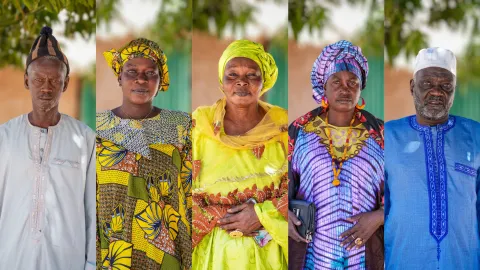
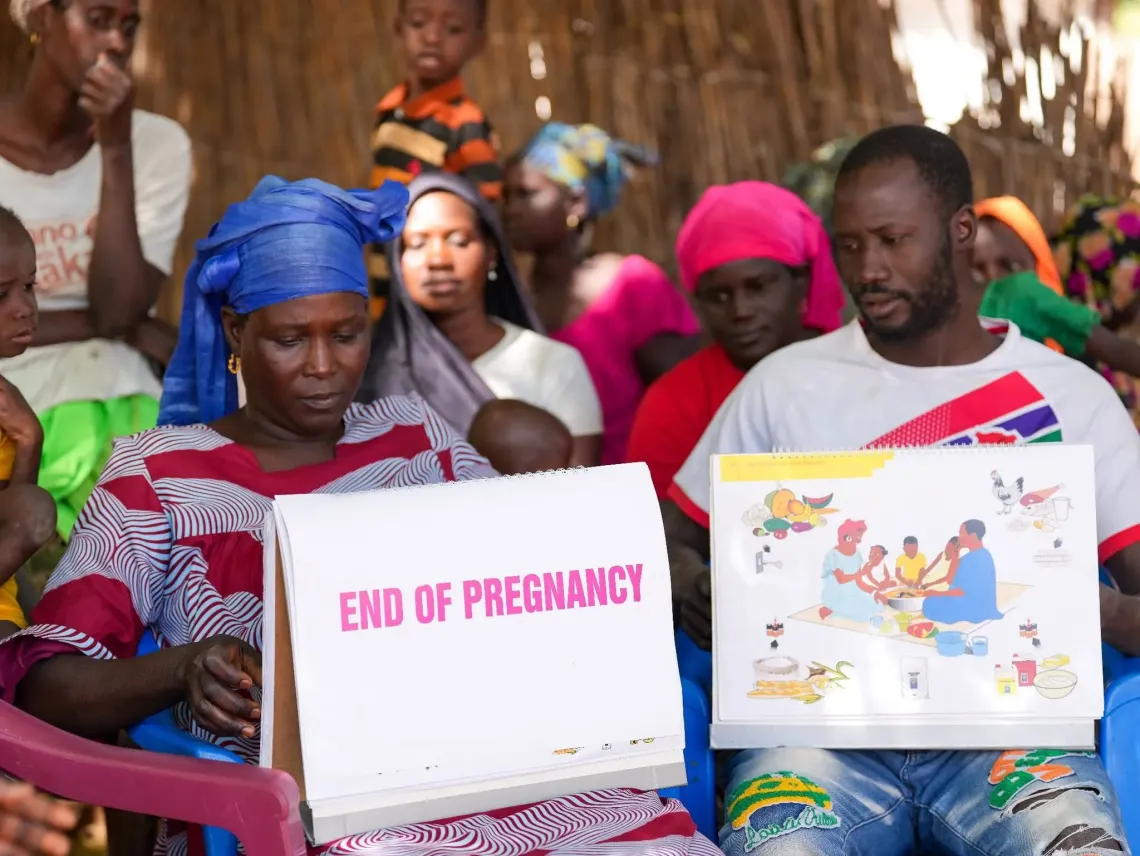
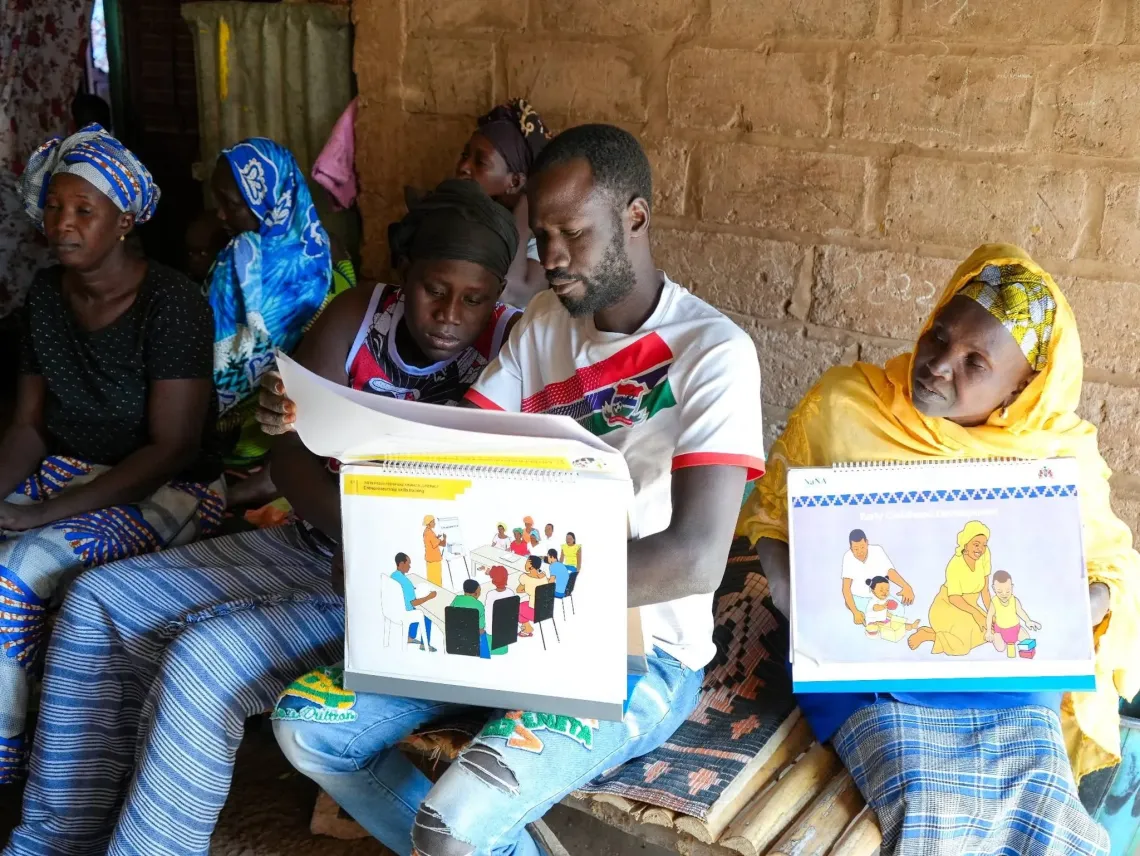
Hundreds of kilometres away, in Cheken village in the North Bank Region, Halima Mbye is a member of Group Nampal, loosely translated from Wolof as the Breastfeeding Group. It is a community support group that works directly with pregnant women and new mothers to extend the care that begins at the hospital all the way into the home. Their work is practical, relentless, and deeply rooted in the communities they serve.
"Since we started the group, we have seen a lot of improvement," Halima says. "In the past, women would get pregnant and not even see a doctor until they were six months along. They would not register at any hospital or clinic. Now, women are registered in hospital before they even reach their third month."
Group Nampal accompanies women through every stage of pregnancy and beyond. They ensure mothers know their due dates and communicate those dates to the village health worker and to husbands so families can prepare in time. When a mother is about to give birth, a member of the group accompanies her to the hospital, so she is never alone.
As soon as you give birth, in the early few hours, you perform what we call the cleansing of the breast. And then the first meal the child receives is the mother's breast milk. This goes a long way in protecting the child for life.
The connection between the community and the hospital is not accidental. It is by design. Back at Bwiam General Hospital, Aji Safiyatou Niassi, head of the antenatal unit, sees the difference that this kind of community involvement makes every day.
Cultural norms and deeply held beliefs still present challenges, she acknowledges. Persuading mothers to practise exclusive breastfeeding for six months, without supplementing with water or other food, is not always straightforward. But she has watched that resistance soften, gradually, and she credits community groups like Group Nampal for much of that shift.
"A lot of our support staff and community members are being trained," she says. "Involving them has improved our ability to reach out to communities and spread information that is really improving practices in our society."
Group Nampal works with mothers to ensure that once they are home, the commitment to exclusive breastfeeding does not waver. No water. No food. Nothing but breast milk for the first six months. When the child reaches six months, the group guides families on how to introduce light foods slowly and carefully so the transition does not undo the progress made.
The group's members are mostly women, but not entirely. Babucarr Secka is one of the few men in Group Nampal, sitting with families in Cheken to talk about exclusive breastfeeding, and joining the group's work on spotting the early signs of malnutrition.
"I do this because I see it as the small token I can give back to develop my community and the well-being of children here," he says.
The challenges are real. Roads in many parts of The Gambia are poor. Women who go into labour must sometimes be transported to the hospital by donkey cart, over uneven ground, in the dark.
"Imagine somebody who is in labour, and we have to put them on a cart. The roads are not good, and we have to go all the way to the hospital," Halima says. "Imagine this happening at night. This is a major challenge for us here."
Yet the group does not stop. They go anyway, because they have seen what happens when a mother arrives at the hospital prepared, supported, and not alone.
That is the thread that connects Group Nampal to hospitals like Bwiam General Hospital. One works within the walls. The other works beyond them. Together, they form a chain of care that does not break when a mother leaves the ward.
UNICEF supports both initiatives, working with the Government of The Gambia through the Ministry of Health and the National Nutrition Agency to train health workers, equip community groups and ensure that every child, from the first breath to the first meal and beyond, has the best possible start in life.