The 'Bajens' of Central River Region (North): Bridging the Gap in Birth Registration
How a group of women known as Bajens are closing the birth registration gap in rural Gambia with UNICEF support, one community at a time.

Birth certificates are critically important for a child because they serve as a child’s first legal proof of identity and unlock access to essential rights and services. In The Gambia, Section 7 of the Children’s Act 2005 explicitly establishes birth registration a right ensuring that the fundamental rights to a name and nationality as enshrined in the Constitution of The Gambia, are guaranteed for every child. Despite a significant increase in birth registration rates nationally (now 59% of children under five), many more Gambian children remain legally invisible.
While legal provisions exist, access to these important national documents remains a challenge. This is due partly to infrastructure gaps, such as insufficient digital equipment and unreliable connectivity at regional and community levels, and partly to cultural myths in rural communities. For instance, in some traditional settings, there is a deep-seated belief that officially “counting” or registering a newborn invites misfortune or the “evil eye” upon the child. In these areas, a lack of understanding regarding the long-term importance of these documents makes birth registration a lesser priority. Overcoming these barriers requires sustained community sensitization and a generational shift in perception, alongside significant efforts to strengthen access to quality birth registration services.
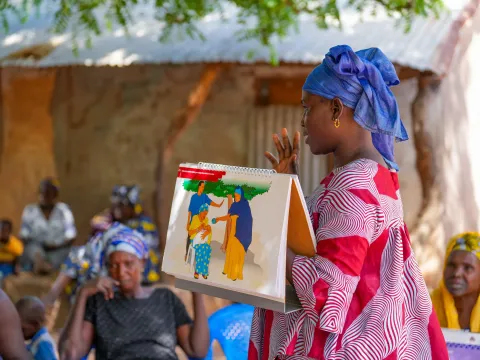
However, hope is growing for children in rural Gambia. In the Central River Region (North), a group of women called Bajens (meaning Aunts) are championing the advocacy for an attitudinal shift toward birth registration. Together, they have helped register over one hundred children within just three months of community engagement. Trained by the Paradise Foundation with technical and financial support from UNICEF, these women are making a lasting change in their communities.
"Birth certificates are the most important documents in the world. If you do not have one, no one can ascertain your identity or provide social services."
These documents provide legal identity, protection, and proof of nationality. As children grow, a birth certificate is necessary for critical life activities such as opening a bank account, registering to vote, and obtaining a passport. Furthermore, the data collected through registration helps the government plan and allocate resources for education, health, and social services, reducing inequities and improving development outcomes for all.
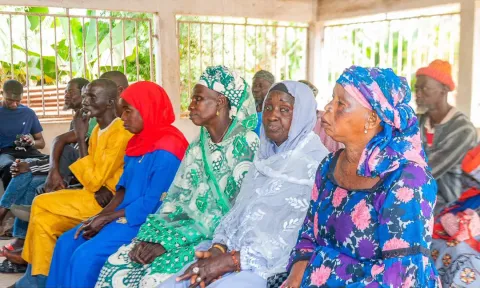
In these communities, the Bajens are supported by traditional communicators known as Kanayalengs, who use their influence to rally communities for mass sensitization. The Bajens also engage the Alkalos (Village Heads) and Seyfos (District Chiefs) to bring men, women, and children together for these vital community meetings.

“Birth certificates are very important,” says Alkalo Mahmoud. “I supported this initiative because of the hard work and selflessness of the Bajens. Our community did not fully know the value of these documents until these women started engaging them. Their major impact is the numerous children they have helped to register and the way they have informed us all on why these documents matter.”
Beyond advocacy, the Bajens walk house-to-house under the sun to identify unregistered children and then mobilize families every Friday at the regional hospital in Bansang for registration. Families in remote areas often face challenges due to the long distances to registration facilities, which can discourage timely registration. These selfless heroes ensure that both children and adults are reached.
While challenges such as occasional machine failures persist, these Bajens remain determined to ensure every child in their district is registered. To them, it is a national calling. Having participated in UNICEF-supported training, they are now the primary defenders of every child's right to be seen, counted, and protected.
“Despite the challenges, in all the 83 villages I was tasked to cover, I have reached people in over 60 of them within three months. Almost everyone in these communities has been registered, particularly the children.”