A Sustainable Start for Every Child: Strengthening What Works in The Gambia
When a mother breastfeeds, she should never have to act alone. A joint op-ed for World Breastfeeding Week.

In a ward at a health centre not far from where you are reading this, a mother holds her newborn for the very first time. In that moment, one simple act can shape the rest of her child’s life: putting the baby to the breast within the first hour of birth. Yet whether it happens depends far less on the mother herself than on everything and everyone around her.
That is the message of this year’s World Breastfeeding Week, observed globally from 1 to 7 August under the theme “Breastfeeding for a Sustainable Start in Life: Strengthen What Works”. Breastfeeding is not simply a personal choice made by individual women. It is a practice that thrives or fails depending on the systems built around mothers: the health workers who counsel them, the families who encourage them, the employers who accommodate them, and the laws and policies that protect them. Breastfeeding requires no purchased product, but it is not cost-free. It requires a mother's time, energy, health, and care. A fair society does not expect women to bear those costs alone; it shares them through quality health services, paid leave, childcare, social protection, and equitable caregiving at home.
The evidence is beyond dispute. Breastmilk is the first vaccine, the first food, and the first act of food security a child ever experiences. Babies who are breastfed immediately after birth or within the first hour of life and exclusively for the first six months are far better protected against infection, malnutrition, and death. Breastfeeding also protects mothers, reducing their risk of breast and ovarian cancers. Globally, scaling up breastfeeding could prevent almost 400,000 child deaths and around 140,000 maternal deaths each year, according to UNICEF and the World Health Organization. These figures underscore the critical role of breastfeeding as one of the most effective and cost-efficient interventions for improving child health, nutrition, and survival worldwide and for laying a solid foundation for Human Capital Development.
The Gambia has much to be proud of. More than half of Gambian infants, around 54 per cent, are exclusively breastfed, a rate above the global average of 48 per cent and the result of decades of committed work by the Government, health workers, and communities. But we cannot be complacent. Early initiation of breastfeeding within the first hour of birth remains low, at 36 per cent. Too many newborns are still waiting too long for the start they deserve.
Closing that gap is not a matter of telling mothers to try harder. Many women still face real barriers to exclusive breastfeeding: a disproportionate responsibility for childcare and domestic work, limited influence over household spending and health decisions, pressure from relatives or community members, inadequate rest, nutrition and postnatal care, and discrimination or income loss at work, with limited protection for women in markets, farms, domestic work, family businesses and other informal settings. These barriers weigh heaviest on adolescent mothers, women with disabilities, low-income families and women living far from health facilities. It is a matter, as this year's theme reminds us, of strengthening the systems that address these barriers, so that no mother has to overcome them alone.
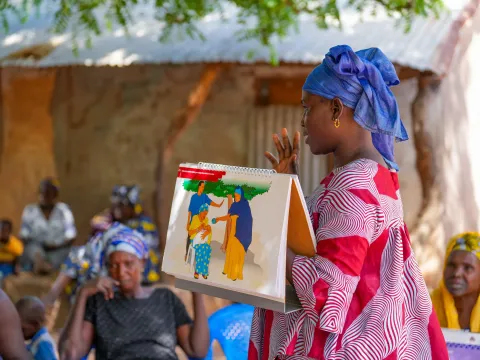
It works when communities carry the message. In villages across the country, from the North Bank and West Coast to the Lower River, Central and Upper River Regions, Village Support Groups, also known as 'Group Nampal' in Wolof, walk with women through pregnancy and beyond, and a designated member accompanies them to the hospital so that no mother gives birth alone. Where women once waited until their sixth month of pregnancy to see a doctor, most now register at a clinic before their third trimester. That is what community ownership looks like. Grandmothers, fathers, and religious and traditional leaders remain among the most powerful influences on how a newborn is fed. For fathers in particular, that influence means sharing responsibility: preparing meals, collecting water, cleaning, caring for older children, accompanying mother and baby to postnatal care, protecting time for rest, resisting harmful feeding pressure, and participating in decisions about the child's care. When they champion breastfeeding, practices change and children thrive.
And it works when workplaces stand behind mothers. No woman should have to choose between earning a living and feeding her child. The Gambia's Women's Act 2010 already guarantees employed women six months of paid maternity leave and daily nursing breaks, and male employees ten working days of paid paternity leave, provisions reinforced by the Labour Act 2023. That legal foundation now calls for implementation, employer compliance, and progressively stronger parental leave provisions. Lactation spaces, paid nursing breaks, maternity protection, freedom from discrimination and affordable childcare should not depend on the goodwill of an individual manager. They are essential labour protections and should be implemented, monitored, and enforced. Workplace lactation rooms alone will not reach women outside conventional offices, so social protection and community-based solutions must extend the same support to women in informal and self-employed work. The UNICEF-supported creches at the Kanifing General Hospital, Bansang General Hospital (under construction), and at the UN House (to be inaugurated soon) show what this looks like in practice, and we call on employers across the public and private sectors to follow suit.
Support for breastfeeding must be accompanied by strong protection measures. Across the world, the aggressive marketing of breastmilk substitutes continues to undermine breastfeeding practices and influence feeding decisions. In The Gambia, the Breastfeeding Promotion Regulation of 2006 was enacted to protect mothers and families from inappropriate commercial marketing and to ensure that they receive accurate, unbiased information on infant and young child feeding. The regulation provides a legal framework for controlling the promotion of breastmilk substitutes and remains a cornerstone of national efforts to safeguard, promote, and support breastfeeding. Its full implementation and enforcement are essential to creating an enabling environment where mothers can make informed feeding choices and where every child is given the best possible start in life.
In The Gambia, breastfeeding promotion has traditionally extended across the entire month of August, a reflection of how seriously this nation takes the health of its youngest citizens. That spirit must now translate into year-round commitment: sustained financing for nutrition programmes, continued training of health workers, expansion of baby-friendly facilities, and workplace policies that make breastfeeding possible for every working mother. A transparent national accountability mechanism would anchor that commitment: an annual breastfeeding scorecard, published by the Government, showing early initiation and exclusive breastfeeding rates, implementation of the Baby-Friendly Hospital Initiative, health worker training, workplace compliance, violations of the Breastfeeding Promotion Regulation, and programme financing, with results disaggregated by region, income, age and disability, so that no child's progress is hidden inside a national average.
UNICEF and the National Nutrition Agency are proud to stand with the Government and people of The Gambia to accelerate progress in this effort. This World Breastfeeding Week, we invite every employer, every health worker, every father, every grandmother, and every community leader to ask one question: what can I do to make breastfeeding easier for the mothers around me?
Because when a mother breastfeeds, she is never acting alone. Behind every breastfed child stands a family, a community, and a country that chose to support her. Let us be that country, for every mother and every child.
__________________
*Mr. Malang N. Fofana is the Director General of the National Nutrition Agency (NaNA).
**Ms. Nafisa Binte Shafique is the UNICEF Representative in The Gambia.