Reaching Every Child with Life-Saving Vaccines
The Race to Protect Zero-Dose Children in Ethiopia

Ethiopia has made remarkable progress in expanding immunization coverage over the years. However, thousands of children still miss out on these life-saving vaccines due to a range of challenges.

Bikile, a mother of five, works tirelessly from dawn to dusk collecting firewood in the forest to sell. Her husband earns a small income as a daily labourer in the city. Together, they barely make enough money to put food on the table. Their youngest child, 18-month-old Hawi Tamene, has never received a single vaccine. Life has been especially hard for Bikile and her family since they moved from the rural village of Weka, 12 kilometres from Ginchi town, where they now live.

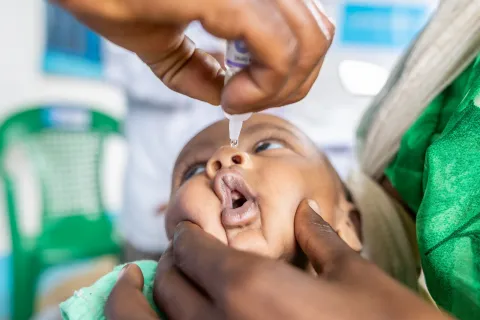
“I did not take my child for vaccination, not because I do not know its benefits. I do. Vaccines protect children from diseases like measles, and my older children are all vaccinated. But life has been very hard since we moved here. I spend every day collecting wood just to feed my family. That has been my priority. Today, I am so happy my child is finally vaccinated and protected.”

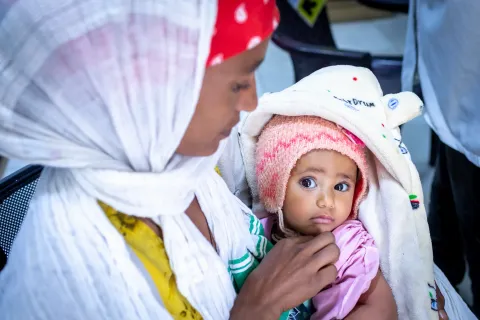
Dintee, 20, brought her smiling nine-month-old baby, Yosef, to the health centre for the first time. She recently moved from Kolba kebele to Guder town because of security concerns.
“I live in Guder now, but my family is still in Kolba. When I visited them, I could not return because of insecurity. I thought I had missed the vaccination date, and it was too late. But health workers explained my baby could still be vaccinated, so I brought him today. I know vaccines protect children from many diseases.”

Despite these challenges, health workers like Tolani are committed to reaching zero-dose children (children who have never received a vaccine) through the national catch-up campaign. Tolani has worked as an urban health extension worker for 12 years, eight of them in Ginchi town in Ambo district. Alongside her colleague Telile, she works tirelessly to mobilize communities and bring mothers to vaccinate their children.
“In conflict-affected areas, many health posts are closed or lack vaccines and supplies, so mothers cannot get their children vaccinated nearby. Security issues limit mothers’ movement and prevent health workers from delivering services properly. As a result, families are moving from rural to urban areas, which has overstretched the health system. Normally, we serve about 500 households, but now it is nearly 2,000. It is overwhelming. We are also working to identify zero-dose and defaulter children and make sure they complete their vaccinations,” says Toleni.
Ongoing conflict in the Amhara region continues to disrupt vaccination efforts, restricting movement for both mothers and health workers.

Bose’s twin girls have never been vaccinated.
“As a housewife with no help, I cannot take them to a health facility. Raising twins alone is hard. My husband works away, and I usually avoid public facilities because the queues are too long. I only go to private clinics when they are sick. Our neighbourhood is remote, but I came today after hearing health workers announce vaccinations,” says Bose.
“Conflict and misconceptions have put our children at risk. Now that I know about vaccination, I will make sure they get the protection they need,” she adds.
Tadila, a dedicated health extension worker in Sostu Gimja Bet kebele, continues to serve despite disruptions caused by conflict. She mobilizes communities and ensures unvaccinated children receive care.
“Insecurity and distance are the main reasons mothers cannot reach health facilities,” she explains.
Tadila works closely with religious leaders, local officials, and women’s groups to promote essential health services, including immunization. She educates families on the importance of timely vaccination and urges them to keep appointments.

Her mother, Tiringo, struggles to make ends meet by selling vegetables. Each day, she walks nearly two hours to Doyo Gena town to buy produce, then returns to sell it at the local market. With six children to feed, including Zinash, vaccination was never a priority. Zinash had never received a single dose.
Misconceptions and delays proved costly. Zinash’s growth stalled, and she often fell ill. “She was not gaining weight and got sick easily. I kept thinking, maybe if I had taken her earlier, she would have been better,” says Tiringo.
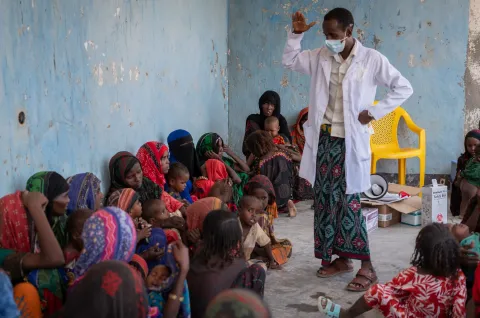
Health workers in Qosha and surrounding districts began house-to-house visits to identify zero-dose children and set up outreach sites in hard-to-reach villages, offering vaccines and other essential health services.

Zinash is now protected from deadly diseases and recovering from severe malnutrition. Tiringo regrets the delay but is determined to advocate for vaccines.
“I know vaccines are important. They save lives. I want other mothers to understand this,” she says. “I want my daughter to grow up healthy and become a doctor one day.”
With support from UNICEF and funding from CIFF and Gavi, mothers like Tiringo now have the chance to vaccinate their children and give them a healthy start in life.