Our Planet, Our Health
A blog by Michele Servadei, UNICEF Deputy Representative in Ethiopia on World Health Day

Today is World Health Day, and the chosen theme is ‘Our Planet, Our Health’ and this really strikes a chord with me.

Ethiopia is experiencing one of the worst droughts in decades. Water sources are drying up, livestock are dying, and crops are failing – millions of children and their families are being pushed to the brink.
And the main culprit, climate change – sadly, our planet is not healthy.


An estimated 6.8 million people including 2.5. million children are suffering because of the drought.
And remember behind every statistic there is a human face – a story of suffering, a story of desperation.
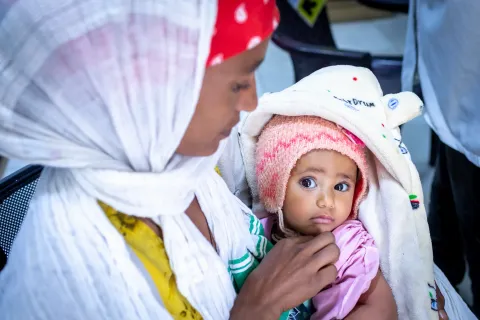
18-month-old Abdi is one of those faces. I met Abdi and his father last week when I visited Gode, Somali region, one of the most severely hit areas impacted by the drought.
Abdi is severely malnourished. His dad told me that his family lost all their cattle due to the drought. As a result, he could no longer feed Abdi and the rest of his children. Now, Abdi is being treated in a UNICEF supported stabilization center.


Drought not only means lack of water. It means that children are going hungry and thirsty every day. They are forced to walk miles in search of food and water and often they have to drink from contaminated water sources.


And this means that children get sick. They become malnourished and even more vulnerable to killer diseases like measles and cholera. Our unhealthy planet is making our children sick.


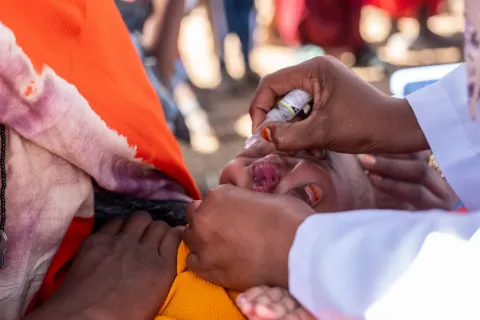
But I am proud to say that UNICEF and partners are working hard to help children get well – even in the most trying circumstances. We are deploying mobile health and nutrition clinics to remote drought hit areas to screen and treat malnourished children. We are also providing routine immunizations, so children are protected from measles and other diseases that threaten their lives.


We are rehabilitating boreholes, providing emergency water trucking and installing more water points to adapt to climate change. We are also investing in sustainable solar powered water supply systems so in times of drought, communities will still have access to water that can keep cattle, crops and children alive.


We are doing our very best to keep children healthy, and with more support to address climate adaptability and lifesaving support we can do even more. That’s my call to action on World Health Day: children everywhere need access to healthcare, clean water and nutrition, especially children living in emergencies. We must keep our children and our planet healthy as they are the future.
Special thanks to our donors:
Canada, CERF, ECHO, Japan, Norway, Sweden, UK, USA