Menstrual Hygiene Health services at Kale Primary School
Southern Nations, Nationalities, and Peoples' Region Southern Nations, Nationalities, and Peoples' Region
“Pass it to me, give it to me” boys were shouting at each other to get the soccer ball. “It is my turn. I am the next one” girls were yelling at one another while jumping rope. Other students were also running here and there in the school compound. This is the normal scene during break time in Kale Primary school compound, Chencha woreda (district).
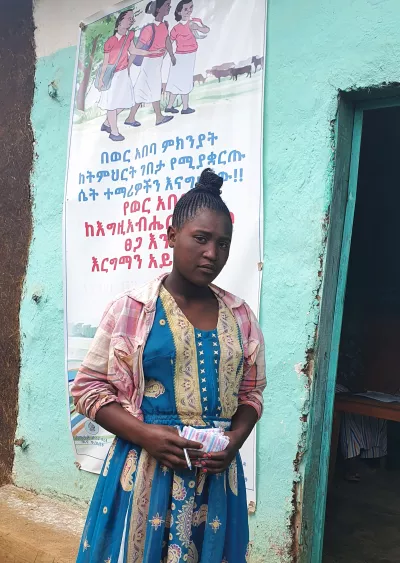
At the corner of the compound, there is a room named “menstruation room” or “safe space”. I saw a girl student leaving the room and went to her to have a few minutes of conversation. She introduced herself as Bethlehem Yoseph, 7th-grade student and 16 years old.
She started her story by telling her first experience with menstruation. “I had my first menstruation three years ago while standing on the morning line-up. Blood was flowing through my thighs and spilled on my dress. The boys who noticed the blood on my dress started laughing and teasing me. I was frustrated and felt ashamed. Fortunately, one boy gave me his jacket and I put it on my dress. Then I immediately left the school and went to my home.
After the incident, I was thinking of dropping out of school knowing that there were no adequate WASH facilities to bathe, menstrual dignity kits and keep myself clean. Whenever I came to school while on my period, I felt frustrated thinking other students might know or fearing I might smell bad. It was hard to concentrate on my lessons. So, I often preferred to stay at home during my period. When I missed classes, I lag behind in my study and there were moments when I missed school tests. Such situations significantly impacted my performance and made me repeatedly fail exams. I was also very shy to inform teachers about my period even though there were female teachers.
She went on to talk about what has changed since then. ‘’Two years ago,everything started to change around managing our menstruation in the school. New girls’ room were built, water supply was extended to the compound and to our girls’ room, we have a place to dispose our used pads, and a female teacher was appointed as Mensural Hygiene Management (MHM) focal point to provide us advice and guidance.”
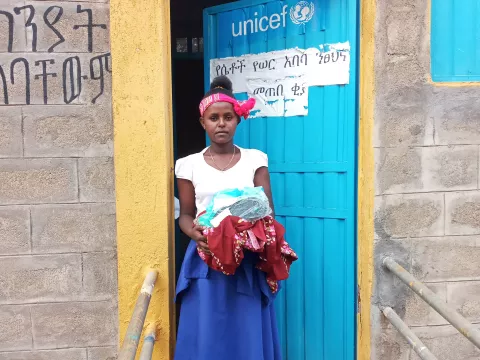
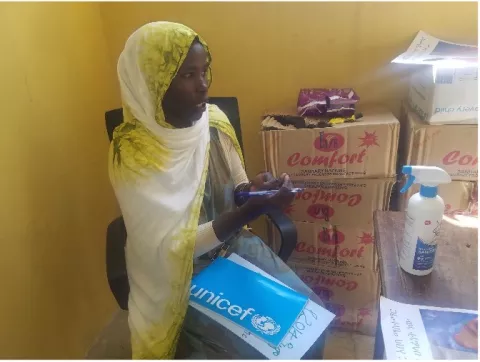
The safe space was partitioned into four rooms - a counseling room; a waiting room; a resting room equipped with mattresses for girls who are ill from menstrual cramps; and a washroom with a washing basin for washing pads and clothes. “When we felt unwell, we always come to this room and seek advice from our female teacher. Moreover, we use the room for the bath, to change our pads, and to rest whenever we need. Pads are always available in the room. We confidently talk to our teacher, W/ro Bethlehem Feleke, about our menstruation and she always gives us good advice and assists us with all problems we faced with menstrual health and hygiene. All boy students and our male teachers are well aware of our needs and always support us on issues related to MHM. This time there is no teasing and bullying from boys.”
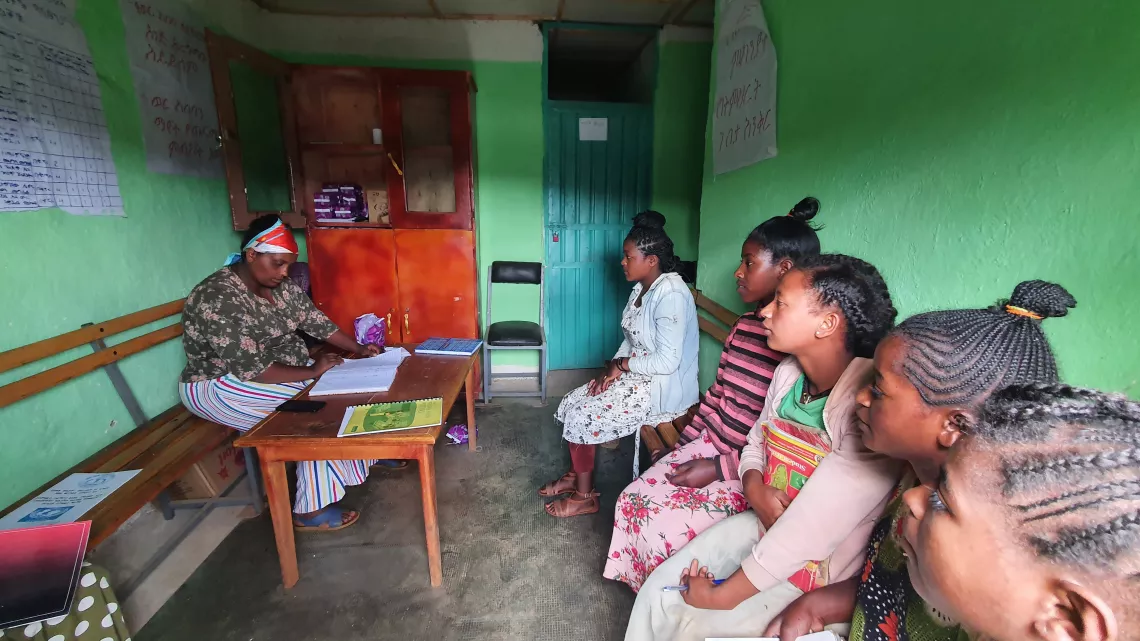
“Even though there are better MHM facilities in school and improved positive attitude by boys and the community on MHM, the major challenge my friends and I face is access to affordable sanitary pads. My family cannot afford to buy me pads,” she concluded.
Kale Primary School, with a total of 453 students (238 girls and 215 boys) reported that this year, not a single girl has dropped out of school or missed a class due to menstruation. Looking at the promising development, the Woreda Health Office has identified Kale as MHM learning school to other surrounding schools.
Through the Canadian funding, UNICEF, jointly with SNNP Regional Health Bureau and its respective woreda WASH offices, has been implementing Menstrual hygiene and health (MHH) programme in 10 schools of 10 woredas of the SNNP and Sidama regions. The goal of the programme is to improve access to WASH facilities, safe spaces, and sanitation products in schools; to advocate promote and improve communities’ attitude and cultural and religious beliefs towards MHH.
Despite the tremendous progress made in advancing MHM agenda in UNICEF-supported schools and woredas, still many schools do not have MHH services. The need to expand to other schools and districts of the region and across Ethiopia would transform not only MHH-friendly schools but also increase girls’ school enrollment, realize their full potential, and change the social taboos across the community at large.